
These days I find humor is an effective way to convey serious advice. Therefore, this piece draws inspiration from the style and popular characters from the great British author, P G Wodehouse. The article is in the form of a dialogue between Bertie Wooster and his sagacious butler Jeeves. If you’re not familiar with P G Wodehouse, now is a good time to start. You should immerse yourself in his works.
Bertie’s Quandary
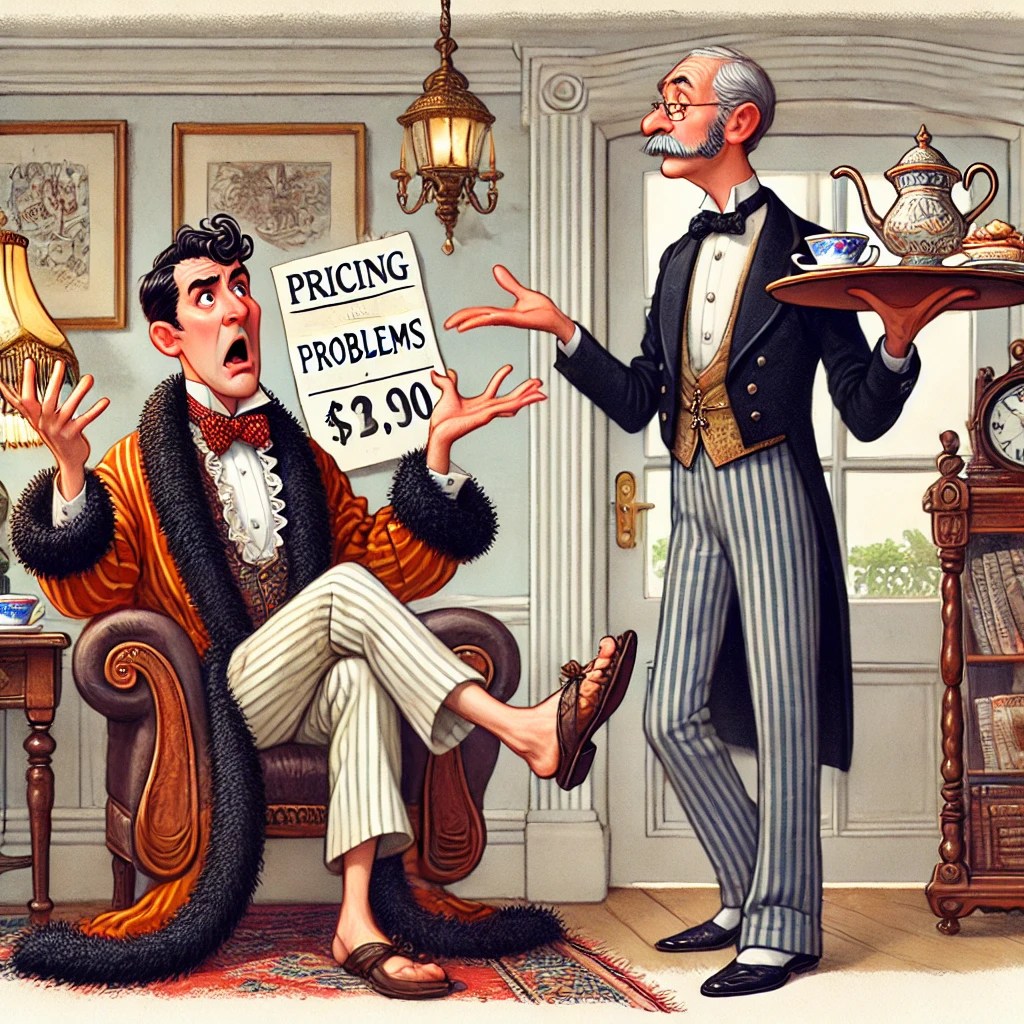
Bertie: Jeeves, this dashed article is giving me sleepless nights. I promised the chaps a cracker on startup pricing. Now, I have only disjointed thoughts. A case of writer’s cramp has also struck me. Jeeves: Indeed, sir. Pricing for startups is a subject of no small complexity. It requires a delicate balance of strategy, insight, and if I may no small measure of courage.
Bertie: Courage, eh? Like the time I tried to serenade Madeline Bassett and got chased by her father’s hound? Jeeves: Not entirely dissimilar, sir. Shall we tackle this systematically?
Bertie: Lead on, Jeeves. I’ll be the Watson to your Holmes.
The Importance of Pricing
Bertie: Start us off, Jeeves. Why is pricing such a big deal?
Jeeves: Pricing, sir, is the keystone of a startup’s success. It influences perception, revenue, and growth. Allow me to elucidate:
- Signal of Value – Jeeves: Customers, sir, are curious creatures. They often judge a product’s quality by its price. A low price may suggest your software is as flimsy as a three-legged chair. A high price implies sophistication and reliability. Bertie: So, it’s the difference between the chap in Savile Row tailoring and the fellow in off-the-rack tweed?
- Revenue and Profitability– Jeeves: Revenue, sir, is the lifeblood of any startup. Without it, one cannot pay for cloud infrastructure, development, or the highly coveted office beanbags. Proper pricing ensures profitability and sustainability. Bertie: So, without good pricing, the whole thing collapses like my attempts at playing the trombone?
- Market Positioning – Jeeves: Pricing defines how your product is perceived. A premium price positions it as a high-quality solution for discerning customers. A lower price suggests accessibility for a broader audience. Bertie: Like deciding whether to sip champagne with Lord Emsworth or tea with Aunt Agatha?
Why Startups Sell Below Value
Bertie: This is the puzzler, Jeeves. Why do these startup chaps persist in selling their wares for peanuts?
Jeeves: A combination of desperation, inexperience, and external pressures, sir. Let us examine the key reasons.
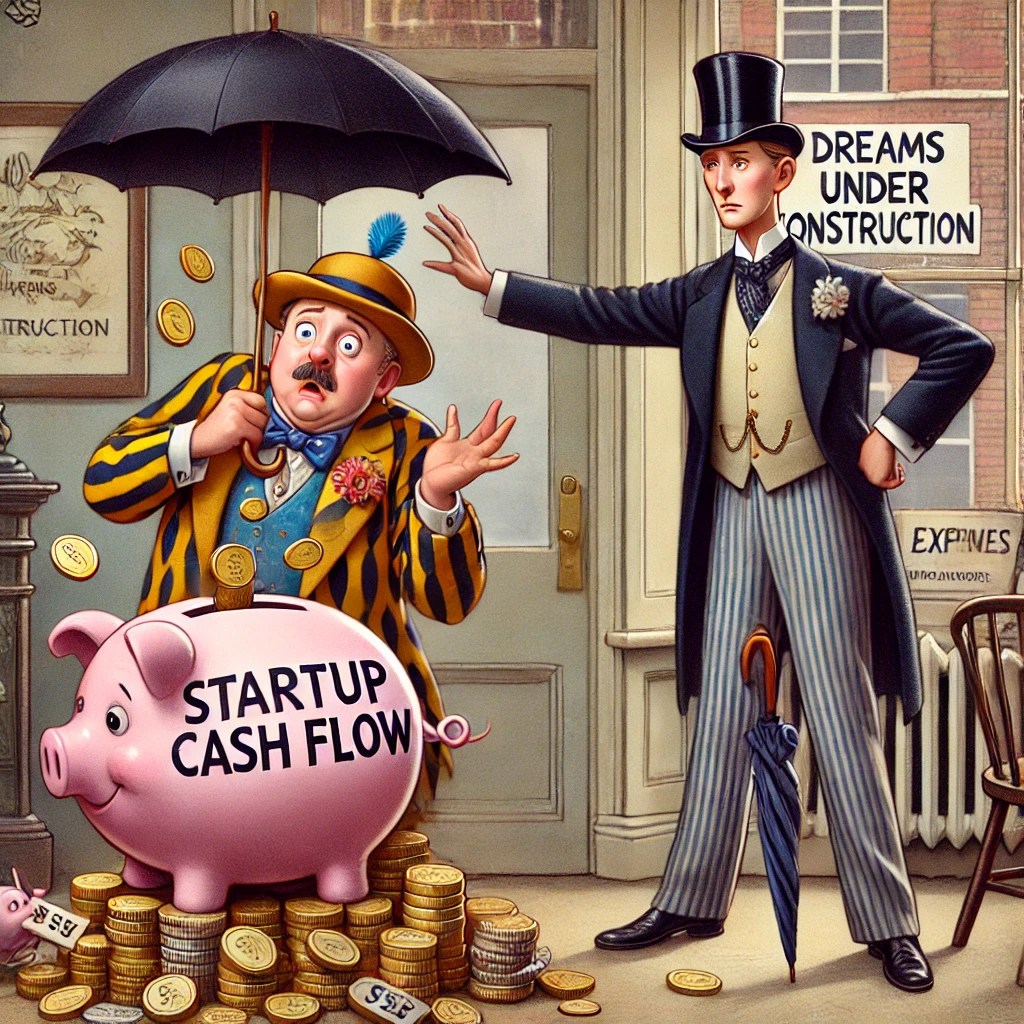

- Immediate Need for Cash Flow – Jeeves: Startups are often in dire need of funds. They are much like a gentleman caught short at a casino. They sell their products at unsustainably low prices to keep their operations afloat. Bertie: A sort of “anything to keep the lights on” approach? Jeeves: Quite so, sir. Unfortunately, this short-term thinking often undermines long-term success.
- Fear of Losing Customers – Jeeves: Many founders believe that charging too much will frighten off customers. They attempt to lure buyers with low prices, failing to realize that this strategy often attracts the wrong clientele. Bertie: The sort who take the biscuits but never buy a round at the pub?
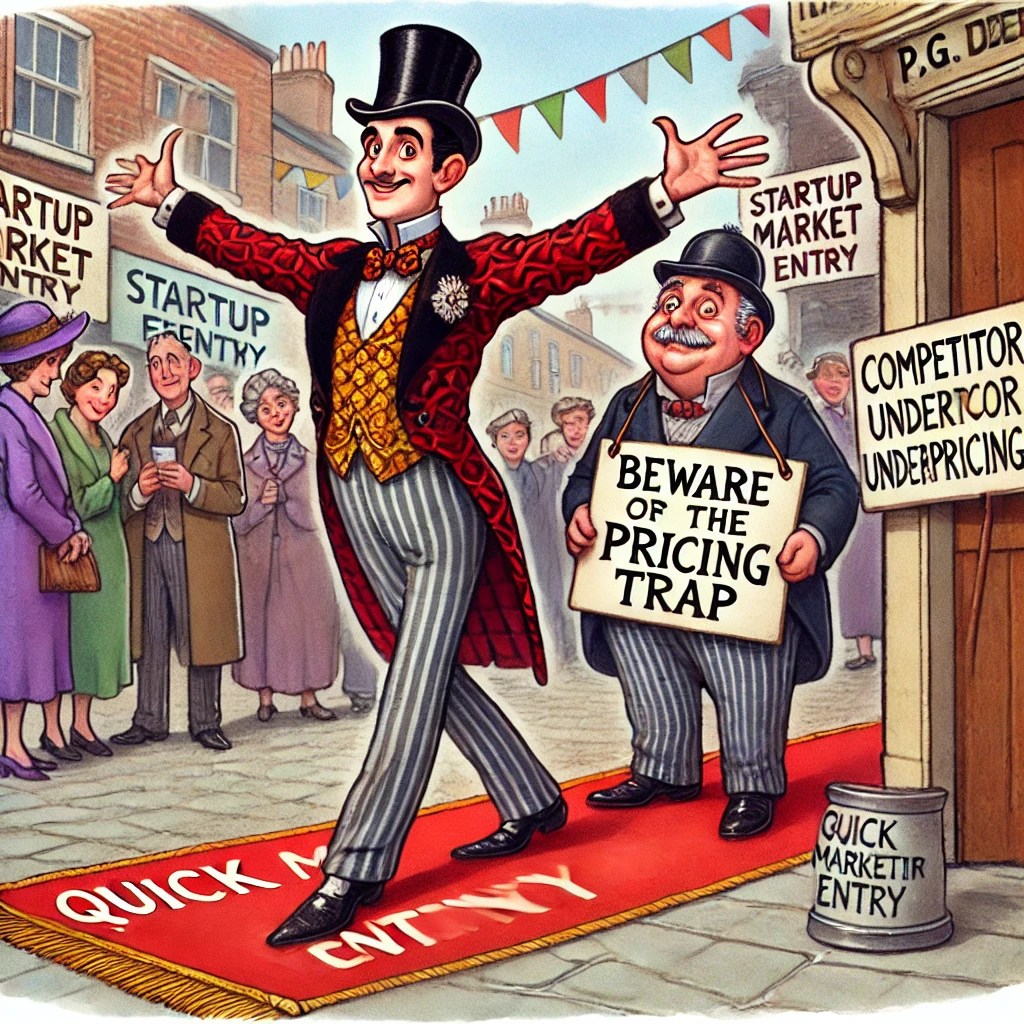
- Desire for Quick Market Entry – Jeeves: Startups, eager to outpace competitors, often undercut prices to establish a foothold. This is like racing headlong into a bog, sir. It creates a sticky situation that is difficult to escape. Bertie: Sounds dashed unpleasant, Jeeves.
- Lack of Confidence in Product Value – Jeeves: Founders often underestimate their product’s worth. They doubt whether customers will pay full price. This lack of confidence leads to unnecessary discounts. Bertie: Poor blighters. Someone should pat them on the back and tell them they’re jolly good at what they do.
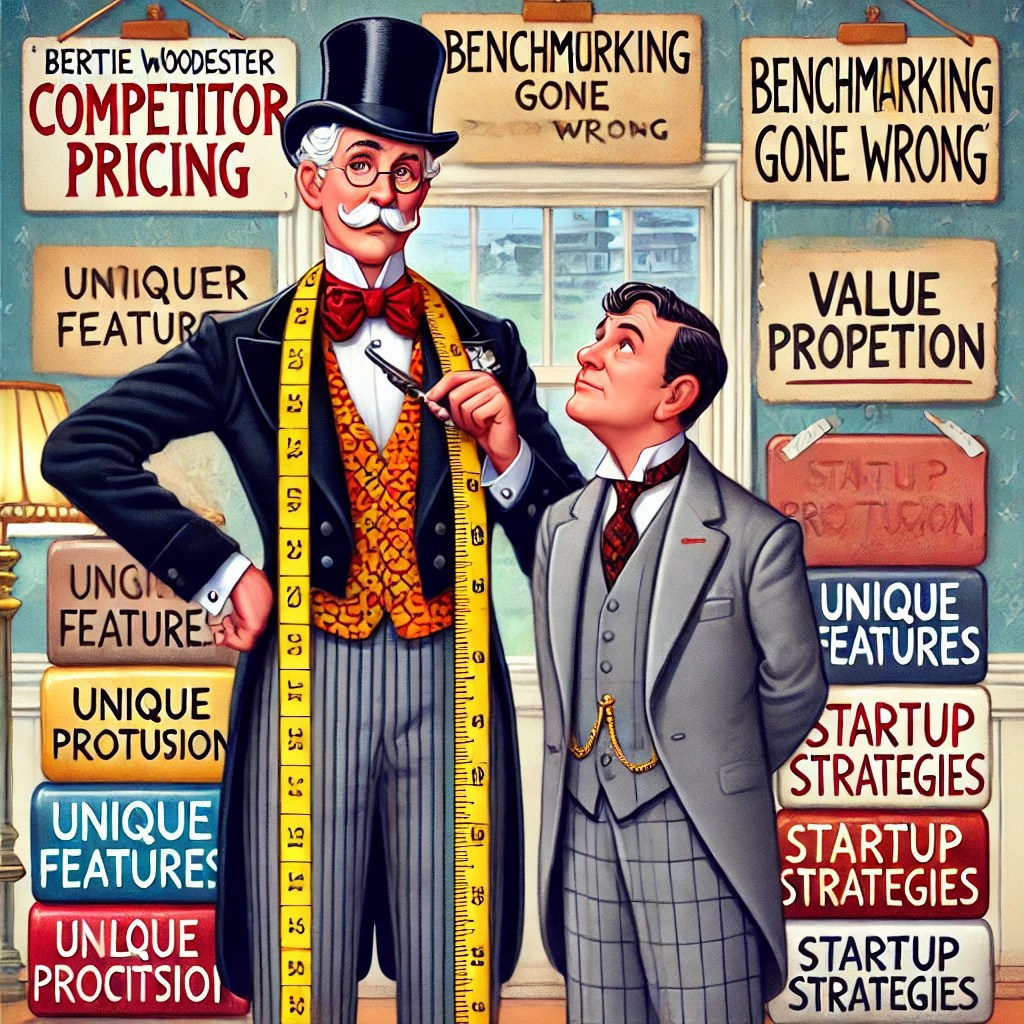
- Misguided Competitor Benchmarking – Jeeves: Startups often mimic competitors’ pricing without considering their unique value proposition. It is like wearing a bowler hat just because another chap does. One might have no business wearing one. Bertie: Dashed silly, if you ask me.
The Risks of Undervaluing
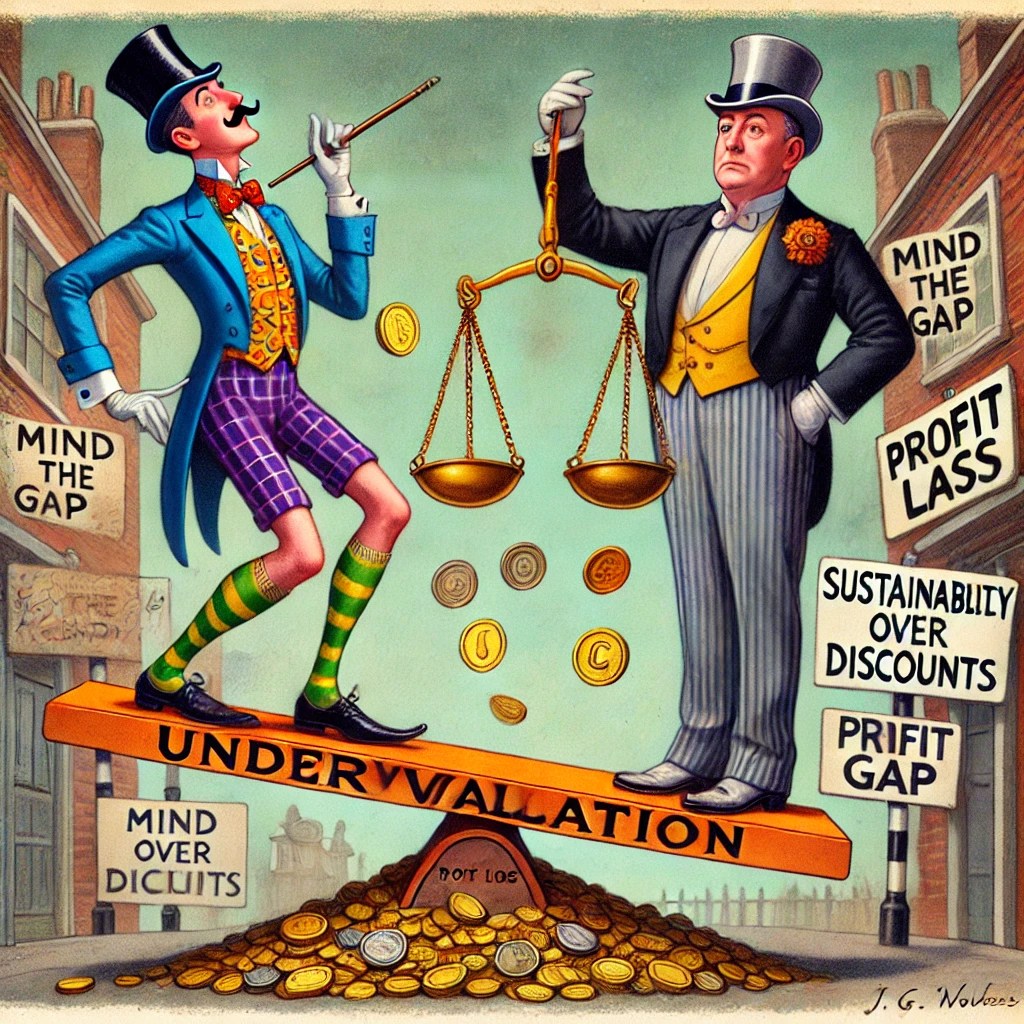
Jeeves: The consequences, sir, are numerous and severe:
- Resource Drain – Jeeves: Startups that sell below value exhaust their resources delivering products for meager returns. It is, metaphorically speaking, like rowing a boat with a teaspoon. Bertie: A frightful waste of effort.
- Perceived Lack of Quality – Jeeves: Customers equate low prices with poor quality, leading to diminished trust and slower adoption.
- Scaling Difficulties – Jeeves: Without sufficient margins, startups struggle to reinvest in growth, marketing, or hiring. Bertie: Like trying to fund a weekend at Cannes on the proceeds of a lemonade stand?
How to Avoid Undervaluing
Bertie: Righto, Jeeves, let’s turn this into actionable advice for our startup chums. Jeeves: With pleasure, sir.
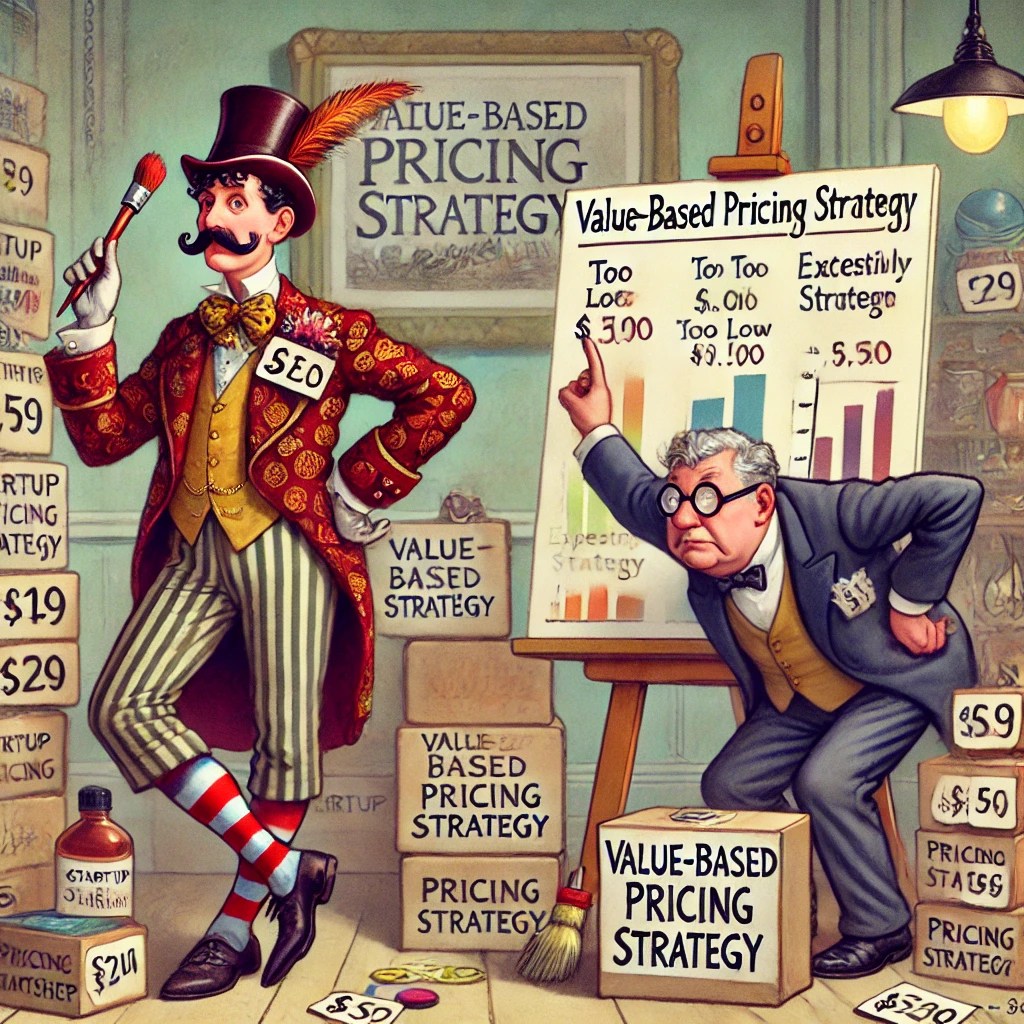
- Value-Based Pricing: Jeeves – Charge according to the value your product delivers, not merely its costs or competitors’ prices.
- Conduct Market Research: Jeeves – Understand your customers’ willingness to pay. Without this knowledge, one is navigating without a map.
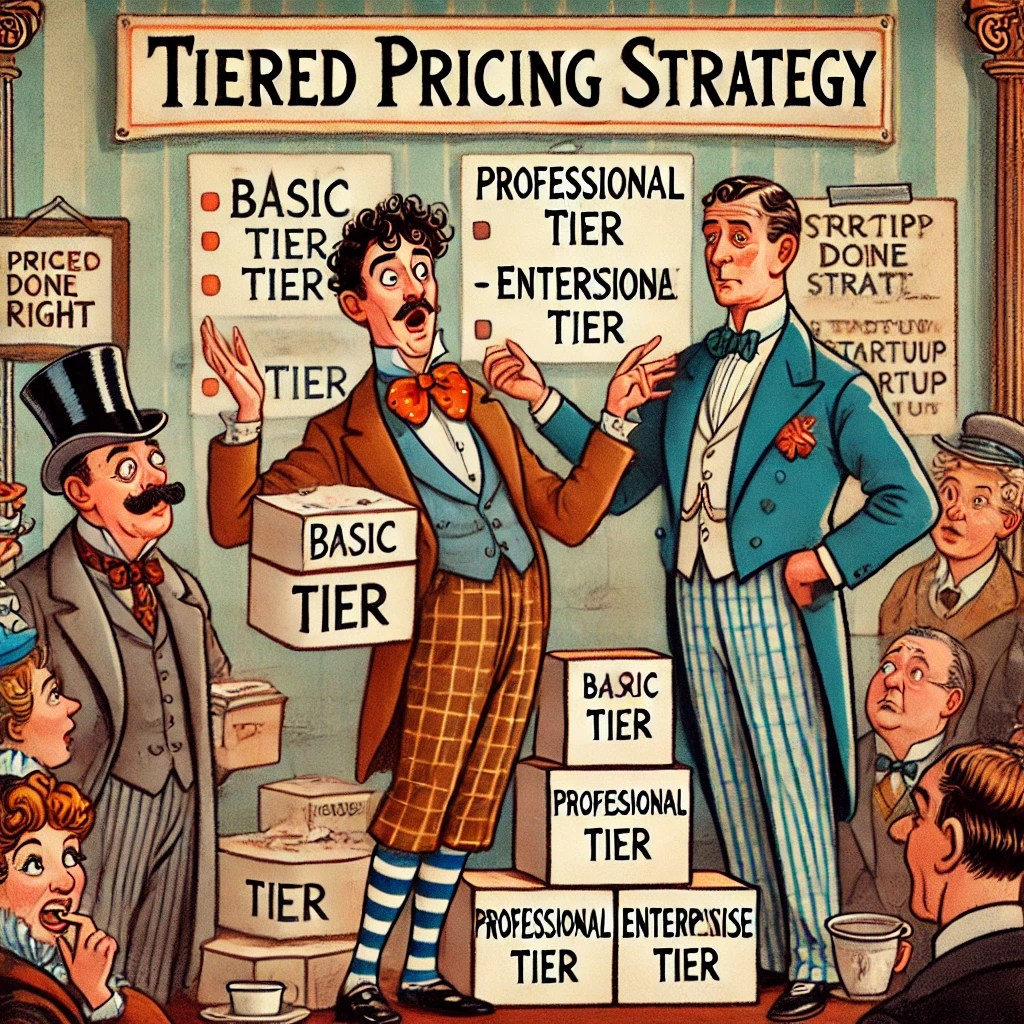
- Tiered Pricing – Jeeves: Offer plans for different customer segments. A basic tier provides affordability, while premium tiers capture more value. Bertie: Like serving tea in the front parlor and champagne in the drawing room?
How to Deal with Customers Who Demand Lower Pricing
Bertie: Jeeves, one hears tales of customers who, sensing a startup’s cash flow issues, demand lower prices. Dashed unscrupulous, if you ask me! How does one handle such bounders?
Jeeves: Indeed, sir, such situations are not uncommon. These customers, while understandably seeking value, may inadvertently exploit the startup’s vulnerability. Allow me to propose a few strategies to navigate these encounters with poise.


- Emphasize the Value of the Product – Jeeves: When faced with such demands, shift the conversation to focus on value instead of price. Highlight the benefits, unique features, and outcomes your product delivers. Customers must understand that the price reflects the tangible and intangible value they receive. Bertie: So, instead of groveling with a discount, one says, “Here’s why it’s worth every penny”Jeeves: Precisely, sir. A confident presentation of the product’s value often dissuades unreasonable demands.
- Offer Non-Monetary Incentives – Jeeves: If the customer remains insistent, offer alternatives that do not involve price reductions. You can provide extended trial periods. Consider giving additional support or exclusive access to upcoming features. Bertie: A sort of “Have a slice of cake, but the bakery’s not on sale”? Jeeves: An apt analogy, sir. This approach demonstrates goodwill without compromising the product’s perceived value.
- Use Tiered Pricing to Your Advantage – Jeeves: If your pricing strategy includes multiple tiers, guide the customers to a plan. Direct them to a lower-tier plan that meets their budget. Preserve premium features for higher-paying clients. Bertie: Ah, the old “Here’s a starter pack, but the deluxe set is where the action’s at” gambit? Jeeves: Precisely, sir. This ensures accessibility without undervaluing your offerings.
- Politely Decline Excessive Demands – Jeeves: Customers may make untenable demands. In these cases, politely declining is perfectly acceptable. Explain that the pricing is designed to ensure quality and sustainability, which benefits all customers in the long term. Bertie: So, one says, “I’m terribly sorry, but my principles and my pricing stand firm”? Jeeves: Quite so, sir. A measured yet resolute response often garners respect.
- Identify Red Flags and Move On – Jeeves: If the customer appears excessively price-sensitive, consider parting ways. Also, if they seem unreasonably demanding, it may be best to part ways amicably. Such clients often contribute to higher churn rates and disproportionate resource demands. Bertie: Like that fellow who always borrows money but never pays it back—best to avoid, eh? Jeeves: An apt observation, sir. Focus on customers who appreciate the product’s value and align with the startup’s goals.
The Pitfall of Effort vs. Revenue Misalignment
Bertie: Jeeves, there’s another thing that grates the nerves—servicing customers who pay peanuts but demand the entire circus. How does one tackle this bally unfair situation?
Jeeves: A most pertinent concern, sir. Serving customers at a price lower than your product’s value often results in a misalignment between effort and revenue. This mismatch can severely impact profitability. Allow me to elaborate.

- Disproportionate Effort for Minimal Returns – Jeeves: When a customer pays less than what the service or product is worth, resources needed to fulfill their needs do not change. The required resources remain constant. In some cases, these resources may even increase. This creates a disproportionate relationship where the cost of serving the customer exceeds the revenue they generate. Bertie: Like hosting a chap for dinner who devours every crumb and brings nothing but complaints? Jeeves: Precisely, sir. This leaves the startup depleted of resources without sufficient compensation, eroding profitability.
- Higher Support Demands from Low-Paying Customers – Jeeves: Lower-paying customers, sir, need more hand-holding. They often require more frequent support or additional services. This is crucial for them to feel they are receiving value. This not only drains resources. It also detracts attention from premium customers who contribute more significantly to the business’s bottom line. Bertie: So, one ends up running ragged for customers who don’t appreciate the effort? Dashed discouraging!
- Limited Room for Reinvestment – Jeeves: Margins are slim. This leaves little room for reinvestment in product development. There is also limited room for innovation or scaling operations. This creates a cycle where the business struggles to grow or improve its offerings. Bertie: Like trying to save for a yacht while spending every penny on repairing the old dinghy?
- Opportunity Cost of Serving the Wrong Customers – Jeeves: Every moment spent on a low-value customer is a moment not spent nurturing higher-value relationships. It’s also time not used to pursue more profitable opportunities. The long-term opportunity cost can be substantial. Bertie: So, while one is busy appeasing the bargain hunters, the big fish swim away?
The Solution: Set Boundaries and Price Strategically
Jeeves: To avoid such pitfalls, startups must ensure their pricing reflects the true cost of delivering their product or service. Establish clear boundaries for what is included at each price point. Polite but firm redirection is necessary for customers who demand excessive effort for minimal returns.
Bertie: Like saying, “This is what’s on offer, old bean, and it’s a jolly good deal already”?
Jeeves: Precisely, sir. By aligning pricing with effort, startups can protect their resources, maintain profitability, and ensure long-term sustainability.
Pricing Alone Cannot Buy Loyalty or Satisfaction
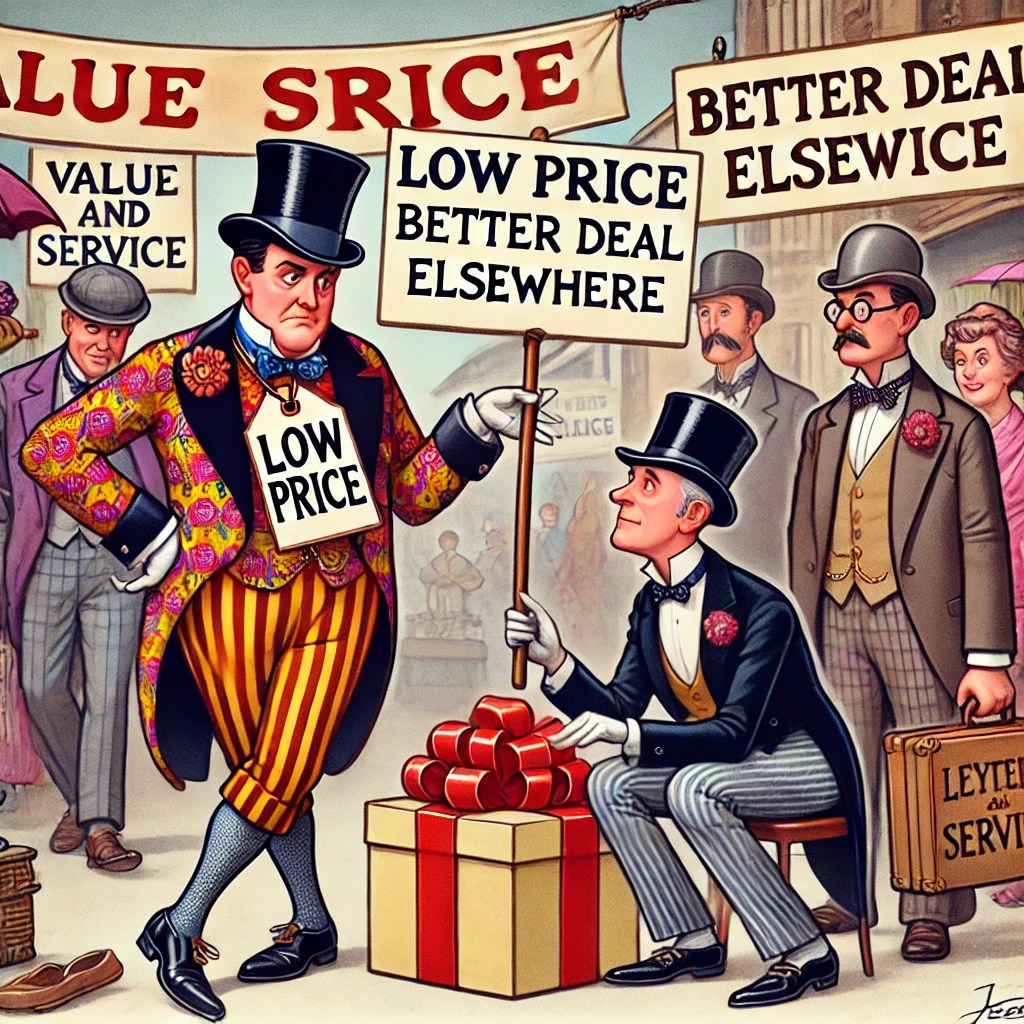
Bertie: Jeeves, one often hears chaps saying, “Lower prices will keep the customers happy forever.” Dashed naïve, if you ask me. Surely there’s more to loyalty than a bargain price?
Jeeves: Indeed, sir. While pricing can influence initial purchase decisions, it is rarely sufficient to secure long-term customer loyalty or satisfaction. Allow me to elaborate.
- Loyalty Comes from Value, Not Just Cost – Jeeves: Customers may be initially drawn to a low price. However, their loyalty depends on the value they perceive in your product. If the product fails to deliver on its promises, even the most budget-friendly pricing will not retain them. Bertie: So, it’s not just about offering the cheapest ticket to the show, but making sure the performance dazzles, eh?
- Satisfaction Depends on the Overall Experience – Jeeves: Multiple factors influence customer satisfaction beyond pricing. These include product quality, ease of use, support, and the emotional connection customers feel with the brand. Bertie: Like Aunt Dahlia always says, “It’s not just the beef wellington, Jeeves; it’s the ambiance and the service!”
- Price-Sensitive Customers Are Often Less Loyal – Jeeves: Customers attracted solely by low prices are often the quickest to leave. They switch when a competitor offers a marginally better deal. True loyalty is built on value, trust, and the unique advantages your product offers. Bertie: So, these bargain hunters jump ship at the first whiff of a cheaper ticket? Dashed ungrateful, if you ask me.
- Loyalty Requires Consistent Engagement – Jeeves: Building loyalty involves nurturing relationships through consistent communication, updates, and excellent customer support. Customers appreciate being treated as partners in success, not just buyers. Bertie: Like always sending a thank-you note after a jolly good evening—keeps the goodwill flowing, eh?
The Solution: Focus on Value and Relationships
Jeeves: Startups must recognize a key principle. While competitive pricing is important, delivering superior value is essential. Building meaningful relationships with customers is also crucial. Bertie: So, the motto is, “Price gets them in the door, but value and service make them stay”?
- Price-Sensitive Customers Are More Likely to Bail – Bertie: Jeeves, I’ve noticed something about these price-sensitive fellows. They’re the first to bolt when someone else dangles a cheaper offer. Dashed disheartening, don’t you think? Jeeves: Indeed, sir. Customers who are drawn primarily by low prices often lack loyalty. They are the quickest to leave when a competitor offers even the slightest discount. Allow me to explain further.
- Loyalty Is Rooted in Value, Not Price – Jeeves: Price-sensitive customers tend to view your product as a commodity. They do not see it as a solution. If they see a competitor offering a similar product at a lower price, they often switch without hesitation. They ignore the quality or benefits your product provides. Bertie: Like leaving a five-star hotel for a dodgy inn just because it’s a shilling cheaper? Madness!
- Price Wars Lead to Churn – Jeeves: Engaging with price-sensitive customers often initiates pricing wars. Startups must continually lower prices to retain these customers. This not only impacts profitability but also attracts more of the same fickle customers. Bertie: So, once you start chasing these bargain hunters, you’re on a slippery slope, eh? Jeeves: Precisely, sir. It is a race to the bottom.
- Long-Term Relationships Are Built on Value – Jeeves: Customers who prioritize value over price are more likely to remain loyal. Even when a competitor offers a discount, they appreciate the unique advantages your product provides. They are less inclined to switch for short-term savings. Bertie: So, the secret is to attract the chaps who stay for the whole symphony, not just the opening act?
- The Cost of Losing and Reacquiring Customers – Jeeves: When price-sensitive customers leave, startups face the dual burden of lost revenue. They also incur the cost of reacquiring new customers to fill the gap. This churn cycle creates instability and diverts resources from nurturing loyal clients. Bertie: And all because some bounder down the road knocked a penny off his widget. Dashed tiresome, Jeeves!
The Solution: Target Value-Oriented Customers
Jeeves: To avoid this cycle, startups must focus on attracting customers who value quality. They should also emphasize service and the unique benefits of the product. By emphasizing long-term relationships over short-term gains, startups can build a more stable and profitable customer base.
Bertie: So, the motto is, “Win the right customers, and the others can toddle off to the discount aisle”?
How Bootstrapping Shapes Pricing Strategies

Bertie: Jeeves, what about those plucky startups that bootstrap their way into the market? Surely, being strapped for cash puts a bit of a twist on the old pricing strategy?
Jeeves: Quite so, sir. Bootstrapped startups, relying on their own resources without external funding, often face unique challenges in pricing their products. Allow me to elucidate.
- The Pressure to Generate Immediate Revenue – Jeeves: Bootstrapped startups often prioritize cash flow to sustain operations. This urgency can cause founders to price products lower than their true value. They do this to attract customers quickly and cover essential expenses. Bertie: Like selling off the family silver to pay for the butler’s holiday? Seems a bit desperate, Jeeves. Jeeves: Indeed, sir. While it addresses short-term cash flow, it often undermines long-term profitability.
- Limited Cushion for Pricing Experiments – Jeeves: Startups with external funding can afford to experiment with pricing models. However, bootstrapped companies must tread carefully. A pricing misstep—too high or too low—can have immediate and severe consequences, given their constrained resources. Bertie: So, no grand leaps into the pricing unknown, eh? More like inching along a tightrope?
- The Need to Maximize Per Customer Revenue – Jeeves: Bootstrapped startups often focus on increasing revenue from each customer. This necessitates carefully structured pricing tiers and upselling strategies to ensure that customers contribute meaningfully to the business’s financial stability. Bertie: So, make sure each chap is pulling their weight on the revenue oars, what?
- Balancing Value with Affordability – Jeeves: Bootstrapped startups must strike a delicate balance between offering value and remaining competitive. Their pricing must reflect the product’s worth without alienating customers who may perceive them as an untested newcomer. Bertie: Tricky business, Jeeves. Like trying to impress Aunt Agatha while on a shoestring budget.
- Leveraging Community and Direct Sales – Jeeves: Bootstrapped startups often benefit from direct sales channels and community-driven marketing. These approaches reduce the need for heavy spending on customer acquisition, allowing founders to maintain sustainable pricing. Bertie: Ah, the old charm offensive—win them over with direct appeal and cut the middleman out entirely?
The Bootstrapped Solution: Strategic Pricing with a Long-Term View
Jeeves: To succeed, bootstrapped startups must adopt a pricing strategy that balances short-term survival with long-term scalability. This involves emphasizing value, crafting pricing tiers that cater to diverse customer segments, and building customer loyalty through exceptional service.
Bertie: So, it’s all about playing the long game while keeping the lights on in the meantime?
Jeeves: Exactly, sir. A measured approach ensures that bootstrapped startups can grow steadily without sacrificing their integrity or ambitions.
The End of Obscene Valuations: The Case for Early Profitability

Bertie: Jeeves, I say, whatever happened to those startups with valuations so high? The figures were astronomical. They made Aunt Dahlia’s betting slips look modest. Seems the bubble’s burst, what?
Jeeves: Quite so, sir. The era of exorbitant startup valuations was driven by unchecked investor enthusiasm. Now, there is a more prudent focus on profitability and sustainability. Allow me to expound.
- The Shift from Growth at Any Cost to Sustainable Growth – Jeeves: Investors no longer favor vanity metrics. They are unimpressed by user acquisition without monetization. Startups are now expected to demonstrate a clear path to profitability rather than relying on perpetual fundraising. Bertie: So, no more tossing money about like confetti at a wedding, eh? Dashed sensible, if you ask me.
- Macroeconomic Factors Have Tightened the Purse Strings – Jeeves: Economic conditions, sir. Rising interest rates and reduced liquidity have made capital more expensive. It is also harder to secure. Startups must now prove their ability to generate revenue independently to attract funding. Bertie: Ah, so the free-flowing champagne has dried up, and everyone’s back to plain old tea?
- Profitability Equals Resilience – Jeeves: A profitable startup is less reliant on external funding and can better weather economic downturns. Investors and customers alike favor companies that demonstrate financial independence and operational efficiency. Bertie: Like a chap who stands firm when the wind changes, instead of being blown about like a paper kite?
- Customers and Employees Seek Stability – Jeeves: Profitability is not merely a concern for investors. Customers and employees are more likely to commit to a company they perceive as stable and enduring. They avoid companies that are constantly teetering on the edge of financial uncertainty. Bertie: So, you’re saying no one wants to join the band on a sinking ship? Dashed understandable.
- Startups Must Prove Their Worth Early – Jeeves: Gone are the days of surviving on the promise of future profitability. Startups must now demonstrate their value quickly. Today, they must validate their business model and pricing strategy early to justify their existence. Bertie: Sounds like startups need to do the business equivalent of showing their homework, eh? No more bluffing?
The Solution: A Clear Focus on Profitability
Jeeves: To thrive in this new era, startups must adopt pricing and operational strategies that prioritize profitability. This includes setting realistic growth targets, pricing products to reflect true value, and managing resources judiciously.
Bertie: So, the motto is, “Make money, don’t just make noise”?
- Pricing Strategy and ROI for Investors – Bertie: Jeeves, I say, how does one keep the investor chappies happy? What should one’s pricing strategy be? They’re always banging on about returns on investment, aren’t they? Jeeves: Indeed, sir. A well-thought-out pricing strategy is crucial for achieving operational success. It also shows investors how their capital will generate robust returns. Allow me to elaborate.
- Pricing Drives Revenue Growth – Jeeves: Investors evaluate startups based on their ability to generate predictable and scalable revenue. A pricing strategy that reflects value and encourages customer retention demonstrates a clear path to growing revenue over time. Bertie: So, no slapdash prices scribbled on the back of a napkin? They want precision and a dash of ambition?
- Higher Margins Lead to Greater Profitability – Jeeves: A well-executed pricing strategy ensures profitability. Each sale significantly contributes to the bottom line. This not only boosts profitability but also reassures investors that the business can sustain itself without constant cash injections. Bertie: Ah, the old “making every shilling count” approach. Dashed clever, Jeeves.
- ROI Is Linked to Customer Lifetime Value – Jeeves: Investors are particularly interested in metrics such as customer lifetime value (CLV). They are also interested in customer acquisition cost (CAC). A strategic pricing model that maximizes CLV while keeping CAC manageable signals strong potential for returns. Bertie: So, the trick is to demonstrate to the investor fellows that each customer is a continuous gift. It’s something that keeps providing value, eh?
- Premium Pricing Enhances Perceived Value and Attracts Strategic Investors – Jeeves: Startups that position themselves as premium providers often attract discerning customers. They also attract investors seeking high-growth opportunities in niche markets. Bertie: Like Aunt Agatha investing in a top-notch racehorse instead of some dodgy donkey at the county fair?
- Pricing Demonstrates Market Validation – Jeeves: A successful pricing strategy shows that customers are willing to pay for the product. The pricing must be at profitable levels. This validation reassures investors that the product meets a real market need. Bertie: So, it’s all about proving one’s worth, like producing a glowing report card at school?
The Investor-Friendly Pricing Playbook
Jeeves: Startups must craft pricing strategies that balance short-term revenue with long-term value creation. Transparent communication of how pricing aligns with growth projections and ROI ensures investor confidence.
Bertie: So, make the investors feel they’re betting on a thoroughbred with a strong finish, not just a flashy start?
Conclusion: Jeeves’ Final Word
Bertie: Well, Jeeves, this has been an education and a half. Anything to add?
Jeeves: Only that pricing, sir, is both an art and a science. It requires confidence, research, and an understanding of one’s value. If startups embrace these principles, they may achieve both prosperity and longevity.
Bertie: I say, Jeeves, these strategies sound dashed effective. If one manages to handle such customers well, it’d certainly be a feather in the old cap!
Jeeves: Indeed, sir. Maintain confidence in your pricing. Focus on value. Startups can navigate these encounters and preserve their integrity. They also maintain sustainability.
 Sumir Nagar