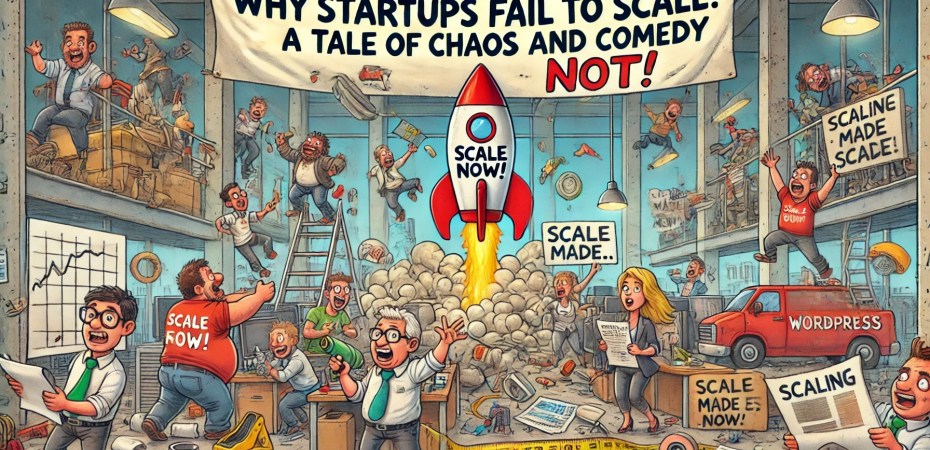
Scaling a startup is about more than merely securing funding or increasing market reach. It’s about transforming the organization’s internal operations, culture, and leadership to handle larger, more complex demands. However, many startups fail to scale due to internal dysfunctions like pay scale disparities, toxic culture, or the inability to exit bootstrapping mode. These issues prevent the organization from evolving, leaving it stuck in its startup phase for prolonged periods. Inability to scale only means that at some point it is bound to collapse. At best the business will continue to maintain the lifestyles of the promoters and not create wealth for all involved.
Let’s take a look at the humorous story of one Mr. Bertie Startupington and the lessons he learned after several missteps.
Scaling a startup, one must admit, is a bit like training a dog to do one’s taxes—ambitious, fraught with errors, and occasionally leaving everyone involved howling in frustration. Take our protagonist, the eager startup founder, Mr. Bertie Startupington, Esq. (not his real name, but a chap with a gift for getting into scrapes). Bertie learned the hard way that scaling isn’t just about ambition; it’s about avoiding the sort of blunders that turn promising ventures into tragicomedies.
Scaling a startup, as Mr. Bertie Startupington (not his real name, but certainly his spirit) discovered, is less about ambition and more about navigating an obstacle course of one’s own creation. Now Bertie, had this flair for dramatic missteps. Therefore he stumbled into nearly every conceivable pitfall, from clinging to a bootstrapping mindset to sparking office politics worthy of a Shakespearean tragedy.
Let us follow his journey, punctuated by laughable errors and surprising insights, as he learns the hard way that scaling a startup requires more than blind enthusiasm.
1. Stuck in Bootstrapping Mode: When Frugality Becomes Foolhardy

In the early days, Bertie embraced bootstrapping like a miser clutching his last shilling. He once argued that a spreadsheet and sheer optimism is an effective replacement for a HR system. But when the business began to grow, his reluctance to invest turned problematic.
The Wi-Fi was slower than a snail on holiday. The office chairs creaked ominously. The team worked with outdated tools that seemed more suited to a Victorian counting house. His justification? “Why spend when we can save?”
The breaking point came when the accounts software crashed during payroll week, prompting a junior accountant to mutter, “Is this a startup or a history exhibit?”
Lesson Learned: Scaling demands investment. Bootstrapping is splendid at the start, but one cannot conquer the world with duct tape and goodwill alone.
2. Pay Scale Disparity: The Case of the Irate Loyalist

Bertie’s knack for upsetting the apple cart reached new heights with his approach to salaries. Keen to attract new talent, he offered sky-high pay packages to fresh hires while steadfastly keeping loyal employees on their pre-inflation wages.
This disparity went unnoticed until a long-serving developer stormed into his office clutching a new hire’s offer letter. “Why,” the developer bellowed, “is the fresh-faced chap next to me earning more for less?” Bertie’s stammered response about “market conditions” was met with a frosty glare and the sound of a resignation letter being typed.
Lesson Learned: Pay scale parity matters. Reward loyalty, or be prepared for mutinous murmurs.
3. Toxic Culture: Divide, Rule, and Ruin

Bertie, with his laissez-faire approach to leadership, inadvertently created an office culture where politics reigned supreme. Teams bickered like rival families in a particularly melodramatic soap opera. His attempt to “spark competition” by dividing responsibilities backfired spectacularly, as departments devolved into warring factions.
One day, during an argument about who “borrowed” the last pack of printer paper, someone dramatically declared, “We’re on the brink of civil war!” Bertie, caught in the crossfire, offered tea as a peace offering.
Lesson Learned: Office politics belong in Westminster, not the workplace. Build a culture of collaboration and avoid the blame games.
4. Leadership Bottlenecks: The Micromanager-in-Chief

Ah, Bertie. A man who believed that if a task was worth doing, it was worth his direct supervision. His micromanaging tendencies meant that no project moved forward without his stamp of approval, which he gave with the speed of a sleepy tortoise.
When not micromanaging, he swung to the opposite extreme—delegating so recklessly that he once assigned an intern the task of forecasting next year’s financial projections. Said projections included a suspicious line item titled “Snacks, £50,000.”
Lesson Learned: Balance is key. Micromanagement stifles, over-delegation confuses, and neither leads to scalable success.
5. Ignoring Meritocracy: A Nepotistic Nightmare
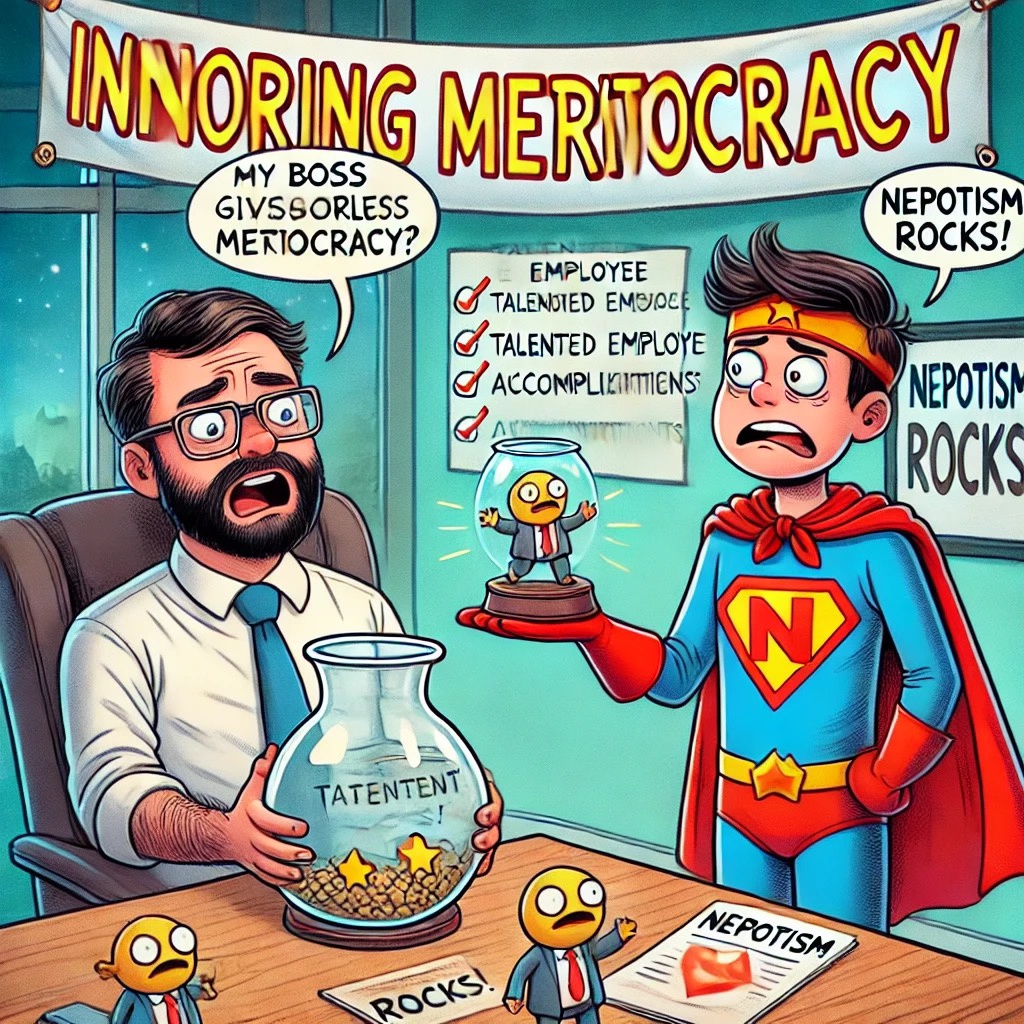
Bertie was a loyal soul, perhaps too loyal. His cousin Cyril, whose only experience was running the family fish stall, was appointed Head of Marketing. Meanwhile, genuinely talented employees were overlooked because they lacked Bertie’s fondness for cricket metaphors.
This glaring disregard for merit led to an exodus of frustrated high performers. Cyril, in his infinite wisdom, launched a marketing campaign featuring a haddock mascot—an idea that, unsurprisingly, did not resonate with tech clients.
Lesson Learned: Meritocracy is essential. Loyalty is admirable, but competence is non-negotiable.
6. Lack of Cultural Awareness: Lost in Translation

When Bertie decided to expand internationally, he approached the task with all the cultural sensitivity of a bull in a china shop. A product tagline that worked splendidly in the UK turned into an embarrassing faux pas in France.
In Japan, his attempt to impress clients with local puns resulted in blank stares and polite coughs. “I thought they’d find it hilarious,” Bertie lamented, to which his assistant replied, “Perhaps next time, leave the jokes to the professionals.”
Lesson Learned: Cultural awareness is a superpower in global markets. Research, adapt, and embrace diversity.
7. Grapevine Management: Gossip as Governance

Bertie’s penchant for eavesdropping on office gossip led to a series of spectacular missteps. He once fired an employee based on a rumour about tardiness, only to discover later that the “latecomer” was covering for someone else.
When confronted about his methods, Bertie sheepishly admitted, “It seemed efficient at the time.” The HR manager muttered something about “19th-century management styles” before storming off.
Lesson Learned: Gossip is no substitute for formal communication channels. Structure and transparency are far better foundations for decision-making.
8. Misaligned Management Styles: The Square Peg Conundrum
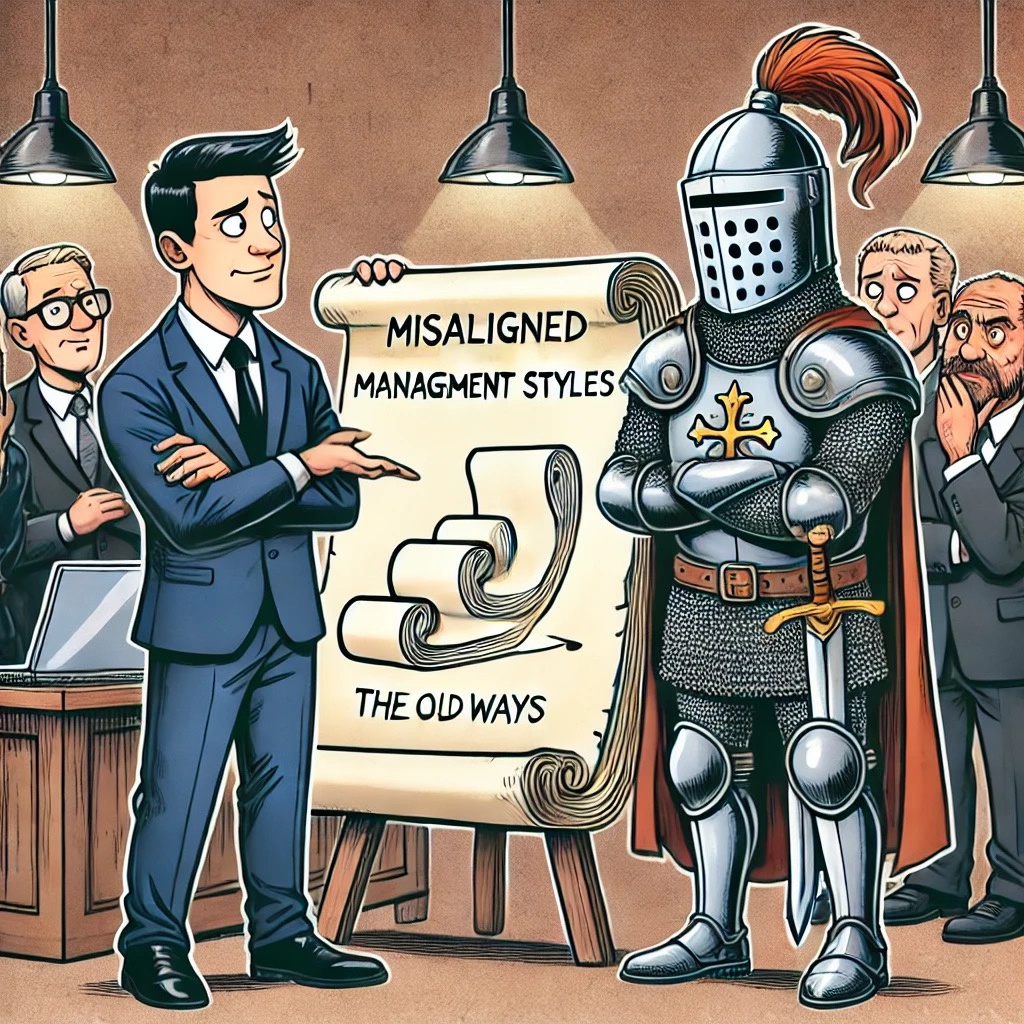
Hiring top talent was one of Bertie’s few strengths. But his insistence on applying old-school management styles to these modern professionals was his undoing. Talented hires expected independence; instead, they were micromanaged into oblivion.
One particularly ambitious developer quit after being told to follow a 27-step approval process for a single button design. Bertie, perplexed, remarked, “But surely they appreciate structure?”
Lesson Learned: Adapt management practices to empower skilled hires, or risk alienating the very people needed for growth.
9. Integrating New Hires with Core Teams: Clash of the Titans
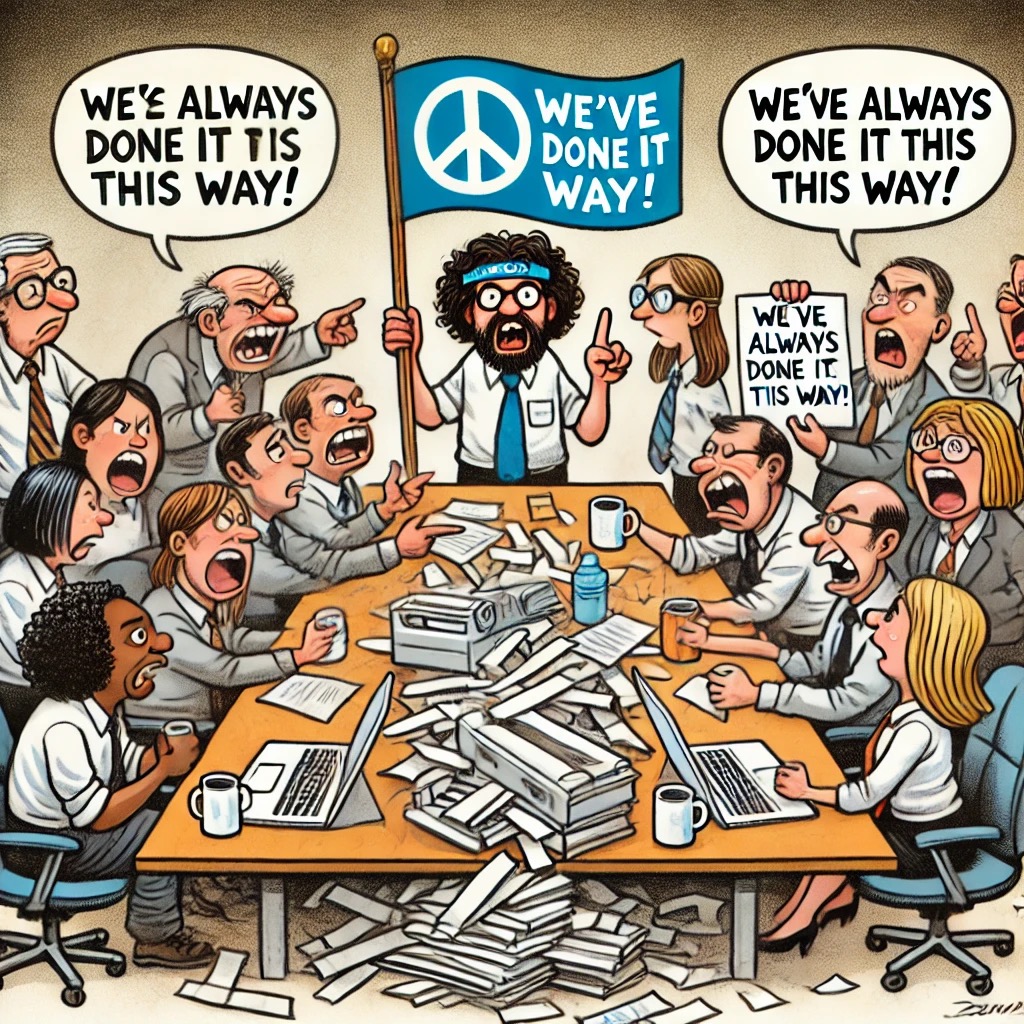
Bertie decided to bring in some big guns to strengthen his team. He assumed the existing staff would welcome the new hires with open arms. Alas, it turned out to be more like inviting a troop of lions into a nest of territorial meerkats.
The core team, loyal but prickly, viewed the new recruits as interlopers. The new hires, confident and brimming with innovative ideas, clashed with the “we’ve always done it this way” mindset of the original team. Meetings turned into battlegrounds, with one brave intern attempting to mediate by waving a whiteboard marker like a flag of surrender.
Lesson Learned: Successful integration requires structured onboarding, team-building exercises, and clear communication of roles to avoid turf wars.
10. Misuse of Relationships and Employee Enthusiasm: The Overcommitment Crisis

Bertie, being a charismatic chap, had a knack for inspiring enthusiasm among his team. Unfortunately, he also had a habit of mistaking eagerness for invincibility. Employees keen to impress were handed Herculean tasks, such as managing three projects simultaneously while also organizing the company’s annual picnic.
When one overworked employee finally snapped and declared, “I haven’t slept in three days, but at least the picnic’s catering is sorted!” Bertie realized he might have overdone it. Adding to the chaos, Bertie’s tendency to reward loyalty over skill resulted in promotions that left the office hamster better qualified for the role.
Lesson Learned: Appreciate enthusiasm, but don’t exploit it. Match tasks to skills and reward effort with fairness, not burnout.
Bertie Startupington’s tale is a lesson for us all. Scaling a startup is no small feat, and avoiding these common pitfalls is essential for success. With humour, self-awareness, and the willingness to adapt, any founder can learn from their mistakes—and perhaps avoid some of Bertie’s more colourful blunders.
So, dear reader, take heed. Invest wisely, reward loyalty, and for heaven’s sake, avoid the haddock mascots. Cheers to your scaling journey—may it be more soufflé than stew!
Scaling a startup requires more than just external opportunities. It demands fixing internal inefficiencies and fostering a culture of transparency, meritocracy, and growth. From addressing pay scale parity to transitioning out of bootstrapping mode, startups must evolve their practices to build sustainable growth.
Remember: Internal barriers can make or break a scaling journey. Tackle them head-on, and the path to success becomes far clearer.
 Sumir Nagar