Rising from Adversity: A Playbook to Overcome Life’s Toughest Challenges.
Rising from Adversity
Life is an unpredictable journey filled with highs and lows, triumphs and setbacks. Adversity is not just an occasional hurdle, it is a fundamental part of our personal and professional evolution. Yet, despite its inevitability, formal education rarely prepares us for these real-life struggles.
Schools and universities teach us technical skills, theories, and formulas. However, more often than not they overlook the essential lessons of resilience, emotional intelligence, and adaptability. These are the very skills needed to navigate life’s toughest moments.
While we often attempt to separate our work struggles from personal hardships, the reality is that they are deeply intertwined. A career setback can shake our confidence beyond the office. Personal challenges can also impact our ability to perform at our best. And yet, no textbook or lecture truly equips us for the emotional toll of failure, rejection, or uncertainty.
But here’s the truth: adversity is not the enemy. It is a teacher, shaping our resilience, patience, and character. We must learn to overcome setbacks through experience. Managing emotions and turning challenges into opportunities cannot be taught in a classroom.
Because in the end, the struggles we overcome become the foundation of the person we are meant to be. And the greatest lessons in life are the ones we teach ourselves.
In this article, we will explore the different types of adversities people face. We will examine how professional and personal struggles intricately influence each other. Most importantly, we will discuss practical strategies to develop the life skills that education often neglects.
The Failure of Formal Education in Preparing Us for Adversity
Since formal education doesn’t teach resilience, we must train our minds, develop problem-solving skills, and build emotional strength ourselves.
No one teaches resilience, financial literacy, or emotional intelligence, even though these are crucial for overcoming adversity.
Universities focus on theory over adaptability, but life is chaotic and unpredictable.
Schools and Universities Teach Theory, Not Resilience
Most educational systems focus on academic knowledge—math, science, history—but not on handling real-world setbacks. There are no classes on emotional resilience, financial hardship, or overcoming failure—yet these are the most common struggles people face. Many students graduate with degrees but have no idea how to deal with rejection, job loss, or unexpected life disruptions.
The Professional Curriculum is Designed for Predictability, But Life is Chaotic
Business schools teach strategy but not how to handle a failing business. Law schools teach litigation but not how to cope with personal injustice. Medical schools teach how to save lives but not how to process grief when a patient dies. The focus is on predictable systems, but real life is filled with uncertainty, failure, and setbacks.
The Modern Workplace Prioritizes Skills Over Mental Strength
Employees are trained in technical skills, company policies, and performance metrics. However, they are not taught how to handle burnout, workplace toxicity, or professional rejection. Many people lose jobs due to mental exhaustion, workplace politics, or fear of failure, not just lack of skills. Formal training does not prepare individuals for financial instability, entrepreneurial risks, or navigating career transitions.
Why This Gap Leaves People Struggling
When adversity strikes—whether personal or professional—most people don’t have a structured approach to handle it. Society glorifies success and achievement, but does not normalize failure, loss, or hardship—which are inevitable parts of life. Without training in resilience, many people crumble under pressure, feel isolated in their struggles, or make destructive decisions.
What’s Missing from Formal Education?
What Schools Teach
What We Actually Need in Life
How to solve equations
How to solve life crises
How to pass exams
How to overcome failure
Professional skills
Emotional resilience & adaptability
History of past leaders
How to lead oneself in tough times
How to write essays
How to communicate during adversity
How to get a degree
How to navigate financial setbacks
What Truly Prepares You for Adversity?
Since schools don’t teach resilience, people must learn through experience, self-education, and personal development. Here are the real-life skills that help people overcome adversity:
Mental Resilience & Emotional Strength
Understanding that failure is part of growth.
Training the mind to adapt instead of panic.
Building habits that support a strong mindset (meditation, reflection, mindfulness).
Self-Awareness & Emotional Intelligence
Recognizing emotions and learning to respond instead of react.
Understanding personal strengths and leveraging them in adversity.
Practicing self-reflection to avoid destructive patterns.
Problem-Solving & Adaptability
Instead of focusing on “what went wrong,” shifting to “how can I fix this?”
Seeing change as an opportunity rather than a threat.
Learning to pivot and try new strategies when old ones fail.
Social & Relationship Skills
How to ask for help and build a strong support system.
The ability to handle relationship conflicts without emotional breakdowns.
Learning to communicate effectively in times of crisis.
Financial Literacy & Crisis Management
Knowing how to budget, save, and invest for financial security.
Learning to manage debt and recover from financial loss.
Developing multiple income streams to prevent over-reliance on a single job.
Adversities in Professional and Personal Life – A Deep Dive
Perhaps examining these adversities more closely will help us. This allows us to tackle them in the best manner possible.
Professional Adversities
The workplace is full of challenges that can shake confidence and hinder progress. Some common professional adversities include:
Career Stagnation – Feeling stuck in a job with no growth opportunities.
Job Loss – Sudden layoffs or termination can leave one feeling lost and financially stressed.
Toxic Work Environment – Dealing with office politics, difficult colleagues, or unsupportive management.
Work-Life Imbalance – Long working hours leading to burnout and lack of personal time.
Failure & Rejection – Missing out on promotions, business deals, or entrepreneurial setbacks.
Personal Adversities: Life outside of work brings its own set of struggles, often deeply affecting our mental and emotional well-being. Common personal adversities include:
Health Issues – Physical illnesses, mental health struggles, or chronic conditions.
Relationship Struggles – Breakups, divorces, family conflicts, or toxic friendships.
Financial Hardships – Debt, unexpected expenses, or loss of financial security.
Self-Doubt & Fear – Feeling unworthy, lacking confidence, or struggling with personal purpose.
Grief & Loss – Coping with the loss of a loved one or personal dreams.
How Professional and Personal Adversities Impact Each Other
Life is not compartmentalized. Adversity is rarely confined to one area of life. A crisis in personal life can spill into professional performance, while workplace struggles can drain personal joy and relationships. Challenges in one area inevitably affect the other. Adversity, whether personal or professional, seeps into daily life in ways we may not immediately recognize. Recognizing this connection is key to managing adversity holistically. Here’s how different struggles can impact everyday routines:
Work Stress Can Lead to Personal Struggles
Long working hours can cause exhaustion, reducing time and energy for family, health, or hobbies.
A toxic work environment can lead to emotional stress, making it difficult to maintain positive relationships.
Financial instability from job loss can create anxiety, affecting personal peace and decision-making.
Personal Struggles Can Affect Professional Performance
Health issues, whether physical or mental, can impact focus, productivity, and work efficiency.
Relationship conflicts can lead to emotional distress, reducing motivation and increasing workplace mistakes.
Financial worries at home can make career decisions more stressful, leading to poor judgment.
The Cycle of Stress and Burnout
When professional stress impacts personal well-being and vice versa, a cycle of burnout begins.
A stressful job leads to neglecting personal life.
Personal life suffers, causing anxiety and unhappiness.
That emotional burden returns to work, affecting performance and further worsening professional challenges.
Breaking this cycle requires a conscious effort to address both personal and professional adversities holistically.
How Adversity Impacts Day-to-Day Life
Adversity doesn’t exist in isolation. It affects daily routines and mental health. It also impacts medical health. It clouds clarity and focus. Adversity impairs decision making. It impacts energy levels and overall well-being.
Type of Adversity
Impact on Daily Life
Career Stagnation
Lack of motivation, disengagement, and a sense of purposelessness.
Anxiety, reduced social life, difficulty meeting basic needs.
Self-Doubt & Fear
Hesitation in decision-making, procrastination, low self-esteem.
Grief & Loss
Emotional numbness, disrupted sleep, social withdrawal.
Coping Mechanisms – During Adversity
People develop different ways to cope with adversity—some healthy, some harmful. Here’s a look at how individuals typically respond to various challenges:
Unhealthy Coping Mechanisms
Avoidance – Ignoring the problem instead of addressing it.
Self-Blame – Internalizing failure as personal inadequacy.
Comparing with Others – Feeling even more defeated when seeing others succeed.
Giving Up – Believing that further attempts are pointless.
Destructive Habits – Overeating, excessive alcohol consumption, or social withdrawal.
Healthy Coping Mechanisms
Analyzing What Went Wrong – Identifying mistakes and areas for improvement.
Seeking Feedback – Asking mentors or trusted individuals for an outside perspective.
Developing a New Strategy – Adjusting the approach rather than repeating the same methods.
Building Mental Toughness – Strengthening resilience through self-discipline and reflection.
Practicing Patience – Accepting that success often takes longer than expected.
Career Stagnation
Unhealthy Coping: Staying in a comfort zone, blaming external factors, disengagement.
Healthy Coping: Seeking mentorship, upskilling, exploring new career paths.
Job Loss
Unhealthy Coping: Isolation, overthinking, reluctance to apply for new jobs.
Healthy Coping: Networking, learning new skills, considering freelancing or entrepreneurship.
Healthy Coping: Practicing self-affirmations, setting small achievable goals, working with a mentor.
Grief & Loss
Unhealthy Coping: Suppressing emotions, prolonged grieving, isolating from loved ones, inability to feel true emotions, unhealthy distractions (alcohol, excessive work).
Healthy Coping: Allowing reasonable time to grieve, seeking emotional support, engaging in healing activities, establishing meaningful emotional relationships.
Strategies to Overcome Adversity in Both Areas
Adversity can be a stepping stone rather than a stumbling block. Instead of seeing difficulties as roadblocks, reframe them as opportunities to learn, grow, and adapt. Ask yourself:
“What is this teaching me?”
Focus on solutions rather than problems.
Understand that setbacks are temporary.
Develop a Resilient Mindset
Reframe adversity as an opportunity. Every challenge brings lessons for growth.
Focus on solutions, not just problems. Ask, “What steps can I take to improve this situation?”
Practice gratitude. Even in tough times, recognizing small positives can shift perspective.
Strengthen Emotional and Mental Resilience
Resilience is the ability to bounce back from setbacks. It’s a skill that can be developed over time.
Manage stress through mindfulness, meditation, or journaling.
Strengthen self-awareness. Recognize your emotions but don’t let them control you.
Seek therapy or coaching when facing overwhelming challenges.
Surround yourself with supportive people who uplift you rather than drain you.Seek guidance from mentors, friends, or support groups.
Set Clear Boundaries Between Work & Personal Life
Develop a Strong Personal Foundation. A stable personal life provides the emotional strength needed to navigate professional difficulties.
Define working hours and avoid taking work stress home.
Prioritize personal time—spend quality moments with loved ones.
Say no when needed to avoid unnecessary professional burdens that impact personal peace.
Invest in relationships. Strong personal connections act as a support system in tough times.
Cultivate hobbies and passions. Engaging in fulfilling activities helps maintain balance.
Maintain Physical Health to Support Both Areas
Regular exercise improves both mental clarity and emotional balance.
Healthy eating fuels energy and reduces the impact of stress.
Adequate sleep ensures better decision-making and emotional stability.
Learn to Adapt and Embrace Change
Change is constant. The ability to adapt quickly is a crucial survival skill in both work and life. Master the Art of Adaptability.
Be open to new opportunities. Sometimes, losing a job can open the door to a better one.
Develop a learning mindset. Upskill, read, and be open to growth.
Embrace uncertainty. The unknown can be frightening, but it can also lead to great rewards.
If facing job loss, explore new skills or career paths.
If struggling in relationships, focus on communication and self-growth.
If personal loss occurs, allow yourself time to heal while keeping hope alive.
Take Action and Set Clear Goals
Action is the antidote to adversity. When faced with challenges:
Break down the problem into manageable steps.
Set realistic goals and timelines.
Celebrate small wins to build momentum.
Seek Help and Professional Guidance
If struggling with mental health, seek therapy or counseling.
For career guidance, find a mentor or coach.
If facing financial struggles, consult a financial planner.
Professional mentors can help navigate career setbacks.
Therapists or life coaches can offer emotional support and clarity.
Close friends and family can provide encouragement during tough times.
There’s no shame in asking for help—everyone needs support at some point.
Build Financial Stability for Peace of Mind
Create a financial safety net to handle unexpected career shifts.
Avoid overworking solely for money—find a balance between financial goals and well-being.
Invest in skills and education to open up more career opportunities.
The Power of the Mind in Overcoming Adversity
The human mind is the most powerful tool in overcoming adversity. How we perceive challenges determines how we respond to them. A strong mindset can turn obstacles into opportunities. Your mind can either by your greatest friend or worst enemy.
The Role of Mindset in Resilience
People with a growth mindset see failures as lessons rather than defeats.
A solution-oriented mindset helps focus on what can be controlled rather than dwelling on the problem.
Practicing self-awareness prevents negative thoughts from taking over decision-making.
The Science of Mental Strength
The brain rewires itself based on repeated thoughts and behaviors. If you train your mind to see challenges as opportunities, resilience increases. Neuroplasticity proves that mental strength can be developed through practice and repetition.
Techniques to Strengthen the Mind
Mindfulness and Meditation – Helps in stress reduction and emotional balance.
Visualization – Imagining success before achieving it increases confidence.
Affirmations – Positive self-talk changes thought patterns.
Gratitude Practice – Shifts focus from lack to abundance.
How Mental Strength Helps in Different Adversities
During Job Loss – Helps maintain confidence and resilience in job searching.
During Relationship Struggles – Aids in emotional regulation and communication.
During Financial Stress – Encourages strategic thinking rather than panic.
During Health Issues – Enhances recovery and emotional well-being.
Training the Mind to Overcome Fear and Doubt
Challenge Negative Thoughts – Ask, “Is this really true?” when self-doubt arises.
Reframe Fear as Excitement – Instead of thinking, “I’m afraid to fail,” say, “I’m excited to try.”
Adopt a Long-Term Perspective – Remember that today’s struggles are temporary.
Your mind is your strongest weapon when facing adversity. The ability to reshape your thoughts and perceptions can make the difference between staying stuck and making a breakthrough.
How to Handle Repeated Failure When Nothing Seems to Work
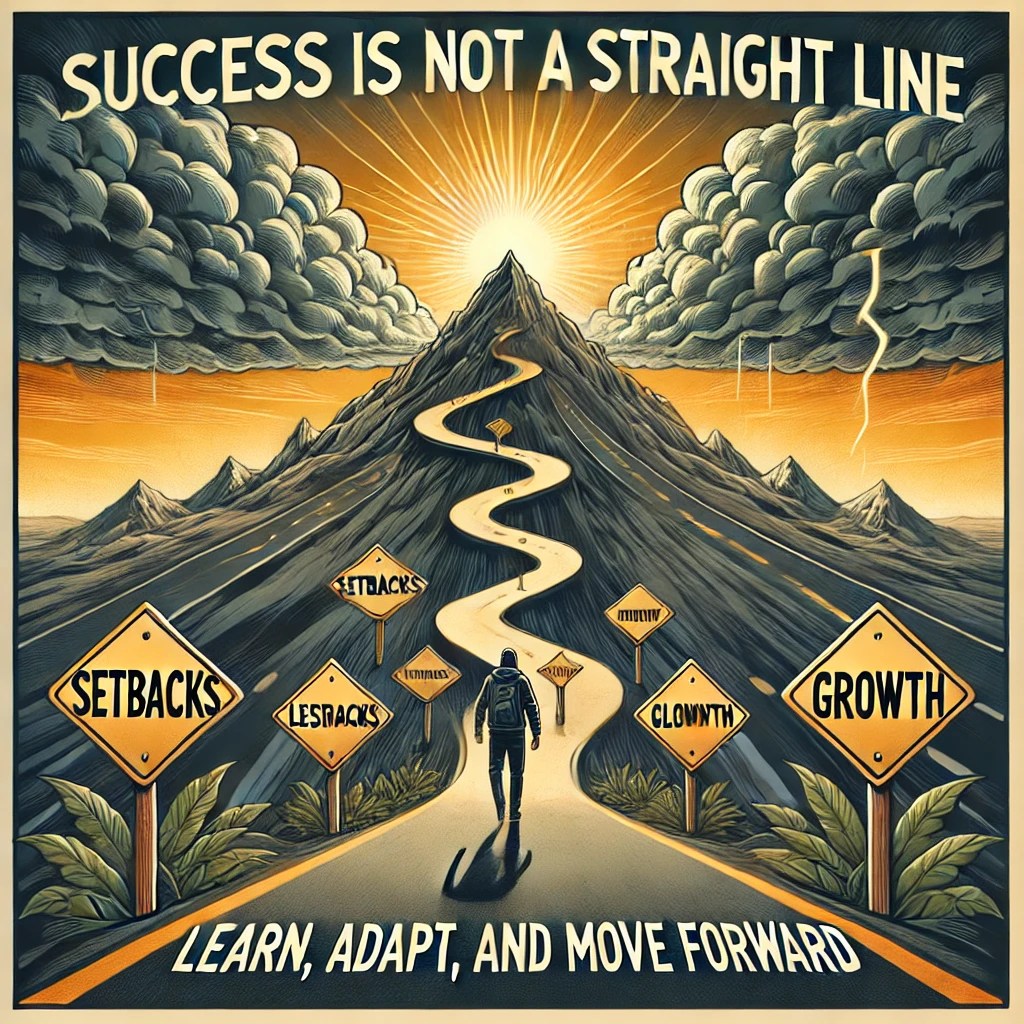
Success is never a linear path—it is a journey filled with highs, lows, detours, and unexpected turns. Every setback you face is temporary; it does not define your worth or dictate your future. Instead of fearing failure, embrace it as a teacher, guiding you toward growth and resilience. The key to overcoming adversity is not avoiding difficulties. It is learning from them. Adapt and move forward with greater wisdom and strength.
Acceptance: Embracing Your Current Reality as the First Step to Change
One of the hardest yet most crucial steps in overcoming adversity is accepting your current reality. People often get stuck. They fall into denial, blame, or wishful thinking, which prevents them from making the changes necessary to move forward.
The Power of Acceptance
Acceptance does not mean giving up—it means acknowledging what is real so that you can start making real changes.
When you stop fighting reality, you free up mental energy to focus on solutions instead of dwelling on the problem.
Acceptance allows you to move from reaction mode to action mode.
Why People Struggle with Acceptance
Denial Feels Safer – Facing reality can be painful, so people often avoid it.
Blame is Easier – It’s easier to point fingers at external circumstances than to take responsibility.
Hope Can Become an Illusion – Holding onto unrealistic expectations keeps people stuck in the past instead of moving forward.
How to Accept Your Reality & Move Forward
Step 1: Acknowledge the Situation Honestly
Be brutally honest with yourself: What is my situation right now?
Stop sugarcoating or downplaying challenges.
If you’re unemployed, acknowledge it. If you’re in debt, accept it. If you’re in a toxic situation, recognize it.
Step 2: Separate Emotion from Facts
Feeling frustrated, angry, or sad is natural—but don’t let emotions cloud your judgment.
Example: Instead of saying, “I’m a failure because I lost my job,” reframe it as, “I lost my job. I now need to find ways to recover.”
Step 3: Identify What’s Within Your Control
Ask yourself: What can I change? What can I influence?
Focus on what you can do today rather than worrying about things beyond your control.
Step 4: Let Go of the “Should Have Been” Mindset
Stop thinking about what should have happened and start focusing on what you can do now.
Example: Instead of saying, “I should have saved more money,” say, “I will start managing my money wisely.” Start this from now on.
Step 5: Make Peace with Imperfection
Life doesn’t always go as planned, and that’s okay.
Understand that setbacks are part of growth, not signs of failure.
Step 6: Take Small Steps Forward
Acceptance is powerful, but action is what creates change.
Start small—if you’re in debt, create a budget. If you’re jobless, apply for one job today. If you’re unhealthy, take a short walk.
Reframing Failure as Data, Not Defeat
View each failure as feedback, helping refine your approach.
Ask, “What can I learn from this?” rather than “Why does this always happen to me?”
Remember that every successful person has faced setbacks before breakthroughs.
Mental Strength & Emotional Resilience
Train your mind to expect challenges and prepare for them.
Understand that repeated rejection doesn’t define your worth—it simply means the right opportunity hasn’t arrived yet.
Strengthen self-discipline through daily affirmations and visualization.
Discipline over motivation – Show up even when you don’t feel like it.
Detach emotions from failure – See problems logically, not just emotionally.
Surround yourself with resilient people – Learn from those who have overcome adversity.
Shifting from Victim Mentality to Ownership Mentality
Instead of thinking, “Life is against me,” shift to, “I control my response to this situation.”
Focus on what’s within your control: skills, knowledge, networking, persistence.
Change Your Approach, Not Just Your Effort
When Applying for Jobs and Getting No Responses
Refine Your Resume & Cover Letter – Tailor each application to the specific job.
Leverage Networking – Many jobs are filled through referrals rather than applications.
Expand Your Search – Consider different industries or roles that align with your skills.
Upskill – Learn new technologies or skills that increase marketability.
Follow Up – Reach out to recruiters to show initiative and seek feedback.
When Trying to Start a Business but Failing Repeatedly
Analyze Past Failures – Identify why previous attempts didn’t succeed.
Test Small Before Scaling – Start with a low-cost version of your idea.
Seek Mentorship – Find experienced entrepreneurs who can provide guidance.
Adjust Your Model – If one strategy doesn’t work, pivot and try another.
Stay Financially Prudent – Avoid risking everything on a single business attempt.
Focus on Small Wins, Not Just Big Goals
Instead of waiting for a major breakthrough, focus on small daily improvements.
Micro-actions—like applying for one job a day, exercising for 10 minutes, or networking with one person—build momentum.
Break large problems into smaller, manageable steps.
Reframe Rejection as Redirection
Not getting a job? It means a better opportunity is ahead.
A failed relationship? It’s making space for the right person.
A financial setback? It’s teaching money management skills that will serve you long-term.
Every “no” brings you closer to the right “yes.”
Stay Open to New Learning
Read about resilient individuals—how did they handle failure?
Listen to podcasts and talks on mindset and adaptability.
Attend workshops or coaching sessions that teach real-world problem-solving.
When Facing Personal Setbacks & Emotional Burnout
Seek Support – Talk to trusted friends, family, or a therapist.
Adopt New Perspectives – Read biographies of successful people who overcame struggles.
Take a Break & Reset – Sometimes stepping back helps in seeing the bigger picture.
Invest in Self-Care – Prioritize physical and mental well-being.
When Financial Recovery is Taking Too Long
Reevaluate Spending – Identify areas where costs can be cut.
Diversify Income Sources – Consider freelance work, side businesses, or investments.
Seek Financial Advice – Consult experts on debt management and wealth-building.
Practice Patience – Financial recovery is often slow but consistent effort pays off.
When Relationships Keep Failing
Reflect on Patterns – Identify recurring issues and work on self-improvement.
Improve Communication – Learn effective ways to express emotions and expectations.
Be Selective – Avoid rushing into relationships that don’t align with personal values.
Focus on Personal Growth – A strong individual identity attracts better connections.
Breaking the Cycle: The Rebuild Strategy
Why You Shouldn’t Live in the Past
One of the biggest barriers to overcoming adversity is dwelling on the past. This includes holding onto past successes. It also involves obsessing over past failures.
The Trap of Past Successes
Many people fall into the habit of reminiscing about their “glory days”. These are the times when they were at their peak in career, relationships, or finances. While it’s great to acknowledge past achievements, staying stuck in nostalgia prevents growth.
The world is constantly evolving, and success requires adapting to new realities.
Over-reliance on past wins can create a false sense of entitlement, leading to frustration when new challenges arise.
Your best days should always be ahead of you, not behind you.
Instead of saying, “I was successful once,” shift your mindset to “I can achieve even more moving forward.”
The Burden of Past Failures
Failure is a natural part of life, but dwelling on mistakes can paralyze you from taking action. People who constantly replay their failures often:
Fear taking new risks because they assume failure will repeat itself.
Self-sabotage by believing they’re not good enough.
Live in regret instead of using lessons from the past to improve their future.
Mistakes and failures are meant to be lessons, not life sentences. Do not see past failures as proof that you can’t succeed. Instead, view them as valuable experiences. They are shaping you into a wiser and stronger individual.
The Mindset Shift: Learn, Don’t Linger
The past should be a reference point, not a place of residence. Here’s how to shift your mindset:
Acknowledge Your Past Without Being Defined By It – Recognize both your wins and losses, but don’t let them limit your future potential.
Extract the Lessons – Instead of replaying failures, focus on what they taught you.
Apply What You’ve Learned – Use past experiences to make better decisions today.
Stay Present & Future-Focused – Ask yourself: “What can I do NOW to build a better future?”
Actionable Steps to Stop Living in the Past
Forgive yourself for past mistakes and commit to moving forward.
Celebrate progress, not just past wins.
Detach from nostalgia-based thinking—embrace new opportunities instead.
Take new action daily that pushes you toward future success.
Why This Matters: Success isn’t about where you were—it’s about where you’re going. Let go of the past. Focus on what you can control today. This way, you free yourself from limitations and unlock new possibilities.
Step 1: Accept the Reality Without Emotional Paralysis
Recognize that repeated failure is painful but also temporary.
Avoid over-identifying with failure—your situation is not your identity.
Step 2: Take Micro-Actions Instead of Waiting for a Big Breakthrough
Apply for one new job per day rather than waiting for the “perfect” opportunity.
Work on a side project even if your business attempts failed.
Read one chapter of a book rather than trying to overhaul your entire mindset at once.
Step 3: Strengthen Mental Toughness
Train your mind to expect setbacks and push through them.
Focus on discipline over motivation—show up even when you don’t feel like it.
Visualize success daily to reprogram limiting beliefs.
Step 4: Keep Adapting & Iterating
If one approach isn’t working, try another.
Learn from people who overcame similar struggles.
Be open to new strategies that might lead to unexpected success.
The Art of War
In warfare, victory is not always about direct confrontation. Many of history’s greatest military leaders understood the importance of strategic retreat, misdirection, and choosing battles wisely. The same principle applies to overcoming adversity in life.
“He who knows when to fight and when not to fight will win.” — Sun Tzu, The Art of War
The Difference Between Skirmishes, Battles, and Wars
Not every fight is worth fighting. In military strategy, there are three types of engagements:
Skirmishes – Small encounters that test your strength and tactics.
Battles – Larger, defining confrontations that shape the course of a war.
Wars – The overarching struggle that determines ultimate victory.
When facing adversity, learn to differentiate between the small fights, major battles, and long-term wars in your life.
Losing a job (a battle) doesn’t mean you’ve lost your career (the war).
Ending a toxic relationship (a battle) can free you for long-term happiness (the war).
Financial struggles today (a skirmish) don’t mean you’ll never be wealthy (the war).
Retreat Before the Charge
Sun Tzu wrote about the importance of knowing when to withdraw in order to fight another day. Many famous warriors, from Alexander the Great to Napoleon, retreated when necessary to regroup, re-strategize, and return stronger.
The same applies in life. Sometimes, the smartest move is to step back, reassess, and prepare for a stronger comeback.
In Business: If your company is failing, do not double down on a flawed strategy. Retreat, pivot, and learn new skills. Relaunch stronger.
In Career: If you’re being undervalued in your job, don’t waste time fighting for validation. Focus on building skills. Network and move to a place that appreciates you.
In Personal Life: If a toxic situation is draining you, withdraw and protect your energy. Do this instead of fighting a losing battle.
Choose Your Battles Wisely
Not every argument is worth engaging in.
Not every opportunity is worth chasing.
Not every setback is worth resisting.
A retreat is not a surrender; it is a strategy. Sometimes, stepping back allows you to conserve energy for the real fight that matters.
The Grand Comeback: Strike When the Time is Right
Once you’ve regrouped, return with strength.
When you have an advantage, press forward.
Once your foundation is strong, make your move.
History proves that the greatest victories come after moments of retreat, reflection, and recalibration.
The Harsh Reality: People Gravitate Towards Success and Distance Themselves from Struggle
One of the most painful aspects of facing adversity is realizing that many people tend to pull away. Friends, colleagues, even family might distance themselves when you’re struggling.
Why Do People Distance Themselves from Struggling Individuals?
Social Conditioning: Society celebrates winners. People want to associate with success because it makes them feel inspired, hopeful, and validated.
Fear of Negativity: Many avoid struggling individuals because they fear being “dragged down” by their problems.
Self-Preservation: Some people don’t want to deal with emotional burdens and prefer to focus on their own lives.
Misunderstanding of Struggle: If someone has never faced true hardship, they may struggle to understand it. They may not know how to support others going through it.
Transactional Relationships: In professional and social circles, relationships are often built on what people can gain. When someone is struggling, they are often seen as having “less to offer.”
How This Reality Impacts Those Facing Adversity
Feelings of isolation and abandonment.
Loss of support networks when they are needed the most.
Increased self-doubt, making it harder to bounce back.
Erosion of trust in relationships, leading to withdrawal from social circles.
How to Deal With This Harsh Reality and Stay Strong
Instead of letting this reality break you, you can use it to build resilience. It can help you refine your social circle. You can emerge stronger.
Accept That This is Human Nature—Don’t Take It Personally
Understand that this behavior is not a reflection of your worth but rather a natural social tendency.
People who leave when you’re struggling were never meant to be in your life long-term.
The ones who stay during adversity are your real tribe—value them.
Stop Chasing Those Who Distance Themselves
If someone avoids you when you’re down, don’t beg for their support.
Instead of resenting them, focus on those who genuinely care.
Surround yourself with people who value character over circumstances.
Build Inner Strength So That External Validation Becomes Less Important
The most powerful way to overcome abandonment is to stop relying on others for emotional security.
Work on mental resilience—journaling, meditation, personal development, and positive self-talk.
Shift from seeking approval to becoming self-sufficient emotionally.
Create a New Support System—Even if It’s Small
Seek out like-minded individuals who have faced adversity and emerged stronger.
Join support groups, mentorship programs, or communities that focus on personal growth.
Sometimes, the best support comes from new connections rather than old ones.
Use This Phase to Separate True Friends from Fair-Weather Friends
Struggles reveal who truly cares and who was just around for the good times.
Instead of mourning lost relationships, appreciate the clarity this adversity provides.
Invest in people who offer mutual support, not just one-sided relationships.
Focus on Your Comeback, Not on Who Left
The best way to deal with social abandonment is to rise stronger than ever.
Use this as motivation to prove to yourself—not to others—that you can rebuild.
When you succeed again, people will return, but by then, you will have outgrown the need for their validation.
Give Back When You Rise—Break the Cycle
Once you overcome adversity, remember how it felt to be abandoned.
Be the person who supports others when they are down, instead of turning away.
This not only builds meaningful relationships but also strengthens your own resilience.
How to Avoid Toxic People and Gossip During Adversity
Toxic individuals thrive on negativity. When facing adversity, avoid people who drain your energy. Steer clear of those who gossip about your struggles.
Identify Toxic People
They constantly complain, criticize, or manipulate.
They enjoy talking about other people’s problems but offer no real solutions.
They make you feel worse after every interaction.
Avoid people who try and take advantage of your situation, in fact eradicate such people from your existence. Disconnect completely
Set Boundaries
Limit time spent with negative individuals.
Politely disengage from gossip or conversations that don’t add value.
Redirect discussions towards constructive solutions.
When people have wronged you, learn from the lesson and move on. Vengeance is your own toxicity, it will consume you.
Do Not Feed the Gossip Wheel
Refuse to share personal struggles with all and sundry..
Protect your energy by confiding only in trusted individuals.
If confronted with gossip, respond with neutrality and avoid escalation.
Why This Matters: Toxic environments drain mental strength. Protecting your energy and staying away from negativity ensures you remain focused on your personal growth.
How to Conduct Yourself on Social Media During Adversity
To make the most of social media during tough times, use it strategically, not emotionally.
Avoid Emotional Posting & Oversharing
It’s natural to want to vent, but publicly posting frustrations can make you vulnerable to unnecessary judgment or gossip.
Instead, journal your thoughts privately or talk to close friends and mentors offline.
If you must share, focus on what you’re learning from the experience rather than just the pain.
Limit Exposure to Toxic Content & Drama
Disconnect completely from people and accounts that trigger negative emotions or comparisons.
Avoid getting involved in online arguments, debates, or gossip.
Protect your energy—not everyone deserves access to your struggles.
Use Social Media for Constructive Purposes
Follow accounts that offer career guidance, mental health resources, financial strategies, or personal growth content.
Engage with motivational, educational, and solution-oriented content instead of endless scrolling.
If you’re job-hunting, keep your LinkedIn profile updated and active.
Connect with the Right People & Opportunities
Join professional groups, mentorship communities, and job boards that align with your goals.
Network with people in your field who can provide guidance or job leads.
If you feel the need to share your struggles, do it in safe spaces where people genuinely want to help.
Control Your Social Media Narrative
If you choose to share your journey, frame it with strength and lessons learned rather than self-pity.
Avoid posting out of frustration—wait until you can share from a place of insight.
Don’t measure your progress based on likes and comments—true growth happens offline.
Why This Matters: Social media can either be a distraction or a tool for growth. Use it wisely to ensure it supports your comeback rather than slowing it down.
Protect Yourself from Exploitation During Adversity
One of the harshest realities of struggling is facing exploitation. Whether personally or professionally, some people see your difficult situation as an opportunity to exploit you. When you’re vulnerable, people may try to take advantage of your time, emotions, finances, or skills for their own benefit. Recognizing this behavior and taking steps to protect yourself is crucial.
How People Exploit You in Personal Relationships
When you’re going through a tough time, some people will pretend to offer support. They secretly use your vulnerability to their advantage.
Fake friends will pretend to care, only to gossip about your struggles.
Manipulative people will guilt-trip you into doing things for them, knowing you’re emotionally weakened.
Toxic partners or family members may use your struggles to assert control over you.
Some people will keep you in a cycle of negativity, feeding off your misery rather than helping you rise.
How to Deal With This:
Trust actions, not just words. People who genuinely care will show up consistently, not just when it benefits them.
Set clear boundaries. If someone keeps draining your energy without offering real support, distance yourself.
Be selective about who you share your struggles with. Not everyone deserves access to your vulnerable moments.
Don’t let guilt force you into obligations. You don’t owe anyone emotional labor while you’re healing.
How People Exploit You Professionally
In tough economic or career situations, employers, colleagues, and even clients may take advantage of your desperation.
Underpaying for your skills because they know you “need the opportunity.”
Making unreasonable demands on your time, assuming you have no better options.
Gaslighting you into thinking you should be “grateful” for any opportunity, even if it’s exploitative.
Forcing you to accept unfair conditions with the promise of “future rewards” that never come.
Overloading you with work that isn’t compensated fairly, using your need for stability against you.
How to Deal With This:
Know your worth—even in tough times. Desperation can make you accept less than you deserve, but undervaluing yourself only prolongs struggles.
Negotiate, even when you feel like you have no leverage. A bad situation doesn’t mean you should settle for being exploited.
Recognize empty promises. If someone keeps saying “we’ll take care of you later,” demand clarity or walk away.
Have a backup plan. Even a side hustle or an alternative source of income can reduce dependency on exploitative situations.
Document everything. In professional settings, always keep records of agreements to avoid being taken advantage of later.
The Psychology of Exploitation: Why People Do It
They see vulnerability as weakness. Some people prey on those who are struggling because they assume you lack the power to fight back.
They prioritize their gain over your well-being. Opportunists will always put their needs first, even at your expense.
They assume you won’t notice or push back. Many manipulators rely on the fact that vulnerable people hesitate to stand up for themselves.
How to Stop Being a Target:
Be aware of red flags. If something feels off, trust your instincts.
Say NO without guilt. You don’t have to justify protecting yourself.
Surround yourself with people who empower you, not exploit you.
Focus on rebuilding your strength. The stronger you become, the harder it is for people to manipulate you.
Final Thought: Protect Your Energy & Resources
When you’re struggling, your energy, time, and self-respect are your most valuable assets. Some people will try to use your hardships for their benefit—don’t let them. Recognize exploitation early, set firm boundaries, and walk away from those who don’t respect you.
Tough times will pass. The way you protect yourself during adversity is important. Valuing your worth will shape your long-term success and self-respect
Managing Financial Stress and Liabilities During Adversity
Financial struggles, whether from job loss, reduced compensation, or unexpected expenses, are among the most stressful aspects of adversity. When liabilities such as loans, mortgages, or debts are involved, the pressure intensifies. Without a solid plan, financial stress can quickly spiral into emotional and mental exhaustion.
Assess Your Financial Situation Honestly
List all liabilities, debts, and financial obligations.
Seek Alternative Housing Arrangements (If Necessary)
If rent/mortgage is unaffordable, consider downsizing or co-living temporarily.
Look for rental assistance programs or temporary housing solutions.
Protect Your Credit Score (If Possible)
Even if struggling, try to pay at least the minimum balance on loans/credit cards to avoid further damage.
Communicate with financial institutions instead of ignoring overdue payments.
Learn Financial Literacy & Avoid Past Mistakes
Use financial adversity as an opportunity to understand money management better.
Develop a plan to build an emergency fund for future security.
Avoid repeating financial mistakes that led to the current situation.
Why This Matters: Managing financial adversity requires both immediate action and long-term planning. Taking small but consistent steps ensures survival while preparing for a better future.
Staying Healthy & Maintaining Fitness During Adversity
Your physical health directly impacts your emotional and mental resilience. Neglecting fitness and nutrition during tough times worsens stress and fatigue.
Eat Healthy Even When on a Budget
Focus on whole foods: vegetables, lean protein, whole grains.
Avoid excessive junk food, sugar, and processed meals that affect mood and energy.
Stay hydrated—dehydration contributes to stress and fatigue.
Exercise Regularly to Release Stress
Walking, running, or even light stretching releases endorphins that improve mood.
Strength training helps build mental discipline alongside physical health.
Yoga and meditation reduce anxiety and increase focus.
Maintain a Sleep Routine
Avoid late-night screen time to improve sleep quality.
Establish a calming bedtime routine for better mental clarity.
Why This Matters:
Exercise improves mood and mental clarity, reducing stress hormones.
Proper nutrition stabilizes emotions and prevents energy crashes.
Good sleep supports resilience and decision-making abilities.
When facing adversity, your body is your greatest tool for survival—treat it well.
Statistics on Social Support and Isolation
Understanding the impact of social support and isolation during adversity is crucial. Here are some key statistics:
Health Risks of Loneliness: Research shows that loneliness and social isolation can cause increased levels of proteins. These proteins relate to inflammation. This predisposes individuals to diseases such as heart disease, diabetes, stroke, and even early death. EatingWell
Loneliness Among Older Adults: Studies have shown that older adults experienced more loneliness. A lack of companionship contributed to these feelings. These feelings of loneliness also stem from reduced connections. This lack of companionship and connections negatively impacts cognition and mental health. BMC Public Health
Impact on Mental Health: Higher social support leads to lower levels of depression. It also reduces anxiety. This emphasizes the protective role of social connections on mental health. BMJ Mental Health
Loneliness and Mortality: Loneliness increases the risk of premature death by 26%. This fact emphasizes the severe health implications of social isolation.
How I Deal With Adversity
I don’t just write about overcoming adversity—I live it. Like everyone, I have faced setbacks, obstacles, and moments of doubt. But over time, I have built a personal system that helps me not only survive challenges but thrive despite them. Here’s how I deal with adversity:
Stay Deeply Spiritual
My faith and spirituality ground me, giving me a sense of purpose beyond temporary struggles.
I trust that everything happens for a reason, and every challenge carries a lesson.
Practicing gratitude, prayer, and meditation keeps me centered and focused on what truly matters.
Take Care of My Mind
I read, learn, and continuously expand my knowledge.
When negativity arises, I consciously shift my thoughts to solutions instead of problems.
I practice mindfulness, reflection, and self-awareness to manage stress and anxiety.
Prioritize Physical Health
I exercise regularly, whether it’s strength training, running, or simple stretching.
I eat nutritious, balanced meals that fuel my body rather than drain it.
I maintain a consistent sleep routine because I know physical well-being is key to mental resilience.
Completely Disconnect from Negative Influences
I deny access to toxic people who drain my energy and bring negativity into my life.
I cut off gossip, drama, and destructive conversations that do not serve my growth.
I protect my mental space fiercely, ensuring that I only engage with uplifting and supportive individuals.
Have No Expectations from People
I have learned that expecting anything in return from others—especially those I have helped—only leads to disappointment.
I give without expecting repayment, gratitude, or acknowledgment.
I understand that not everyone will reciprocate kindness, and that’s okay.
By letting go of expectations, I free myself from resentment, frustration, and unnecessary mental trauma.
I find peace in knowing that I act from a place of integrity, not obligation or expectation.
Surround Myself with the Right People
I am deeply grateful for the people I trust—those who listen without judgment and offer genuine support.
I nurture my inner circle, ensuring that I only share my struggles with those who uplift and empower me.
Quality over quantity applies to relationships. It’s better to have a few genuine supporters than a crowd of fair-weather acquaintances.
Stay Positive, No Matter What
I actively choose optimism over despair.
Instead of focusing on what’s going wrong, I focus on what I can change and improve.
Even in the darkest moments, I remind myself that setbacks are temporary, but my mindset is forever.
Engage in Constructive Hobbies
I keep my mind engaged with creative, fulfilling activities that help me grow.
Whether it’s reading, writing, or exploring new skills, I find ways to bring joy. Immersing myself in adventure also ensures I have outlets that bring happiness.
These hobbies prevent me from dwelling on negative thoughts and keep me moving forward.
See Challenges as Opportunities
I have trained myself to see every obstacle as a stepping stone.
Instead of saying, Why is this happening to me?” I ask, “What is this teaching me?
I embrace adversity because I know it is forging me into a stronger, wiser person.
Trust the Process & Focus on My Journey
I remind myself that life unfolds at its own pace, and everyone has their own path.
I do not compare myself to others, because every journey is different.
I focus on progress, not perfection.
The Bottom Line: I don’t let adversity define me—I use it to refine me. Challenges will come, but my mindset, habits, and unwavering faith keep me strong. And if you are facing struggles, know that you too have the power to rise above them.
Final Thoughts: Turning Adversity into Strength
Adversity is not meant to break you—it is meant to build you. Every successful person has faced setbacks, but what defines them is how they respond to those challenges. Your struggles today are shaping you for a stronger tomorrow. Do not fear hardship. Embrace it and learn from it. Use it as fuel to create a life filled with purpose, growth, and resilience.
Difficult times are not roadblocks; they are stepping stones to growth. No school or university can fully prepare you for life’s challenges—real education comes from experience, persistence, and adaptation. Adversity is inevitable. You have the responsibility to overcome it. Train your mind. Develop problem-solving skills. Build emotional strength.
When efforts to bounce back seem futile, remember this: failure is a temporary state, not a permanent condition. Some of the most successful people endured years of rejection, stagnation, and hardship before achieving breakthroughs. The difference was that they never stopped trying—they adjusted, adapted, and kept moving forward.
You are not stuck. You are simply in a chapter of growth. Keep pushing forward, and eventually, the tides will turn in your favor. Your current struggles do not define your future—your response to them does.
Adversity also reveals who truly matters. One of the hardest lessons in life is realizing that many people only show up for the wins. They are not there for the struggles. But this truth is empowering—it cleanses your life of superficial relationships and reveals those who genuinely stand by your side. Instead of mourning those who left, embrace the clarity you’ve gained.
Focus on your personal growth. Let your comeback story be a testament to your resilience. You are not doing this to prove anything to others. Remind yourself of your strength.
If you are struggling, remember:
You are not alone—everyone faces adversity.
You are stronger than you think—you have overcome past struggles before.
You can always learn, adapt, and grow—there is no final failure, only lessons and adjustments.
Life is a constant classroom. The question is: are you willing to keep learning?
Your Comeback Starts Now
Adversity can either break you or build you, and the choice is yours. Instead of being trapped in past failures or lost in old successes, focus on what’s ahead. Every setback is a setup for a comeback. You are not your past—you are what you choose to become starting today.
I Am Here to Help—Get My Detailed Playbook on Overcoming Adversity
If you’re facing challenges—whether in your professional life, personal life, or both—you don’t have to go through it alone. I understand how difficult it is when nothing seems to work. It becomes even harder when people who once supported you seem to disappear. I have created a detailed playbook that provides:
Practical steps to overcome financial stress.
Mental resilience techniques to stay strong.
How to avoid toxic people and protect your energy.
A structured fitness and health plan to stay physically strong.
Strategies to rebuild your life and regain confidence.
If you follow this playbook, you will come out of adversity stronger, wiser, and more prepared than ever.
Subscribe to my blog www.sumirnagar.com , if you want a copy of this playbook. Let’s find a way forward together.
Another very helpful piece of writing! Straight talk and something to keep coming back to. Your generosity of spirit is rare and real. Thank you, Sumir!! 🙌🏾
Thanks Poonam, for your kind words. This is what I want to hear from many more people. So many people just need to be reinforced with what they already know. I am to do just that. Help me spread the word.









 Sumir Nagar
[…] Rising from Adversity: A Playbook to Overcome Life’s Toughest Challenges. […]
LikeLike
Another very helpful piece of writing! Straight talk and something to keep coming back to. Your generosity of spirit is rare and real. Thank you, Sumir!! 🙌🏾
LikeLiked by 1 person
Thanks Poonam, for your kind words. This is what I want to hear from many more people. So many people just need to be reinforced with what they already know. I am to do just that. Help me spread the word.
LikeLike
Soo Informative…. Looking forward to learn more from you Sir!!
LikeLike
Thanks Alvira. I’m glad you liked it. I’m more than happy to reach people based on my experiences.
LikeLike
Thank You.
LikeLike
sooo Informativee Sir!!! looking forward to learn more from you!!
LikeLike
sooo Informativee Sir!!! looking forward to learn more from you!!
LikeLike
You’re very kind. Thank you.
LikeLike