
Foreword
Closure—the unicorn of modern relationships. Rare, mythical, and often faked.
A few days ago, I overheard a conversation at my club’s poolside. A group of young people were discussing modern relationships. They talked about how fleeting they’ve become. They also mentioned how these relationships lack depth. Most importantly, they noted how closure is almost nonexistent. Instead of honest conversations, people resort to ghosting, blocking, and cryptic messages. They also spoke about the consequences of not having closure.
I’ve been on both sides of this equation—struggling to find closure and failing to give it. That realization sparked this article.
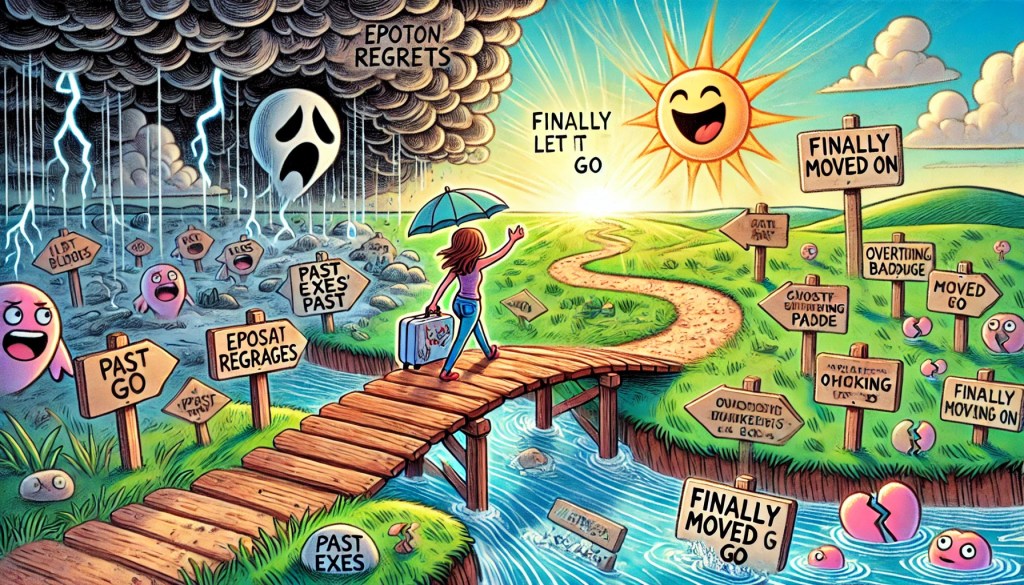
So what exactly is “Closure”? At its core, closure is about acceptance. It’s the bridge between what was and what is, allowing us to move forward without resentment or regret. Resentment and regret tend to consume you. Best to steer clear. Easier said than done, but possible.
Closure isn’t something we get; it’s something we create. It’s the bridge between what was and what is, allowing us to move forward without resentment or regret. Yet, many remain emotionally tied to the past. They engage in stalking, lurking, and rehashing old wounds. Some keep exes around under the illusion of “friendship.” Some refuse to let go, some sabotage their future, and some just thrive on unresolved chaos.
Closure is the emotional full stop at the end of a relationship sentence. Without it, you’re stuck in a psychological loop of the past. Places, conversations, and texts keep replaying. Every interaction keeps replaying on loop. Closure is a sense of completion. It has the real potential of setting things right after things haven’t gone quite right. Handled badly we end up affecting our emotions, our self-esteem, and even our relationships.
This article is an intervention. It explains why people struggle with closure. It reveals how it sabotages new beginnings. Most importantly, it shows how to finally cut the cord.
The discussion in this article can be applied to every aspect of life, both personal and professional. Here, we focus more on personal relationships. We specifically look at past relationships and how we allow them to negatively impact our prospects for a happier future.
We claim to be “over it.” Why do we allow people to come in and out of our life at will? It feels like a broken automatic door. If you’re not letting go, you’re starring in your own reality show. It features you, your past, and your unresolved emotional baggage. You’re inviting chaos, doubts, and unnecessary conflict. You’re allowing your loyalty and intentions to be questioned and allowing your self-worth take a nosedive.
You need to read this if:
- You’re still emotionally tethered to past events or unwanted people from your past.
- You’re prone to any of these behavior patterns.
- You want real closure.
It’s time for a wake-up call. We will expose the absurd ways people keep the past in their lives. We’re exposing why people chose to do so, why this is sabotage to self and maybe others? Most important, how to finally cut the cord before your current or future partner takes drastic action. They might file an emotional restraining order or just decide to move on.
This article promises all of the above, explores different types of relationships and dives deep into:
- The psychological reasons people struggle to let go,
- The role of revenge in preventing closure,
- Why keeping exes around is a terrible idea,
- How staying connected sabotages future relationships, and
- The ultimate remedies to help you heal and move forward.
It’s time to stop playing emotional ping-pong with your past. Let’s get you off this hamster wheel—for good. Are You Still Refreshing a Discontinued Show? You Need Closure!
The Hard Truth About Closure
Closure isn’t a grand climax moment. It doesn’t involve someone sitting you down and apologizing for everything. No one hands you a framed certificate of emotional resolution. You don’t get a refund for your wasted time. Closure means accepting that it’s over and acting accordingly. It’s something you give yourself.
What Closure Is NOT (Seriously, Stop This Nonsense!!!)
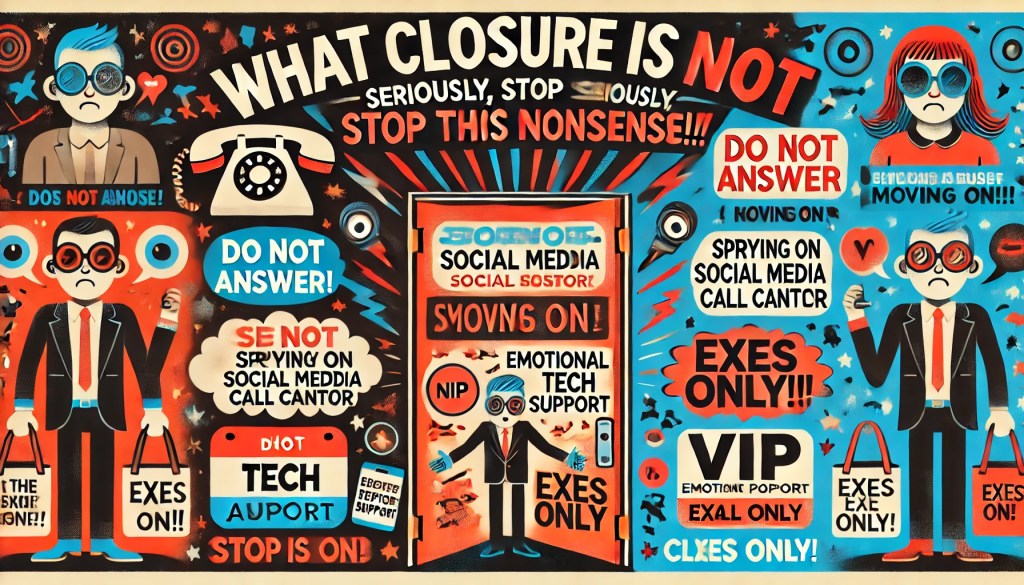
What it’s NOT is a rather long list and so it’s more important to deal with that first. It does NOT mean:
- Keeping them on social media “just to see what they’re up to.” (No, checking their social media feeds every day isn’t casual curiosity, it’s digital self-torture.)
- Texting “Happy Birthday” like you’re networking on LinkedIn. (Sending birthday wishes to someone who emotionally screws you over.)
- Letting them call you “just to talk.” (Newsflash: You’re not their unpaid therapist.)
- Using “but we have mutual friends” as an excuse to keep them in your life. (You’re not in a custody battle, cut the cord.)
- Using “we need to keep social pretenses” is lame. Pretense = Pretending, its fake, its artificial.
And just in case you missed it the first time, closure also does NOT mean:
- Keeping them on speed dial “just in case.” (In case of what? A moment of weakness for you to succumb?)
- Answering their texts like you’re working customer service. (You’re not Tech Support for their emotions.)
- Allowing them to disrespect you in ways you wouldn’t tolerate from a total stranger.
Think about this: would you allow a random person to talk to you the way your ex does? If not, why are they getting VIP treatment? So, if you’re still clinging to the past, it’s time to cancel the subscription and move on.
Closure isn’t a door someone else closes for you. It’s one you slam shut yourself. And if you’re not achieving closure, you’re leaving the door open for disaster.
Some Practical Ways to Find Closure
All we need to do is take some conscious steps to take charge:
- Detach from the Need for an Apology or Explanation: Closure rarely come from others, it comes from within.
- Cut Ties: Staying connected to someone only prolongs the discomfort and will cause pain. It’s okay to distance, unfollow and block to heal (in that order or all at once).
- Replace Rumination with Reflection: Instead of replaying the past, ask yourself: What did this teach me? How have I grown from this?
- Create a Closure Ritual: Write a letter and burn it. You might revisit a place one last time (not my recommendation).
- Engage in an activity that marks the end of a chapter: Just make sure it’s not a case of “out of the fuel and into the fire.”
- Fill the Void with New Experiences: Invest in friendships, hobbies, travel, or personal growth. Forward movement heals.
Types of Relationships & the Closure They Require
Deep, Meaningful Relationships (Romantic, Platonic, or Familial)
These substantial relationships are built over time, are filled with shared experiences, emotions, and significant impact. When they end, whether through breakups, betrayal, death, distance or just circumstances, the void can feel unbearable. It leaves you vulnerable. You may even be prone to making knee-jerk decisions that send you into a downward spiral.
Why People Stay Connected:
People stay connected to the past for reasons that may seem justified. People live in hope for reconciliation. They fear loneliness. Some may have shared responsibilities such as children, assets, or pets. Others feel the need for emotional attachment and comfort. Some just have shared interests.
How to Find Closure:
- Accept finality and make it final.
- Accept that you may never get all the answers. Sometimes, there is no clear reason why things ended. Accepting this helps you reclaim your peace.
- Cut and Limit Contact (when there are shared responsibilities) to allow healing.
- Write a letter (don’t send it). Expressing everything you never got to say can be therapeutic.
- Find meaning in the experience (even if it’s been negative). Ask yourself: How did this shape me? Did any good came from it? What did I learn?
- Practice forgiveness. This is for your peace, not theirs.
- Do not stalk (or allow yourself to be stalked) on social media or in person.
- Focus on self-growth and new experiences.
- Asking favors for yourself or others after the fact? Are you willing to create an obligation? Just don’t do it!
Other Relationships Worth Examining – These Are The Ones That Really Need Closure & Fast!
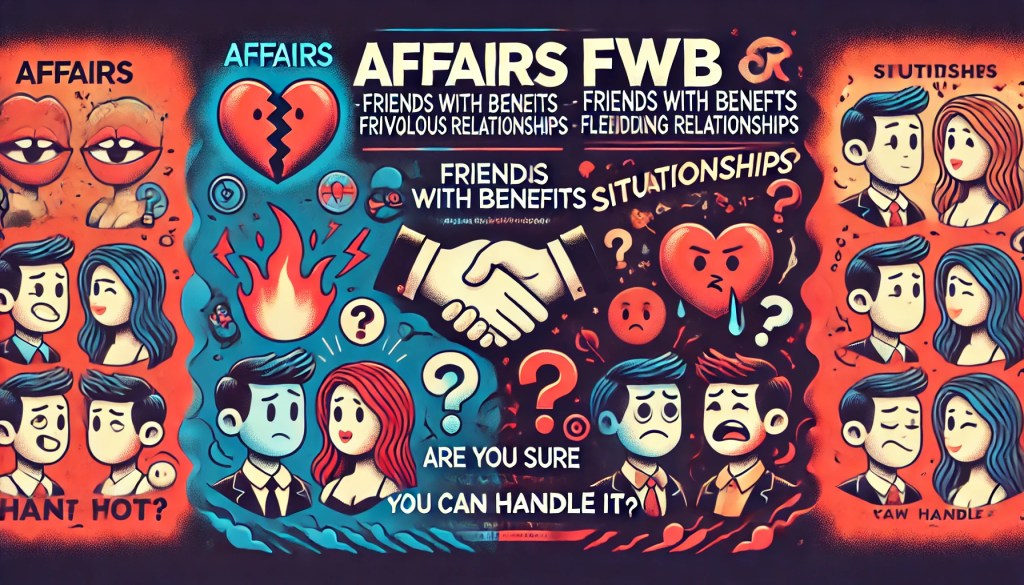
Let’s talk about Affairs, FWB – Friends With Benefits, Frivolous or Fleeting Relationships, Short-Term Romances, Situationships, Brief Friendships.
Though the nature of these relationships are nuanced, for the sake on brevity let’s just bundle them under “temporary”. They are by nature temporary, fueled by attraction, fun, or excitement and circumstances. However, they do leave emotional imprints. Are you sure you can handle it? Do you really need this?
Let’s attempt to define each in brief for the sake of clarity.
Affair: Rooted in impulse, emotional or physical desire, secrecy and risk, Affairs cause incalculable damage when they end badly.
Friends with Benefits (FWB): Relationships based on mutual attraction and physical intimacy without commitment can cause significant upheavals. They often make closure difficult.
Situationships (Undefined Relationship): Ambiguous connections occur where two people act like a couple without committing to a label. These situations often end in confusion, frustration, or unspoken heartbreak. Discussing boundaries threadbare up front can prevent misunderstandings.
Why People Stay Connected:
- Nostalgia for the excitement, physical or emotional intimacy.
- Ego boost from occasional messages or attention.
- Curiosity about the other person’s life.
- Kindness and Understanding with no justification.
- Addictions to the thrill or secrecy, unfinished emotions due to abrupt endings, guilt or remorse.
- Comfort in familiarity, hope that the dynamic will change into something serious .
- Convenience of a no-strings-attached relationship.
- Hope for clarity or a real commitment.
- Fear of losing the person completely.
- Emotional Dependency created by inconsistency.
How to Find Closure:
- Acknowledge The Impact. Just because it was brief doesn’t mean there is no impact.
- Release the “What Ifs.” Not everything is meant to last, and that’s okay.
- Remember. Some people are meant to be chapters, not the whole book.
- Accept Responsibility. They have consequences.
- Acknowledge Lessons. Treat these as learning experiences.
- Break Patterns. If this is a pattern, break it.
- Set Boundaries. They help in damage control.
- Decouple Quickly. Cut ties completely to avoid further complications.
- End The “Arrangement”. Understand when the arrangement no longer serves you.
- Physical Intimacy Trap. Continued physical intimacy is staying connected.
- Be Selfish. Acknowledge when someone isn’t giving you what you deserve.
- Communicate Clearly. Even if it means walking away, it’s a small price to pay.
- Acceptance Is Key. Closure may come without a clear answer. Be willing to take charge of closure for your own well-being.
One-Sided Relationships (Unreciprocated Love, Ghosting, Unacknowledged Friendships)
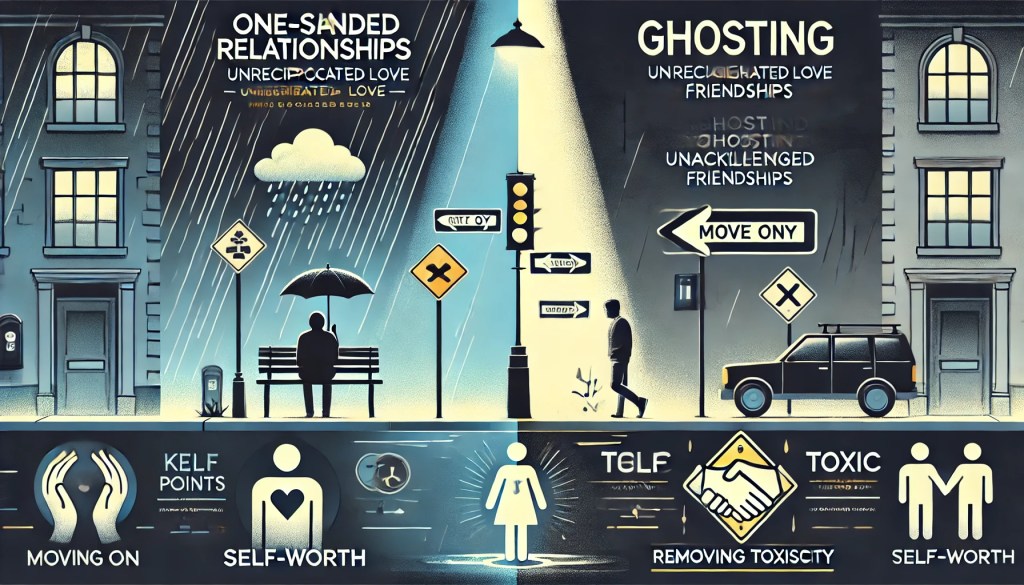
When we invest in people romantically and they don’t invest back, we end up waiting for apologies that never come. We wait for explanations that are never given. We also seek recognition that is never received.
Perhaps you’re in regular touch with someone and you believe you’re “just friends”? Over time you realize that’s not what the other person believes? Maybe it’s time to question your role in allowing that belief to take root!
How to Find Closure:
- Accept that silence is your answer. If someone ghosts you, they have given you all the closure you need. If someone disrespects you or fails to acknowledge your worth, they have given you all the closure you need.
- Shift your focus from rejection to redirection. This was not a loss. It was a lesson guiding you toward better relationships.
- Reaffirm your self-worth. You are enough, even without their validation.
- Take Ownership. If your actions led to the situation, own it. Make sure you let the other person know. Maybe apologize?
- The Guilt Trip. Don’t guilt trip yourself with concerns about their well-being or situation, allow them to stay connected. If they don’t accept your boundaries then, it’s not on you.
- Eradicate Toxicity. If the person becomes toxic, shut it down firmly. Involve trusted people who can influence an outcome. Register a complaint.
Relationships That End Due to Circumstance (Distance, Timing, Life Changes, Death)

Not all endings happen because something went wrong.
Life simply takes people in different directions, through career moves, shifting priorities, personal growth or unavoidable circumstances.
How to Find Closure:
- Recognize that affection and connection can exist without permanence.
- Just because something ended doesn’t mean it wasn’t valuable.
- Be grateful, not resentful.
- Cherish the good moments rather than mourning what was lost.
- Trust the flow of life. New experiences await. Embrace them, with an open mind and with cautious optimism.
Why Do People Struggle to Let Go?
People keep unwanted past relationships alive, through direct communication, social media interactions, dating apps or mutual friends. The reasons can be deeply emotional, psychological, and sometimes even practical. Here’s why:
- Attachment and Emotional Investment
- Fear of the Unknown
- Unfinished Business
- Loneliness
- Social Media Connection
- Ego and Validation

Emotional Attachment & Habit
The “Let’s Stay Friends” Delusion: Ah yes! The classic gambit to avoid reality! Convincing yourself that being besties with someone you were once naked and in love with is totally normal. Spoiler alert: It’s not. A long-term relationship becomes part of your identity. It’s hard to accept life without that person. Time, energy, and memories create bonds that are hard to break.
Fear of Loneliness:& The Unknown They hope for reconciliation. They seek ego and validation. People tend to live in hope. They keep others around as an emotional backup. It can be easier to keep an old relationship in the background rather than face being alone. People often believe time will fix things. If someone is shown the door, ego is bruised and will have a reaction. – Staying in contact, even superficially, can provide a sense of comfort or familiarity. Letting go means stepping into uncertainty. This step can feel more daunting than staying connected to the past.
Social Media & Digital Connection: Nothing screams “I’m emotionally stuck” like stalking on social media. If you’re still analyzing who liked their selfie, congratulations! You’re the unpaid intern of their digital life. Seeing someone’s life unfold on social media makes detachment harder. It leads to an illusion of continued closeness. Knowing someone still checks in or cares (even passively) can feed the ego.
The Digital Intrusion Victim: The relationship is over, but somehow, your DMs and texts aren’t. They pop up when they’re bored, lonely, want physical intimacy or drunk and you let them.
Shared Social Circles: Your friends aren’t your emotional delivery boys. Yet here you are, still collecting intel. It’s like an ex-employee obsessed with their old job. Mutual friends, work connections, or groups keep people tied together. Many stay in contact to avoid awkwardness.
Situationship That Won’t Die: The separation was “official”, but you’re still talking, still hanging out, still… doing things. You call it “casual,” but deep down, are you hoping for something more? A lack of closure or unresolved feelings keeps people tethered.
Reality Check:
- If you’re “just friends,” do you get emotional when you see them with someone else?
- If you’re keeping them around “just in case,” you’re not over them.
- If you reply just to see where it goes, you’re setting yourself up for season two of the same tragedy.
- Are you keeping them around because you hope they’ll change their mind?
- Remember, small interactions (texts, calls, social media likes) reignite hope. Passive interactions (likes, comments) create an illusion of continued presence.
- Seeing someone still interested can boost self-worth.
- Does keeping them around maintain a sense of control?
- Watching someone’s life unfold online makes it harder to move on.
- Their “Hey, how have you been?” isn’t cute, it’s emotional breadcrumbing.
- If they text only when they need something, you’re their backup plan.
- If they still “like” your posts but won’t commit, they’re keeping you as an option.
- If you’re still “hooking up,” you’re not over it.
- If you can’t date other people without feeling guilty, you’re still emotionally invested.
- If they keep saying “I don’t know what I want,” they already made their choice.
- Leaving them on read or unread and not responding won’t cut it! You’re still giving them access!
- Be honest with yourself: Would you be friends if you never dated?
- If your partner did this, would you be okay with it? (No, you wouldn’t.)
How to Fix It:
- Resist, Mute, Un-follow, Block, Delete. Stop being the emotional safety net. Grow Up!
- They Now Miss You. Let them miss you in silence.
- Social Media Addiction. Disconnect till you heal.
- Privy to Benefits? Cut off all “benefits.” You’re not Amazon Prime.
- Remind Yourself. If they truly wanted you, they’d be with you.
- Date Someone New. Someone who actually knows what they want and is good for you.
Ask yourself: “Would I rather heal or keep score?”
Why Do People Struggle to Let Go? (A Psychological Guide for the Clueless)
If you’re still trapped in the emotional quicksand of a past relationship, science says there’s a reason! But don’t worry, it’s not because you are “soulmates”, it’s just your brain betraying you. If you’re still keeping a door open for your ex, it’s not because of “maturity” or “friendship.” It’s because of science, self-deception, and emotional weakness.
The Zeigarnik Effect
Your brain LOVES unfinished business making it harder to move on from unresolved relationships. Like a jukebox, it serves up conversations from 2019. Wake up! Focus real problems, like filing your taxes!
How to Overcome It: Write down your thoughts to give your brain closure. Have a symbolic farewell, such as writing a letter you never send. Remind yourself that some doors stay closed for a reason.
The Endowment Effect
We overvalue things (or people) we once had, making them seem more special than they were. Your brain convinces you that everything you had was priceless. But let’s be real—you weren’t dating a Greek god; you were probably tolerating a human-sized red flag.
How to Overcome It: Reframe the relationship by recognizing the flaws. Remind yourself that if it were truly valuable, it wouldn’t have ended. Write down all the things you didn’t like about them. Read it whenever nostalgia tries to lie to you. Stop putting them on a pedestal. They probably snored.
Trauma Bonding & Manipulation
Ever felt stuck in a toxic relationship, unable to walk away? That’s trauma bonding—not love, just manipulation disguised as attachment. It’s when someone alternates between affection and mistreatment, keeping you hooked. You’re not in love—you’re addicted to the highs and lows.
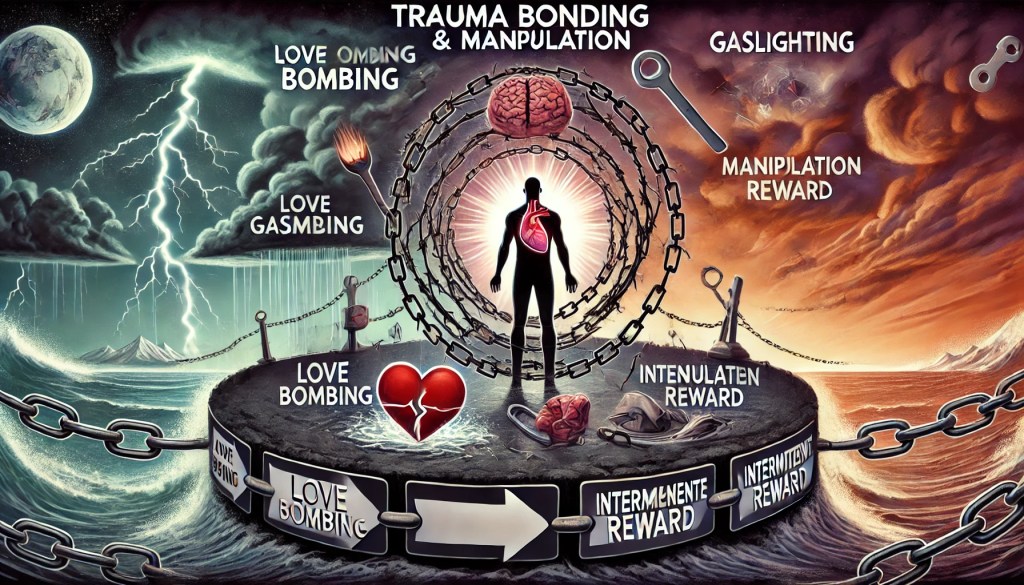
The Cycle: Love Bombing – Over-the-top affection, Devaluation – Criticism, gaslighting begin. They manipulate you to make you feel like the problem. They offer intermittent rewards to pull you back in just when you’re done. You Stay Hooked – Chasing the version of them that never existed. This cycle rewires your brain. You associate the abuser with both comfort and pain. This makes you dependent on their approval and attention.
Why It Feels Impossible to Leave
- Your Brain is Addicted – The pain-reward cycle floods you with dopamine, like a drug.
- You Confuse Chaos for Passion – Intensity ≠ love.
- You Think You Can “Fix” Them – You’re not their therapist.
How to Overcome It
No Contact = No Addiction – Cut them off completely. No texts, calls, “friendly check-ins,” or social media stalking. They are not your closure. Healing starts when access ends. Rewire Your Brain – Stop romanticizing the good moments. They were part of the manipulation. List every toxic thing they did and read it every time nostalgia hits. Recognize It’s an Addiction – You’re not weak, you’re chemically hooked. Expect withdrawal symptoms. They will fade. Reconnect with Reality – Your friends, family, and therapist can help pull you out of the mental fog. Isolation feeds trauma bonding; connection destroys it. Trauma bonding messes with your identity, self-worth, and mental health. Therapy (especially CBT or EMDR) can help undo the damage and rebuild your sense of self. Block the Emotional Hooks – Expect them to come back with fake apologies, guilt trips, or love bombing. Do not fall for it. Their regret is just another manipulation tactic. Choose Your Future Over Your Past – Staying keeps you stuck. Leaving sets you free. No one who truly loves you will ever put you through this cycle.
Fear of Abandonment (Attachment Trauma)
People with anxious attachment styles struggle with endings because they associate them with rejection and loss of self-worth. If being alone makes you panic-text your ex, you might have attachment issues. Don’t worry—so does half of humanity.
How to Overcome It: Build self-esteem outside of relationships. Focus on personal growth and self-validation. Learn to enjoy your own company. Take yourself on a date. Realize that being alone is better than being someone’s emotional afterthought.
Revenge Fantasies (Narcissistic Injury)
When pride is wounded, some people seek revenge to “win” the breakup or prove their worth. Some people hold onto the past not out of love, but out of resentment, ill treatment, toxicity and unfulfilled expectations. Revenge does comes to mind when you’re horribly wronged or mistreated or exploited. There is a need to shut it all down to make sure it never rears its ugly head again. However, cold calculated action works a lot better than vengeful emotions, because those consume you.The desire for revenge can manifest as:
- Spreading rumors or exaggerating the impact of the breakup.
- Keeping in touch with their friends or new partners out of spite.
- Trying to “win” the breakup by showing the other person they made a mistake.
- Holding on to resentment and waiting for karma to strike.
- Subtly trying to make the other person jealous through social media, mutual friends, or new relationships.
- Seeking to “even the score” by making them feel the same hurt (which is some cases may be justified).
How to Overcome IT
- Ask yourself: Does this bring me peace or keep me stuck?
- Redirect your energy into self-improvement.
- Forgive, not for them, but for yourself.
- Accept that the best revenge is personal success.
- Redirect energy into personal goals instead of competition.
Revenge may bring temporary satisfaction, but it does not offer true closure. Healing comes from moving forward, not proving a point.
Types of People Who Won’t Let Go (A Gallery of Emotional Messes)
The Emotional Hoarder
Still has old texts and love letters. Maybe even a hoodie that smells like their ex (gross). Treats their past relationship like a family heirloom instead of the dumpster fire it actually was.
The “Just Checking In” Ninja
Disguises their inability to move on as innocent “friendly” check-ins. Drops random texts like “Hope you’re doing well :)” or “Hey, saw this meme and thought of you!” (Translation: “Please notice me; I am struggling.”)
The Social Media Stalker
Knows exactly where their ex went for brunch, who they went with, and what they ordered (avocado toast, obviously). Leaves “accidental” likes on 2017 vacation photos at 3 AM.
The Emotional Gymnast
Still bending over backward to stay in someone’s life? “We can still be friends!”, while secretly hoping for a reconciliation. Their new relationship status: “Not single, but not exactly over it either.”
How to Fix This
- Delete. Everything. Immediately.
- Stop using their Spotify playlists like a tragic soundtrack to your life.
- If you’re texting them more than their own mother does, stop.
- Set up a Google Calendar reminder titled: “DO NOT TEXT THEM, YOU FOOL.”
- Block. Unfollow. Smell the coffee.
- If you wouldn’t show up at their house to stare through the windows, stop doing the digital version of it.
- Realize that they didn’t apply for the “Lifetime Friend Package.”
- Stop treating them like a subscription service you refuse to cancel.
- The best revenge is your happiness. Do whatever it takes to make you truly happy.
The Problem of Unwanted Attention — Some People Won’t Let Go
You’ve moved on. At least you’re trying to. Yet, your past keeps appearing like a virus. It’s like spam that won’t go away. Worse yet? The popping up happens when you have almost gotten over a person or an episode, rekindling the past.
Why Do They Keep Cropping Up?
- They Miss Attention, Not You – You’re not special to them, but your attention is.
- They Want to Keep You as an Option. You’re their backup plan. This applies in case their new life or relationship isn’t exciting enough.
- They Thrive on Drama – Some people feed off emotional chaos.
- Physical Intimacy – Perhaps that’s the only reason?
- They Lurk to Exploit Your Moments of Weakness – If they keep coming back, it’s because you allow it.
Why Do We Let Them?
- Ego Boost – It feels good knowing someone still wants you (even if you don’t want them back).
- Nostalgia Lies to You – Your brain only remembers the good times, tricking you into thinking they’ve changed.
- Fear of Finality – Cutting someone off feels so permanent. But guess what? That’s the point.
How to Handle Unwanted Attention
- Set Clear Boundaries – If they don’t respect your space, make it non-negotiable.
- Don’t Engage – Every reply keeps the cycle alive. Silence is your best defense.
- Block & Delete – Stop playing nice. If they keep pushing, push back decisively.
- Attention Becoming Toxic? Blackmail? Don’t buckle. Call it out. Document all instances. Involve someone trustworthy to intercede.
- Exhibition of Dangerous Tendencies? Document everything, Issue Stern Warnings, Complain if its persistent.
“Close Friends” With an Ex Who Couldn’t Fight for You?

Let’s set the scene. Once upon a time, you were in a relationship that meant something. It wasn’t just a casual fling, it was deep, real, and, at some point, you both believed it was forever. But then, reality hit.
For whatever reason, they couldn’t fight for you. Maybe they lacked the emotional maturity, the courage, or the stability to choose you when it mattered most. Or maybe life circumstances pulled you apart, distance, family pressure, bad timing, or responsibilities they just couldn’t walk away from.
So now, here you are, broken up, propelled into a spiral, but somehow still in each other’s orbit. You tell yourself it’s different, that you’re not clinging to old feelings, that you’re just “close friends” now.
Let’s be brutally honest for a second. Can you really be “just friends” with someone who was supposed to be your forever at one point?
The Illusion
Keeping an ex in your life is a dangerous emotional game. This happens when the relationship didn’t end due to a lack of love. Instead, it ended because they didn’t fight for you.
You might tell yourself things like:
- “We were best friends first.”
- “We still understand each other better than anyone else.”
- “We can’t just erase everything we had.”
- “Maybe one day, when the timing is right…” (Oh, so you’re just emotionally benching yourself?)
Here’s the cold, hard truth: When you stay close to an ex who let you go, you’re not just “friends.” You’re lingering in the emotional waiting room of what could have been.
Why Staying “Close Friends” Is a Bad Idea
You’re Settling for the Least They Can Offer
At one point, you were everything to them. Now, they offer you scraps of their time, energy, and emotional investment and you accept it, calling it “friendship.” But let’s be real: Would you have settled for this when you were together? If they couldn’t fight for you then, what makes you think they deserve your loyalty now?
The Emotional Hook Is Still There
- If you’re still texting them first when something big happens in your life.
- If their name still gives you a dopamine hit when it pops up on your phone.
- If you still feel that little sting when they mention someone new.
Congratulations! You’re not over them. You’re just rebranding your emotions under the label of “friendship.”
You’re Blocking Your Own Healing
How do you expect to fully move on? The person who hurt you, disappointed you, or walked away is still a key figure in your life. Every interaction keeps a part of you stuck in the past. Every “friendly” conversation reopens wounds consciously (mostly unconsciously) that should be healing.
You’re Creating Unspoken Expectations
- If single, perhaps there’s a chance?
- If dating, married or have moved on, they you’re the spanner in the works.
- If they tell you they miss you, you’ll analyze it for hours.
- And if they tell you nothing? Well, you’ll analyze that, too.
No matter how much you pretend you’re “cool” with it, there’s always a part of you that’s waiting.
What If They “Really Value Friendship” & Want You in Their Life?
Let’s flip the script. Would you have needed “just friendship” from them when you were together? Probably not. Because when you were all in, you weren’t thinking about just being friends. So why accept it now? Why accept a downgraded version of something that was once so significant? If they really valued you, they would have fought for you when it mattered. And if they didn’t fight then, they don’t deserve access to you now.
So, What’s the Right Move?
- Be Honest With Yourself: Would this “friendship” still exist if there was zero chance of rekindling things in the future? If the answer is no, then you’re not just friends. You’re holding onto a safety net.
- Cut the Emotional Cord: Distance is your friend here. No more check-ins, no more emotional deep dives, no more “accidental” meetings. No more, “I’m in the neighborhood, let’s meet!”. If closure is what you need, you have to stop giving them access to your heart.
- Respect Your Future: You deserve a love that is certain, not one that left you behind. You deserve someone who will choose you without hesitation. If you keep them around, you’re making space for their ghost in a life that should be moving forward.
Thoughts: You Weren’t Meant to Be Their Emotional Backup Plan
It’s not noble to stay close with someone who walked away from you. It’s not mature to pretend you’re cool with being “just friends” when deep down, it still stings. Closure isn’t about maintaining a friendship with someone who didn’t choose you. It’s about respecting yourself enough to walk away. So, if you’re still holding on, ask yourself:
“Am I really moving forward, or am I just keeping one foot in the past?” Let go. Move forward. And for the love of your own self-worth, stop texting your ex.
What If You Can’t Avoid Them? (The Art of Detached Coexistence)
Sometimes, cutting all ties isn’t an option. Maybe you work together, co-parent, have mutual friends, or live in a small community where running into them is inevitable. So, how do you handle it without reopening old wounds or getting sucked back into the emotional vortex?
Master the Art of Emotional Detachment
- Treat them like a colleague, not an ex. You wouldn’t pour your heart out to a co-worker about your weekend breakdown, so don’t do it here.
- Keep interactions neutral, polite, and surface-level. If you must communicate, stick to facts, not feelings.
- Avoid deep conversations that could stir unresolved emotions.
The “Professional Mode” Hack
- When engaging with them, mentally switch to “Professional Mode.”
- Keep it short and to the point
- Stick to logistics, not emotions
- No unnecessary personal updates
- No revisiting the past (because it’s past for a reason)
Imagine you’re responding to a corporate email. Would you write, “Hey, I’ve been thinking about us” in a work email? No? Then don’t do it in real life.
Avoid the Emotional Booby Traps
Do NOT engage. Keep your responses nonchalant. Example: Them: “Wow, so we’re just strangers now?” You: “Yup, crazy how life moves on, right?” (End conversation.)
Watch for their bait:
- “I miss our conversations.” (Translation: I miss the validation, not you.)
- “You’ve changed.” (Translation: I hate that you’re moving on.)
- “Do you ever think about us?” (Translation: I need to know I still have power over you.)
For Work Situations:
- Keep all conversations work-related
- Set up email or message-only communication if possible
- No post-meeting “casual” convos—get in, do your job, get out
For Co-Parenting:
- Use a structured schedule and third-party apps to manage interactions
- Keep all discussions child-focused—no reminiscing about “how things used to be”
- If emotions rise, pause the conversation and return when calmer
For Mutual Friends & Social Settings:
- Be civil but distant. No need for fake warmth or forced conversations.
- If they’re in the same group, focus on others. Don’t let their presence dictate your night.
- Let your friends know—“I’m cool being around them, but I’m not down for drama.”
- If Necessary, Establish Low-Contact or Controlled Contact: Not all situations allow for a complete cutoff. However, you can still control the level of access they have to you.
- Mute/Restrict on Social Media (So you don’t see their life updates)
- Redirect Conversations (If they try to steer toward the past, you steer away)
- Enforce a Delay Rule (Pause before responding to texts so emotions don’t take over)
Bottom Line: Detach Like a Pro
If you absolutely must keep them in your life, make it transactional, not emotional. Keep things brief, professional, and distant. Remember: You don’t owe your past a front-row seat in your present. If they respect your boundaries, great. If they don’t? Time to tighten the leash. No one deserves unlimited access to your energy just because they were once a part of your life.
The Danger of Failing to Let Go: How It Affects Future Relationships
When we fail to close chapters, we risk carrying emotional baggage into new relationships. Unresolved emotions—whether regret, resentment, longing, or nostalgia—can distort how we see new people. These feelings might cause us to repeat old patterns. They can also sabotage promising connections.

- Emotional Unavailability: Holding onto the past can make you emotionally distant. If you are still attached to someone else, you may struggle to be fully present. This can affect your relationship with a new partner. The same applies to forming new friendships.
- Unhealthy Comparisons: If you haven’t fully let go, you might compare new relationships to past ones. You could either idealize what you lost or use past hurt as a defense mechanism. This prevents new bonds from growing authentically.
- Insecurity and Trust Issues: Unfinished emotional business can breed doubt and mistrust. If someone betrayed you before, you may assume the same will happen again, leading to unnecessary fear and jealousy.
- Lingering Attachments Create Confusion. Keeping in touch with an ex or a former close friend without clear boundaries can lead to emotional confusion. If you’re holding onto “what was,” you might struggle to see “what is” and “what could be.”
- Self-Sabotage: Clinging to old emotions can lead to behaviors that push new people away. This happens through hesitation, emotional walls, or acting out fears not based on the current relationship.
How It Looks to Someone New: To someone just entering your life, your lingering ties to the past might appear as:
- A red flag, signaling unresolved emotions.
- A sign that they’re competing with ghosts from your past.
- A reason to hesitate before fully investing in you.
- “I’m emotionally unavailable.”
- “I still have unfinished business.”
- “You’re competing with a ghost.”
- Destroying trust: Your partner will start to question your loyalty.
- Creating unnecessary doubt: Even if you think it’s harmless, they don’t.
- Showing a lack of commitment: If you can’t let go of your past, are you really ready for something new?
New relationships thrive in emotional clarity. If someone feels like they’re sharing space with your past, they may never feel truly secure in the present. Substantial partners won’t put up with that. And if they do, they’re either as emotionally messed up as you, or then they truly care. But beware, they probably won’t put up with you indefinitely.
Solution: Respect your future relationship enough to clean up your past and close past chapters.
The Disrespect You’re Allowing (Yes, You’re Letting This Happen)
So it’s all over and then suddenly someone pops back up like a spam email? And instead of blocking them on sight, you actually respond!!! You’ve got to respect yourself enough, to actually stop people disrespecting you. Keep the following important things in mind:
- They Only Reach Out When They Need Something. Have you noticed how they only text you when they’re sad? They also reach out when they’re lonely. They also reach out when they need a favor. That’s because you’re not a person to them—you’re a safety net.
- You’re Keeping Them Around While in a New Relationship (And Making Your Partner Question Everything)
- Keeping an ex in your life while trying to build a new relationship is like driving forward. It’s like looking in the rearview mirror. You’re Making Excuses for Their Behavior (Even When You Know It’s Toxic)
Reality Check:
- They don’t miss you. They miss your attention.
- They’re not sorry. They’re bored.
- If someone disappeared without an explanation, they don’t deserve a response, let alone a place in your life.
- If they only call when they’re struggling, you’re an emotional doormat.
- If they don’t check in when you need them, they’re not your friend.
- They don’t miss you—they miss having access to you.
- If your partner feels uneasy about your ex’s presence, it’s not jealousy—it’s common sense.
- Your ex isn’t just in your life. They’re taking up space in your partner’s mind. They create doubts where there should be trust.
- If you have to constantly explain why your ex is still around, you already know it’s a bad idea.
- If you have to explain away someone’s behavior, it’s because it’s indefensible.
- If someone truly respected you, they wouldn’t put you in a position where you have to make excuses for them.
How to Fix It:
- If they ghosted once, they will ghost again.
- Self-respect means slamming the door shut—permanently.
- You are not their unpaid therapist. Stop answering.
- If they don’t respect your boundaries, block them.
- If you respect your new relationship, act like it.
- Prioritize someone who actually sees a future with you.
- Don’t just demand trust—earn it.
- “They’re just going through a rough time.”
- “They didn’t mean it like that.”
- “We have too much history to just cut them off.”
- Call out the disrespect for what it is.
Stop lowering your standards for someone who already failed you.
Conclusion – Closure is Self-Respect, The Ultimate Gift To Give Yourself
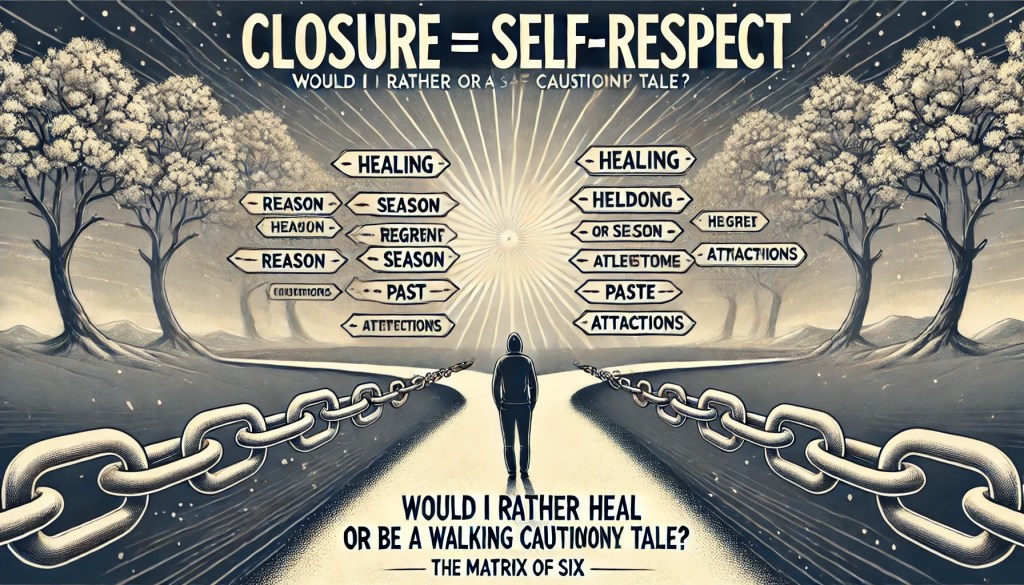
Remember, at the core of every relationship are circumstances, time, and place. Some people enter your life for a reason, others for a season, and only a rare few for a lifetime. Accept this truth sooner. It becomes easier to let go of what no longer serves you. You make space for what’s ahead.
Closure isn’t about forgetting—it’s about freeing yourself. It’s about accepting what was, making peace with it, and stepping into what will be. Because the past? It doesn’t deserve a front-row seat in your future.
Healing begins with action, not just time. Techniques like Cognitive Behavioral Therapy (CBT) help reframe destructive thought patterns. EMDR (Eye Movement Desensitization and Reprocessing) is powerful for processing trauma-related relationships. But therapy alone isn’t enough—you need to take symbolic steps toward closure. Cut all physical and digital ties—no exceptions. Staying connected only prolongs the pain. Rebuild your self-identity by exploring new hobbies. Pursue passions and experiences that remind you of who you are beyond past relationships. Surround yourself with healthy support systems that uplift you, not ones that keep you tethered to the past. And finally? Get over yourself. You don’t need permission to move on. Choose closure. Choose yourself.
So ask yourself: Would I rather heal or be a walking cautionary tale?
Stop keeping doors open that should have been shut long ago. Serve the eviction notice. Take back your peace. And for the love of all things sane, stop texting your ex. The future is waiting. Walk toward it.
Have You Been the Star of Your Own Toxic Love Story?
Tell us in the comments (or don’t—just go heal already).
Visit www.sumirnagar.com for more brutally honest life advice.
 Sumir Nagar
[…] Closure – The Truth You’ll Never Get From Them […]
LikeLike
[…] Closure – The Truth You’ll Never Get From Them […]
LikeLike
Really liked a lot of points in your content well articulated …a few are worth a mention from my perspective –
… it is important to move forward without resentment or regret
also understanding what is NOT ‘closure’ and also how to practice ‘detachment’.
Cheers!
LikeLike
Thanks Puneet. Your comments and responses are appreciated.
LikeLike
Please do share so more people may benefit.
LikeLike
So beautifully articulated Sumir 🙂
such a fun read.
LikeLike
Thanks Janet. This is appreciated.
LikeLike