
Foreword – The Battle Between Focus and Overload
Every endeavor—personal or professional—begins with a thought. Thoughts are initiated in the mind. The successful conclusion (or otherwise) depends on how we process our initial thoughts using our brain.
So is there a difference between the mind and the brain?
The brain is a physical organ. It is made of neurons and tissues. It controls bodily functions. It processes sensory input and stores memory. It’s tangible—you can scan it, touch it, or even operate on it. The mind, on the other hand, is intangible. It’s the seat of thoughts, emotions, awareness, imagination, and subjective experience. While the mind emerges from the activity of the brain, it is not the same as the brain itself.
The brain is like a piano, and the mind is the music it plays. You need the instrument to produce the music, but the experience of the music goes beyond the instrument itself.
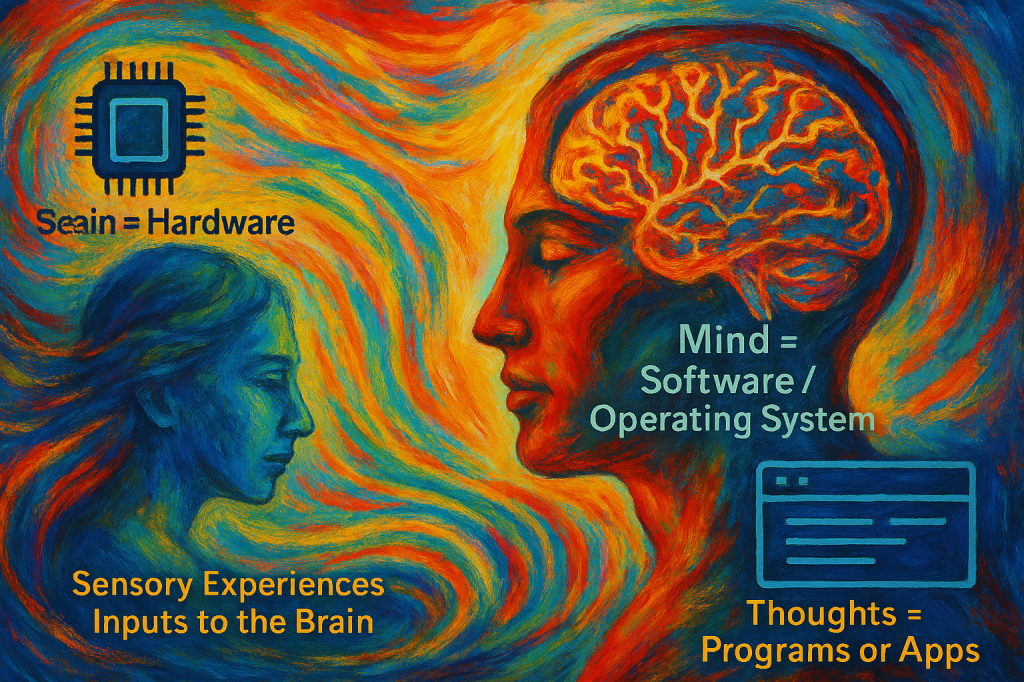
In essence, the brain is the computer processor. The mind is the operating system that drives the processor. They are deeply connected but fundamentally different.
Think of it like this:
- Brain = Hardware
- Mind = Software/Operating System
- Neurons = Circuits
- Thoughts = Programs or Apps
- Sensory Experiences = Inputs to the Brain
The human brain is overwhelmed with sensory inputs from so many sources and is compelled to be interpreted and handled. are received through the nervous system and interpreted. The experience emanating from those inputs, joy, sadness, taste, smell, anger, envy and so on—belongs to the mind. The mind is the seat of awareness, perception, thoughts, emotions, and subjective experience. While the brain processes the raw data from your senses, the mind creates the conscious experience of it.
The brain has immense processing capacity, akin to the processing power of a high end computer. However, to harness the processing power we need a highly optimized Operating System. If the brain isn’t trained to function with a high degree of optimization, we experience mental fatigue. Eventually, the brain runs slow. It then freezes and ultimately crashes.
We lack the skills or for that matter the training to use the brain’s full processing power to our advantage. As a result, this leads to mental fatigue. Eventually, it causes poor decision-making. However, with the right training, we can instruct the brain to function properly. This enhances our overall well-being.
Debunking the 10% Brain Myth
A widely circulated myth suggests that humans use only 10% of their brain, but neuroscience has debunked this claim. In reality, we use nearly 100% of our brain over the course of a day, but inefficiently.
How Much Brain Power Do We Actually Use?
- fMRI scans reveal that even simple tasks engage multiple brain regions, meaning that we utilize most of our brain capacity.
- At any given moment, different neural networks activate based on the task—whether thinking, moving, processing emotions, or problem-solving.
- The brain operates at full capacity but selectively engages regions to optimize energy and efficiency.
Potential vs. Actual Utilization
While we use all of our brain, the key question is: how efficiently do we harness its power? Factors like stress, distractions, poor mental habits, and a lack of cognitive training prevent many from fully optimizing their abilities.
Enhancing Mental Processing Power
We can learn techniques such as deep learning, meditation, neuroplasticity, mindfulness, and strategic problem-solving to significantly improve brain efficiency. This leads to better decision-making, increased focus, and the ability to process complex information quickly and effectively.
Why Do We Struggle With Clarity of Thought?
In today’s fast-paced world, clarity of thought is a rare and undervalued skill. It is unfortunate that almost every educational system teaches us information. However, they don’t train us how to think clearly. Clear thinking is a crucial skill for navigating life’s complexities. This gap is more evident than ever. We live in an era of information overload. Mental fatigue affects many, alongside emotional overload and unresolved trauma. Dopamine addiction is prevalent. Fear of uncertainty and failure is also common.
Instead of thinking critically and making well-informed decisions, people often react impulsively. They make decisions based on emotions. They deny problems and avoid issues. They adopt unhealthy coping mechanisms. These behaviors can lead to regret and poor life outcomes.
These roadblocks create a cascading effect, hijacking our ability to process challenges logically and preventing us from embracing new opportunities.
The Adverse Impact of Poor Mental Processing
Failing to manage how our brain processes information has far-reaching consequences, not just for individuals but for society as a whole, leading to:
- Physical health issues such as fatigue, muscle tension, headaches, digestive problems, and sleep disturbances.
- Increased risk of severe conditions like hypertension, heart disease, and type 2 diabetes.
- Mental health struggles including anxiety, depression, and social withdrawal.
The Link Between Stress & Relationships
- 51% of adults experiencing stress report feelings of depression.
- 61% suffer from anxiety.
- 46% turn to overeating or unhealthy foods.
- 29% increase alcohol consumption.
- 16% start or increase smoking.
- 83% of U.S. workers experience work-related stress.
Primary Contributors to Mental Stress
- Poor communication in personal and professional settings (41%)
- Uncooperative colleagues or partners (40%)
- Excessive workloads (26%)
These statistics highlight the urgent need for effective cognitive strategies to enhance individual well-being. They also emphasize the need to improve mental processing for better decision-making and stress management.
What This Article Will Teach You
This article is your blueprint to unlock a sharper, stronger, and more resilient mind. You’ll learn powerful principles inspired by computer operating systems to rewire your brain. These principles turn scattered thoughts into focused action. They change hesitation into decisive clarity. Just like Windows OS excels at structured task-switching, and macOS thrives on fluid multitasking. Your brain can be trained to handle complexity. It can also process information faster and overcome the mental roadblocks holding you back. Master this system, and you won’t just think better—you’ll lead with confidence, decide with precision, and rise with unstoppable momentum.
You’ll learn:
- Why people struggle with clarity of thought – Understand the key factors that affect judgment. These factors include financial distress and emotional baggage.
- Recognize Thought Errors & Mental Bottlenecks – Learn how overstimulation, stress, trauma, and emotional overload cloud your judgment.
- How avoidance and escapism make problems worse – Learn why running from issues leads to bigger problems. Find out how to break free.
- How to rewire your brain for better decision-making – Develop techniques to process information effectively and act with confidence.
- Operating Systems like Windows OS process information in sequence. Mac OS processes information in parallel. Learn how to apply these computing principles to optimize your thinking.
- Upgrade Your Mental Operating System – Rewire your brain to process information like an efficient OS, balancing logic and emotions.
- The importance of mental reboots – It is similar to an OS upgrade. Discover when and how to reset your mind. Ensure you do not overdo it.
- The role of association – See how the right and wrong people influence your mental clarity and decision-making.
- Why intoxication and binge eating don’t work. These are examples of unhealthy habits. Identify destructive coping mechanisms and replace them with healthier alternatives.
- The power of meditation and mindfulness – Learn how to use these techniques. They can help clear mental clutter. They also boost cognitive performance.
- How to balance multitasking and deep focus – Discover the best times to handle multiple tasks. Learn when to focus on one thing at a time for maximum efficiency.
- Master Decision-Making Strategies – Learn when to multitask, when to focus, and how to avoid impulsive choices.
- Use Practical Techniques to Train Your Brain – Implement proven strategies. These include meditation, mindfulness, and structured thinking. Such techniques boost cognitive power.
By the end of this article, you’ll have a structured approach to thinking, decision-making, and mental resilience. This approach will allow you to navigate life with clarity. You will gain confidence and control. This approach will allow you to navigate life with clarity.
Take Control of Your Mind Today
If you’ve ever felt overwhelmed, struggled with procrastination, or made decisions based on emotions and impulse, this article is for you. If you see yourself in any of these struggles, you are not alone. The good news is that mental clarity can be trained. Read on to discover how to train your mind like a high-performance operating system!
About the Author
Sumir Nagar, also known as SumirTheSeeker, is a seasoned leader. He has 30+ years of experience in business operations, regulatory compliance, digital transformation, financial services, fintech, and startups. He has worked across four continents. He held global leadership roles at leading international financial institutions, and various startups. He brings a unique blend of analytical thinking, strategic insight, and real-world problem-solving expertise.
Beyond the corporate world, Sumir is a thought leader, educator, and speaker. He delivers impactful guest lectures at leading institutions. His writing delves into the intersection of psychology, decision-making, cognitive efficiency, and personal growth and spirituality. It provides readers with actionable insights to optimize their thinking and performance.
Website: www.sumirnagar.com
YouTube: SumirTheSeeker
LinkedIn: Sumir Nagar
“The quality of your life is determined by the clarity of your thoughts. Train your mind, and everything else will follow.”
Sumir Nagar
Why Do People Struggle with Clarity of Thought?
Clarity of thought isn’t just about intelligence—it is about accepting the right inputs. It involves processing, analyzing, and articulating ideas in a structured manner. It also requires execution, even under extreme stress or distractions. However, many struggle with this due to cognitive overload, emotional interference, environmental distractions, and untrained thinking patterns. Here’s why:
Cognitive Overload & Mental Clutter
We live in an era of information excess, where constant notifications, social media updates, emails, and responsibilities flood the brain. This mental clutter makes it difficult to filter out distractions and focus on what truly matters.
- Limited Processing Capacity – The brain is like a computer processor. It can only handle a certain amount of data at a time. Overloading it leads to confusion and indecision.
- Lack of Mental Organization – Unstructured thoughts lead to scattered thinking, poor prioritization, and difficulty making decisions.
Emotional Interference – When Feelings Hijack Mental Clarity
Emotions directly impact cognitive clarity. When overwhelmed by stress, anxiety, or unresolved trauma, the brain shifts into survival mode. This impairs logical reasoning. It leads to impulsive choices or mental paralysis.
- Stress & Anxiety Take Over – Chronic stress activates the fight-or-flight response, shifting focus from logical reasoning to survival instincts.
- Cognitive Overload from Worry – Persistent anxiety clutters the mind, making even simple decisions feel overwhelming.
- Unresolved Emotional Conflicts – Suppressed emotions create subconscious interference, leading to poor judgment and avoidance behaviors.
- Past Trauma & Guilt – The brain replays unresolved failures, regrets, and painful experiences. These experiences keep people stuck in cycles of inaction and self-sabotage.
Living in the Past vs. Learning from It
Many people struggle with mental clarity. They choose to remain trapped in the past. They replay mistakes, regrets, and failures instead of extracting lessons and moving forward. We tend to tell ourselves that we’ve learned from our past experiences. However, in reality, we’re reminiscing about what went wrong. We focus on this instead of how we can avoid past mistakes. We are either too harsh or too lenient with ourselves. And finally, we hold the outcomes of our past mistakes to ransom our present and future.
- The Problem with Dwelling on the Past – Constantly reliving past failures creates emotional baggage that clouds present decision-making. It keeps people stuck in patterns and cycles of self-doubt, regret and behaviours preventing progress.
- The Power of Learning from the Past – The past should be a teacher, not a prison. Successful thinkers analyze past experiences objectively, extract key insights, and use them to make better decisions moving forward.
Key Mindset Shift: Dwelling on the past fuels regret. Learning from it fuels growth.
Decision Fatigue & Mental Exhaustion
Every day, we make thousands of micro-decisions—what to wear, what to eat, what to prioritize. Over time, this leads to decision fatigue, reducing cognitive sharpness and clarity.
- Too Many Choices = Paralysis – An overload of options makes decision-making harder, leading to overthinking and hesitation.
- Lack of Rest & Sleep Deprivation – Mental exhaustion weakens focus, memory, and the ability to process thoughts effectively.
Attention Fragmentation & Lack of Deep Focus
Modern distractions erode concentration. People do not engage in deep, meaningful thinking. Instead, they engage in shallow, surface-level processing. This habit makes it difficult to retain knowledge. It also hampers the ability to make well-informed decisions.
- Constant Multitasking – Rapidly switching between tasks (like checking messages while working) reduces cognitive efficiency.
- Shortened Attention Spans – Social media and instant gratification rewire the brain to seek quick dopamine hits, preventing deep thinking.
You may find this article interesting: “The Attention Code – Mastering Focus, Influence & Connection in a Distracted World”.
Poor Multitasking Abilities & Untrained Cognitive Processing
Not everyone is built for multitasking. Some thrive on focusing on one task at a time, while others can handle multiple streams of information. Forcing the brain to work against its natural style leads to frustration, inefficiency, and mental fatigue.
- Linear Thinkers Need Structure – Those who process information step-by-step struggle when forced into multitasking or chaotic workflows.
- Big-Picture Thinkers Need Flexibility – People who think in patterns and concepts find rigid, linear structures frustrating.
Financial Stress & Lack of Discipline
Money problems hijack mental bandwidth. When overwhelmed by debt, financial uncertainty, or poor money management, the brain stops thinking strategically for the long term. It focuses instead on immediate survival.
- Impulsive Decisions – Financial stress leads to reactive choices rather than calculated strategies.
- Avoidance & Procrastination – Many people ignore financial planning out of fear, leading to greater long-term stress.
Fear of Uncertainty & Resistance to Change
Many struggle with clarity because they fear making the wrong choice. Instead of taking action, they become paralyzed by overthinking, self-doubt, and second-guessing.
- Analysis Paralysis – The fear of failure keeps people stuck in familiar but unproductive patterns.
- Comfort Zone Trap – Avoiding new opportunities leads to stagnation and missed growth.
Habitual Avoidance & Mental Overload
Rather than confronting challenges, the untrained mind defaults to avoidance—seeking distractions like social media, binge-watching, or busy work.
- Deep-Rooted Fear of Failure – Many avoid tough decisions to escape discomfort.
- The More You Avoid, The Harder It Gets – Avoidance creates a cycle of inaction. It leads to lost control over thoughts and actions.
Lack of a Structured Thinking Model
Most people have never been taught how to think efficiently. Instead of structuring thoughts in a logical framework, they approach tasks randomly, leading to mental clutter and inefficiency.
- No Clear Framework – Without mental models or structured approaches, thoughts become chaotic.
- Inability to Prioritize – Many people struggle to differentiate what’s important from what’s trivial.
Clarity of Thought is a Trainable Skill
Mental clarity isn’t an innate gift—it’s a skill that can be developed and refined. We can train the brain to process information efficiently. It allows us to manage emotions effectively and eliminate distractions. By doing this, we sharpen our thinking. We make smarter decisions and navigate life with confidence.
Recognizing and addressing the root causes of mental fog—whether it’s cognitive overload, emotional interference, or unstructured thinking—helps us regain clarity. We can make decisions based on logic rather than emotional turbulence. True clarity isn’t about raw intelligence; it’s about how well you organize your thoughts, regulate emotions, and filter distractions.
By reducing mental clutter, you can unlock deeper focus. Adopting structured thinking models will strengthen decision-making. Aligning with your natural cognitive style leads to a more composed mind.
Key Takeaway: The past should be a guide, not a prison. Learn from it, choose not to live in it.
How the Human Brain Processes Stress
The human brain is wired to respond to stress. It acts as a survival mechanism. However, this response is often overstimulated by daily pressures. These include work deadlines, financial worries, personal conflicts, and self-doubt. When stress becomes chronic, it hijacks cognitive function. This leads to anxiety, mental fatigue, and impaired decision-making. People start to avoid challenges and rely on undesirable support systems and mechanisms.
The Brain’s Stress Response – Fight-or-Flight in Action
At the core of stress processing is the fight-or-flight response. The amygdala controls this response. It is a small, almond-shaped cluster of nuclei located deep within the temporal lobe of the brain. The amygdala detects threats and signals the hypothalamus , a small but crucial region of the brain. It acts as the body’s control center for regulating hormones, homeostasis, and essential bodily functions. These actions initiate a cascade of physiological changes.
- Threat Detection – The amygdala perceives stress (real or imagined) and sends a distress signal.
- Hormonal Surge – The hypothalamus activates the sympathetic nervous system, releasing adrenaline and cortisol.
- Physical Response – Heart rate spikes, muscles tense, and breathing accelerates, priming the body for action.
This response is beneficial in immediate danger. However, if activated repeatedly by daily stressors, it leads to mental exhaustion. It also causes emotional instability and cognitive impairment.
The Prefrontal Cortex – Logical Thinking Under Siege
The prefrontal cortex (PFC), responsible for rational thought, problem-solving, and impulse control, normally regulates emotional responses. However, under prolonged stress:
- The amygdala overrides logical thinking, making emotional reactions stronger.
- Critical thinking declines, leading to impulsivity or avoidance.
- Memory and focus suffer, making it difficult to process information under pressure.
This is why stress clouds judgment, triggers irrational fears, and leads to poor decision-making.
Cortisol Overload – When Stress Becomes Chronic
While short bursts of cortisol help with focus and alertness, prolonged exposure wreaks havoc on mental and physical health:
- Cognitive Decline – Weakened memory, reduced focus, and mental fatigue.
- Emotional Exhaustion – Increased anxiety, irritability, and burnout.
- Physical Deterioration – Sleep disturbances, weakened immunity, and chronic fatigue.
Essentially, long-term stress forces the brain into survival mode, leaving little energy for deep thinking, creativity, or long-term planning.
How People React to an Overloaded Mind – Adaptive vs. Maladaptive Responses
People handle mental processing overload in different ways, broadly categorized as maladaptive (harmful) or adaptive (constructive) coping strategies.
The Three Primary Stress Responses – Fight, Flight, or Freeze
When the mind operates under stress condition, the brain instinctively triggers one of three responses:
- Fight – Reacting aggressively (arguing, overworking, or lashing out).
- Flight – Avoiding stressors (procrastination, escapism, or quitting).
- Freeze – Mental paralysis (indecisiveness, emotional numbness, or withdrawal).
While these responses are evolutionary survival mechanisms, they often fail in modern life, leading to long-term emotional distress.
Unhealthy Reactions – When Stress Becomes Self-Destructive
Many people seek quick relief from stress through maladaptive coping mechanisms that worsen their mental state over time.
- Avoidance & Denial – Ignoring problems rather than addressing them.
- Escapism – Excessive screen time, binge-watching, gaming, mindless scrolling, excessive sleep.
- Substance Abuse – Turning to alcohol, drugs, smoking excesses for temporary relief.
- Disordered Eating – Binge eating for comfort or appetite suppression due to anxiety.
- Lashing Out – Irritability, aggression, or blaming others as an emotional outlet.
- Overworking & Perfectionism – Obsessively keeping busy to avoid facing emotions.
- Emotional Shutdown – The self-destruct button is pressed. There is a loss of interest in hobbies and withdrawal from relationships. It may also lead to self-sabotage and, in extreme cases, self-harm.
These behaviors may numb stress temporarily but reinforce negative cycles, leading to chronic anxiety, burnout, and mental exhaustion.
Optimizing the System for Resilience
In programming, when a system is put through immense processing pressure, tuning and optimizing performance becomes necessary. We use certain techniques to achieve this. We can similarly manage stress by training the brain to process pressure more efficiently. This is much like optimizing or tuning an overloaded operating system for peak performance. We should not allow a multitude of mental inputs and stimuli to hijack our thoughts and emotions. Instead, we can rewire our responses through proven techniques that enhance mental clarity, emotional balance, and resilience.
Proven Strategies to Process Stress Effectively
- Mindfulness & Meditation – Activates the parasympathetic nervous system, reducing stress hormones and restoring mental equilibrium.
- Physical Movement & Exercise – Helps flush out excess cortisol, boosts endorphins, and improves cognitive function.
- Cognitive Reframing – Shifts perception by viewing stress as a challenge rather than a threat, reducing fear-based responses.
- Intentional Breaks & Mental Resets – Engaging in deep breathing, journaling, or hobbies to reset neural pathways and prevent burnout.
- Healthy Social Connections – Seeking guidance from the right set mentors, friends, or therapists to gain perspective and emotional support.
- Structured Prioritization – Breaking down overwhelming situations into smaller, manageable steps, preventing mental paralysis.
By training the brain to process mental inputs constructively, we can achieve mental clarity. We transition from reactive survival mode to building resilience and making intelligent decisions in a state of mental clarity, resilience, and intelligent decision-making.
The Truth About Stress – Friend or Foe?
A mind facing stress isn’t the enemy. The way we use the mind to process and respond defines our mental, emotional, and physical well-being. When stress is harnessed properly, it can promote growth. It can enhance focus and encourage personal transformation. Rather than causing anxiety, it helps prevent self-destruction.
Key Takeaway – Stress is Inevitable, But Your Response is a Choice
Your brain is wired to react to stress, but you can train it to respond more effectively. Shift from avoidance and escapism. Adopt conscious problem-solving and emotional regulation. This way, you can turn stress into a catalyst for personal growth and mental clarity.
Which stress response do you recognize in yourself? What steps can you take to shift toward healthier coping strategies?
Impulsive Thinking & Decisions – Why It Happens and How to Control It
Our general tendency is to act impulsively which is driven by emotional and physical triggers. Impulse is reactive as opposed to proactive. Faulty decisions arize when people act on immediate emotions, instincts, or urges without carefully evaluating the consequences. While quick decision-making can be useful in emergencies, chronic impulsivity leads to poor choices, regret, and long-term consequences. Understanding why impulsive thinking happens and how to control it can significantly improve decision-making skills and overall life outcomes.
A trained mind analyzes situations rationally, weighs pros and cons, and makes well-calculated decisions. However, an untrained mind tends to react emotionally, make rushed choices, and struggle with life’s dilemmas. Understanding why impulsive thinking happens and how to control it can significantly improve decision-making skills and overall life outcomes.
Why Do People Think & Decide Impulsively?
The Brain’s Wiring – Emotion vs. Logic
Impulsivity is largely driven by the limbic system, the brain’s emotional center, which processes instincts, emotions, and immediate rewards. In contrast, the prefrontal cortex, responsible for logical reasoning and long-term planning, regulates impulse control.
- An untrained mind allows the limbic system to dominate, leading to reactive and emotion-driven decisions.
- A trained mind uses the prefrontal cortex to analyze situations rationally before responding.
How an Untrained Mind Reacts to Difficult Decisions:
- Overwhelmed by Emotions – When faced with major life dilemmas (e.g., career choices, relationships, financial struggles), the untrained mind reacts with panic or avoidance. The panic manifests in our thoughts, words and actions.
- Taking The Easiest Way Out – Instead of considering long-term consequences, it takes the path of least resistance. This choice manifests in thoughts, words, and actions.
- Feels Paralyzed or Confused – Instead of making a thoughtful decision, it hesitates due to fear. This fear manifests in our thoughts, words, and actions (or lack thereof).
Example: Breaking a relationship (healthy or otherwise) on impulse as a result of an emotional reaction.
Dopamine & Instant Gratification
Impulsive decisions are fueled by dopamine, the brain’s reward chemical. The modern world encourages us to seek instant gratification. We find this through social media, fast food, shopping, and other quick but fleeting pleasures.
- An untrained mind becomes addicted to short-term rewards and struggles with long-term planning.
- A trained mind can delay gratification and make choices based on long-term benefits.
How an Untrained Mind Handles Life Dilemmas:
- Avoids difficult choices by distracting itself with temporary pleasures (e.g., binge-watching Netflix instead of working on a career change).
- Acting impulsively to feel better instead of managing situations wisely.
- Seeking external validation rather than thinking independently.
Example: A person struggling with career growth might impulsively quit their job. They do this without a backup plan. This action happens simply because they feel frustrated in the moment.
Lack of Self-Awareness & Reflection
Many impulsive decisions stem from reacting rather than reflecting. People who don’t take time to assess their thoughts and emotions are more likely to act on temporary feelings. They may not rely on long-term logic.
- An untrained mind lacks self-awareness, leading to emotional, knee-jerk reactions.
- A trained mind practices self-reflection and analyzes past mistakes to improve future decisions.
How an Untrained Mind Faces Challenges:
- Blames external circumstances instead of taking responsibility.
- Repeats the same mistakes because it never stops to analyze them.
- Acts based on mood rather than logic and strategy.
Example: A person who repeatedly falls into unhealthy relationships may blame others. They might not reflect on their own patterns and choices.
The Untrained Mind Prefers Avoidance Over Resolution
One major issue with an untrained mind is its tendency to avoid uncomfortable truths. It also tends to avoid difficult situations rather than facing them head-on. Avoidance leads to bigger problems, increased anxiety, and poor long-term outcomes.
- Avoidance seems easier than problem-solving – Facing reality requires effort, self-awareness, and accountability, which the untrained mind tries to escape.
- Short-term relief, long-term damage – Avoidance provides temporary comfort but often worsens situations over time.
- Fear of failure or discomfort – Many people avoid taking action because they fear making mistakes or experiencing pain.
How Avoidance Impacts Thinking & Decision-Making:
- Procrastination – Instead of tackling problems, the untrained mind postpones them indefinitely.
- Denial – It convinces itself that there is no problem, even when warning signs are clear.
- Distraction-seeking – It turns to entertainment, social media, inappropriate validation, or other escapes to avoid addressing important issues.
Example: Someone in financial trouble may avoid checking their bank balance. They might ignore bills too. Instead of creating a budget and addressing the issue head-on, they continue spending.
How a Trained Mind Handles Problems Differently:
- Identifies the core issue – Instead of running away, it analyzes the root cause of the problem.
- Break problems into steps – Instead of feeling overwhelmed, it finds actionable solutions.
- Acts despite discomfort – It understands that short-term pain leads to long-term gain.
Example: Instead of avoiding an uncomfortable conversation, a trained mind prepares for it and confronts the issue constructively.
Stress, Fatigue & Decision Overload
When people are stressed, tired, or overwhelmed, their ability to think rationally decreases. The brain defaults to shortcuts and unproductive patterns—which often means impulsive choices rather than carefully considered ones.
- An untrained mind crumbles under pressure, making reactive and emotional decisions.
- A trained mind remains calm under stress and makes calculated choices.
How Life Circumstances Affect Thinking:
- Financial struggles – Can lead to impulsive decisions like taking high-interest loans instead of planning a budget.
- Relationship problems – Can cause emotional reactions, like ghosting someone instead of having a mature conversation.
- Career stagnation – Leads to rash decisions like quitting a job abruptly rather than strategically planning the next move.
Example: A person drowning in debt might impulsively buy lottery tickets in desperation instead of creating a financial plan.
How to Control Impulsive Thinking & Improve Decision-Making
Implement the “Pause & Reflect” Rule
Before making any decision, pause for 5-10 seconds and ask: Do I really need this? What will be the consequences? Will I regret this later?
Example: Instead of immediately responding to an upsetting message, take a deep breath. Revisit the message after the emotional impact has reduced.
Train Your Brain for Delayed Gratification
Impulsive thinkers often struggle with waiting for rewards. Training yourself to delay gratification strengthens impulse control.
- Use the 10-minute rule – If you feel certain impulsive urges, wait a reasonable period of time. It is usually best to sleep over it. If the urge persists, reconsider.
- Practice delays – Choose to wait for a reasonable period. Ideally, wait overnight before checking notifications. This also applies to responding to an emotional situation.
Example: Instead of buying a product immediately, add it to a wishlist and revisit it after a day.
Strengthen Logical Thinking (Prefrontal Cortex Exercises)
Since impulsivity is driven by emotions, strengthening logical reasoning skills can counteract rash decision-making.
- Write down decisions – Seeing your thoughts on paper can expose emotional bias.
- Analyze past mistakes – Reflecting on poor impulsive choices helps build better future habits.
- Use structured thinking models – Decision trees, cost-benefit analysis, and first-principles thinking help reduce emotional bias.
Example: Instead of quitting a job impulsively, write down the pros and cons and evaluate alternatives rationally.
Reduce Dopamine-Driven Impulses
Since dopamine plays a big role in impulsive behavior, reducing unnecessary stimulation can help.
- Uninstall shopping apps if impulsive buying is an issue.
- Turn off social media notifications to avoid reactive scrolling.
- Limit sugar, caffeine, and alcohol, which increase dopamine spikes.
Example: If you impulsively check social media, set screen time limits to break the habit.
Manage Stress & Fatigue for Better Decisions
Since stress weakens impulse control, managing emotional and physical well-being can help.
- Sleep well – A rested brain makes better choices.
- Practice mindfulness – Meditation and breathing exercises improve patience.
- Exercise regularly – Physical activity boosts self-control and reduces emotional reactivity.
Example: Before making an important decision, go for a short walk to clear your mind.
From Impulsivity to Intentionality
Impulsive thinking, reactions and decision-making can be controlled with some effort. Pause before acting. Delay gratification. Strengthen your logical reasoning. Manage stress. By doing these things, you can shift from reactive, impulsive choices to intentional, well-thought-out decisions.
Impulsivity is a habit, but so is self-discipline.
The Power of Association – How the Right & Wrong People Affect Your Mental Reboot
Your environment isn’t just physical—it’s also social. The people you surround yourself with have a huge impact on your mental clarity. They affect your decision-making. They also influence your ability to reset your mind. Just like a computer can be infected by malware (negative influences), your mind can be optimized by high-performance software (positive influences). It is constantly shaped by the people around you.
Bluntly put, misery loves company. Therefore, people facing issues tend to associate with people having similar afflictions. Prolonged exposure to such an environment plays a big role in normalizing behaviours and habits that are damaging.
How the Wrong People Slow Down Your Mental System
Some people drain your mental energy, increase stress, and reinforce unhealthy patterns. If you’re constantly rebooting but keep allowing the same negative influences into your life, your reset won’t last.
The ‘Mental Malware’ Types to Watch Out For
- The Energy Vampires – Always complaining, negative, and leaving you emotionally drained.
- The Drama Addicts – Thrive on chaos, gossip, and emotional manipulation.
- The Passive Enablers – Encourage avoidance rather than personal growth.
- The Fear Spreaders – Instill doubt, prevent risk-taking, and keep you from new opportunities.
- The Fake Supporters – Pretend to care but secretly resent or sabotage your progress.
Effect on Your Reboot: Associating with these types prevents a true mental reset because they reinforce stress, confusion, and self-doubt.
How the Right People Help You Upgrade Your Mind
The right associations act like an operating system upgrade. They challenge you. They keep you accountable. They support your personal and professional growth.
The ‘High-Performance Software’ Types to Surround Yourself With
- The Mentors & Coaches – Provide wisdom, guidance, and honest feedback.
- The Growth-Minded Friends – Encourage you to level up mentally and emotionally.
- The Calm & Rational Thinkers – Help you navigate tough decisions with logic.
- The Solution-Oriented People – Focus on resolving problems rather than dwelling on them.
- The Motivators & Doers – Inspire action and push you out of stagnation.
Effect on Your Reboot: These people help you stay consistent, embrace challenges, and build resilience rather than needing constant resets.
Association – The Key to Lasting Change
A mental reboot only works if you maintain it—and that largely depends on who influences your daily thoughts. Evaluate your circle – Who helps you grow, and who holds you back? Set boundaries with negative influences. Limit time with those who drain your energy. Avoid those who promote regression into past undesirable experiences. Seek out high-performance people – Surround yourself with those truly support and push you forward.
Your mind is like an OS—it runs best on the right software. Choose your associations wisely, and your mental reboot will actually lead to long-term transformation.
Action Step: Identify one toxic influence to limit and one positive influence to strengthen this week!
The Hidden Cost of Intoxication & Unhealthy Coping Mechanisms
When life gets overwhelming, many people turn to quick fixes to escape stress—alcohol, drugs, or undesirable association. Others resort to binge eating, or even starvation as a form of control. These solutions provide temporary relief. However, they ultimately damage mental clarity. They harm emotional stability and impair decision-making—just like a computer overloaded with malware.
The Effect of Intoxication on the Mind
Alcohol, drugs, and even excessive caffeine or nicotine alter brain chemistry, affecting how we think, feel, and respond to situations.
Short-Term Effects (Immediate System Lag)
- Impaired judgment, making rash or regretful decisions.
- Reduced focus, slowing down mental processing.
- Emotional volatility, leading to impulsive reactions.
- Temporary euphoria, followed by a crash in mood and motivation.
Long-Term Effects (Permanent System Corruption)
- Dependence on external substances to handle emotions.
- Weakened neural connections, reducing cognitive flexibility.
- Increased anxiety and depression, creating a cycle of self-destruction.
- Poor sleep quality, leading to chronic fatigue and brain fog.
Mental Reboot Tip: Avoid relying on intoxication for stress relief. Switch to natural dopamine boosters like exercise, meditation, or creative hobbies.
The Destructive Power of Binge Eating & Starvation
Food is often used as a coping mechanism for stress, anxiety, and emotional pain. But using it incorrectly—either through binge eating or extreme restriction—can severely impact mental clarity, mood, and energy levels.
Binge Eating – Emotional Overload & Energy Crashes
- Temporary comfort, followed by guilt and regret.
- Brain fog and sluggishness due to excessive sugar and processed foods.
- Disrupted sleep cycles, reducing focus and productivity.
- Emotional eating becomes a habit, reinforcing avoidance instead of addressing problems.
Starvation: The Illusion of Control
- Creates mood swings, irritability, and low energy.
- Reduces cognitive function, making complex thinking harder.
- Causes obsession with food, leading to stress and anxiety.
- Can trigger binge-restrict cycles, damaging metabolism and mental health.
Mental Reboot Tip: Adopt a balanced diet rich in whole foods, avoiding extreme eating habits. Good nutrition fuels the brain, helping you think clearly and make better decisions.
Breaking the Cycle – Reprogramming Your Mind for Healthier Coping
Just like bad software corrupts an OS, intoxication and unhealthy eating habits corrupt your mental clarity. The real solution is to train your mind to handle stress effectively. This approach enhances your mental performance instead of deteriorating it.
- Recognize the Pattern – Identify when you turn to intoxication or food for escape.
- Replace the Habit – Swap binge eating with mindful eating, alcohol with herbal teas, or stress with exercise.
- Use Healthy Stress Relievers – Meditation, journaling, or socializing can help process emotions better.
- Seek Support – If the habit feels uncontrollable, professional guidance can help rewire your approach. You might not like seeking professional help. Still, ensure you surround yourself with the right kind of people.
Action Step: Identify one unhealthy coping mechanism you use and replace it with a healthy alternative starting today!
Mental Fog & Clarity – How Different Cultures Approach It
Mental clarity and cognitive function are influenced by culture, environment, and traditional practices. Different societies have developed unique ways to overcome mental fog, combining spiritual, psychological, and physiological approaches. Here’s how various parts of the world deal with mental fog and enhance clarity of thought.
East Asia – Mindfulness, Simplicity & Structured Thinking
Countries: China, Japan, South Korea
- Zen & Minimalism: Japanese and Chinese philosophies emphasize decluttering the mind by reducing distractions in daily life. Practices like Zen meditation and minimalism encourage people to focus on essentials, reducing mental overload.
- Tea & Rituals: In Japan and China, people drink green tea or matcha as a way to refresh the mind. This is due to L-theanine, which enhances focus and reduces anxiety.
- Tai Chi & Qigong: Ancient movement practices like Tai Chi and Qigong combine slow, deliberate motion. These movements are paired with breath control. This combination promotes mental clarity and contributes to emotional balance.
- Discipline & Structure: Cultures like South Korea emphasize structured routines and systematic thinking to avoid decision fatigue and mental exhaustion.
South Asia – Meditation, Ayurveda & Spiritual Reflection
Countries: India, Nepal, Sri Lanka
- Yoga & Meditation: Meditation techniques like Vipassana, Transcendental Meditation (TM), and Pranayama (breathwork) are widely practiced. They help to clear mental fog. They also enhance focus.
- Ayurveda & Diet: Ayurvedic wisdom prescribes foods and herbs like Ashwagandha, Brahmi, and Tulsi. These herbs are known to calm the nervous system. They also improve cognitive function.
- Detachment from Overthinking: Hindu and Buddhist philosophies teach detachment from excessive thoughts through Jnana Yoga (knowledge-based self-inquiry) and mindfulness practices.
- Mantras & Chanting: Repeating Sanskrit mantras (e.g., Om, Gayatri Mantra) is believed to create a rhythmic pattern that stabilizes mental fluctuations.
Middle East – Sufi Practices & Traditional Herbal Remedies
Countries: Iran, Turkey, Saudi Arabia, Egypt
- Sufi Whirling & Dhikr: Sufi traditions include spiritual chanting (Dhikr). These traditions also feature meditative dances (Whirling Dervishes). These practices induce a state of mental clarity and emotional transcendence.
- Herbal Remedies: Ancient Persian medicine prescribes saffron, rosemary, and frankincense to improve memory and reduce stress-induced mental fog.
- Islamic Reflection: The Quran emphasizes Salah (prayer) five times a day, helping Muslims reset their thoughts and regain focus.
Western Societies – Cognitive Science, Therapy & Biohacking
Countries: USA, Canada, UK, Germany, France
- Cognitive Behavioral Therapy (CBT): Western psychology promotes CBT and rational analysis to systematically challenge mental distortions that cause brain fog.
- Nootropics & Supplements: The use of nootropics (smart drugs), adaptogens, and supplements is increasing. These include L-theanine, Omega-3, and Lion’s Mane Mushroom, which are used for mental clarity.
- Cold Exposure & Biohacking: Techniques like cold showers and ice baths (Wim Hof Method) are used to boost mental sharpness. Intermittent fasting enhances neuroplasticity.
- Digital Detox & Productivity Hacks: Many people in the West combat cognitive overload through digital detoxing. They also use time-blocking methods and structured journaling.
Africa – Community Healing & Natural Remedies
Countries: Nigeria, Ethiopia, South Africa, Morocco
- Community Storytelling & Dialogue: Many African cultures emphasize oral traditions and storytelling. These traditions help people process emotions. They also allow them to gain clarity through collective wisdom.
- Herbal Medicine & Natural Remedies: Traditional healers use herbs like Gotu Kola, Kanna, and Baobab. These herbs provide cognitive support and stress relief.
- Spiritual Cleansing Rituals: Practices include water purification ceremonies. They also involve fire rituals and tribal dances. These activities help reset the mind and remove mental fog.
Latin America – Nature Therapy & Shamanic Healing
Countries: Brazil, Peru, Mexico, Argentina
- Plant Medicine & Ayahuasca: Indigenous tribes use psychedelic plant-based rituals. Rituals such as Ayahuasca and San Pedro are conducted under shamans. They aim to gain deep mental clarity and emotional healing.
- Connection with Nature: Many Latin American cultures believe that spending time in forests, mountains, or by the ocean clears mental fog. They think it brings clarity. It refreshes the mind and renews energy.
- Music & Dance Therapy: Rhythmic drumming and folk dances help release stress. Salsa or tango can also improve cognitive function.
- Catholic Reflection & Prayer: Many practice faith-based mindfulness through prayer and silent retreats to gain clarity.
Nordic & Scandinavian Countries: Nature-Based Healing & Work-Life Balance
Countries: Sweden, Norway, Denmark, Finland, Iceland
- Friluftsliv (Open-Air Living): The Nordic philosophy encourages spending time outdoors daily, regardless of weather. This practice is believed to reset the mind and restore focus.
- Sauna Therapy: Regular sauna sessions reduce stress hormones, improving mental clarity and relaxation.
- Hygge & Lagom (Balanced Living): These concepts emphasize a stress-free, clutter-free, and cozy lifestyle, reducing mental fog from overwork.
- Work-Life Balance & Minimalist Work Culture: Scandinavian countries prioritize flexible work hours and minimal distractions to prevent cognitive overload.
Common Themes Across Cultures
Despite cultural differences, several universal principles emerge:
- Mindfulness & Meditation – Whether it’s Zen meditation, Sufi whirling, or Vipassana, slowing the mind enhances clarity.
- Diet & Herbal Remedies – Traditional foods and herbs play a major role in cognitive health worldwide.
- Physical Movement – From Tai Chi to tribal dances to cold therapy, movement and environment influence mental clarity.
- Structured Thinking Models – Some cultures use structured decision-making (CBT, Stoicism), while others emphasize intuition.
- Spiritual & Philosophical Approaches – Many cultures integrate faith, philosophy, or rituals to reduce stress and promote clear thinking.
By combining these practices with modern neuroscience, people worldwide can optimize their mental clarity and overcome cognitive fog.
Mental clarity isn’t just about intelligence—it’s shaped by how we think, what we consume, and the cultural frameworks we follow.
Training the Human Mind Like an Operating System – Windows vs. macOS
Just as computers manage tasks using different operating systems, our minds also have unique ways of processing information. Some people thrive with a Windows-like approach. They tackle tasks sequentially with structured focus. Others excel with a macOS-style model by handling multiple streams of information simultaneously.
Windows relies on time-slicing, rapidly switching between tasks, whereas macOS leverages real-time parallel processing, executing multiple processes at once. Understanding these cognitive parallels can enhance productivity. It can improve decision-making and mental efficiency by aligning our thinking with the system that best suits our strengths.
Let’s explore how Windows and macOS process information. You can apply these models to optimize your thinking, workflow, and cognitive performance.
How Windows Works – Time-Slicing and Sequential Multitasking
Windows OS follows a time-slicing model for multitasking. It doesn’t execute multiple tasks simultaneously. Instead, it switches between tasks so quickly. This speed makes it feel like they are running in parallel. The CPU scheduler manages this process. It allocates tiny fractions of a second (milliseconds) to each active program. Then it switches to the next program.
For example, if you have multiple applications open—say, a browser, a Word document, and a media player—each application will receive short bursts of processing time. Windows assigns this time in a rotational manner. This creates the illusion of simultaneous execution. However, only one task is actively being processed at any given moment.
How This Relates to the Human Mind
People who think like Windows OS tend to be:
- Task-switchers – They handle multiple projects by shifting focus between them rapidly.
- Deadline-driven – They work best under pressure by allocating mental resources efficiently in short bursts.
- Efficient with structure – They prefer organized workflows, schedules, and structured breaks to reset focus.
- Prone to cognitive overload – They rely on switching rather than actual multitasking. Excessive task juggling can lead to mental fatigue.
These individuals benefit from time-blocking techniques. The Pomodoro method is also helpful. They thrive in structured work environments that allow them to shift focus in controlled intervals.
How macOS Works – Real-Time Parallel Processing
macOS, is designed for true multitasking. Unlike Windows’ time-slicing method, macOS can allocate separate CPU cores to different tasks, allowing for actual parallel processing. This means multiple applications can run simultaneously without interrupting each other.
For instance, if you’re editing a video, running a code compiler, and streaming a movie at the same time, macOS can dedicate different CPU cores to each process. This enables seamless execution without noticeable slowdowns. This architecture is particularly beneficial for creative and computational-heavy tasks that require real-time responsiveness.
How This Relates to the Human Mind
People who think like macOS tend to be:
- True multitaskers – They can handle multiple complex tasks at once without losing efficiency.
- Creatively inclined – They thrive in environments that allow free-flowing, parallel thinking.
- Big-picture thinkers – They can juggle multiple ideas and integrate them into cohesive solutions.
- High-performance under autonomy – They work best with minimal interruptions and full control over their workflows.
These individuals excel in open-ended work environments. They thrive in brainstorming sessions. Creative professions suit them, as they can process multiple information streams at once without losing clarity.
Which Model Suits You Best?
| Cognitive Style | Works Like Windows OS | Works Like macOS |
| Best for… | Structured thinkers, methodical planners, deadline-oriented workers. | Creative minds, problem solvers, real-time decision-makers. |
| Strengths | Efficient task-switching, organized workflows, adaptable under pressure. | True multitasking, parallel idea generation, seamless creative execution. |
| Weaknesses | Susceptible to mental overload, struggles with distractions. | Overcommits to too many tasks, can struggle with prioritization. |
| Ideal Environments | Task-oriented jobs, corporate settings, structured learning environments. | Research, innovation, entrepreneurship, real-time problem-solving. |
The way we train our minds to process information should align with our natural cognitive tendencies. If you’re a structured, sequential thinker, consider the Windows-style time-slicing approach. Allocate specific time slots for different tasks to maximize efficiency. If you’re more of a big-picture thinker, you have a natural ability to juggle multiple ideas at once. Adopting a macOS-style parallel processing approach may unlock your creative potential.
Understanding these models can help you optimize your learning. They enhance your productivity and problem-solving strategies. This makes you more effective in both professional and personal pursuits.
Which operating system does your brain resemble?
Rebooting Your Mind – Just Like Upgrading an Operating System
A computer slows down over time due to excessive background processes. Outdated software and memory overload contribute to this slowdown. Similarly, the human mind can become cluttered with stress and unresolved emotions. It can also harbor outdated and undesirable thought patterns. When this happens, the best course of action isn’t to keep pushing harder—it’s to reboot and reset.
Recognizing When You Need a Mental Reboot
Here are some common signs that your mind is running on an outdated, overburdened system:
- Decision Fatigue – Struggling to make even simple choices.
- Mental Fog – Feeling overwhelmed and unable to focus.
- Emotional Burnout – Reacting emotionally rather than logically.
- Avoidance & Procrastination – Ignoring problems instead of tackling them.
- Repetitive Negative Thinking – Being stuck in past failures or guilt.
How to Reboot Your Mind for Better Clarity
Step 1: Shut Down Distractions & Overload
- Just like a slow computer runs too many processes at once, your mind becomes sluggish when overloaded with distractions.
- Solution: Take a break from constant notifications, digital noise, and unnecessary inputs. Practice digital detoxing and mindfulness to regain control over your focus.
Step 2: Clear Out Mental Clutter
- A system restart often involves deleting temporary files and clearing unnecessary processes. Similarly, your mind needs decluttering.
- Solution: Write down all the things that are bothering you—financial stress, relationship issues, career concerns. Once they are out of your head, you can prioritize and process them more effectively.
Step 3: Upgrade Your Thought Patterns
- If an operating system isn’t updated, it becomes slow, inefficient, and vulnerable to errors. The same applies to your thought patterns.
- Solution: Challenge outdated beliefs, let go of limiting fears, and actively seek new perspectives through learning, reflection, or professional guidance.
Step 4: Optimize Your Energy & Processing Power
- Your mind needs proper rest, nutrition, and stimulation to function efficiently.
- Solution: Prioritize quality sleep, regular exercise, and mental stimulation (such as reading, problem-solving, or engaging conversations). These habits keep your brain sharp and agile.
Step 5: Restart with Clear Intentions
- After a system reboot, a computer boots up with a clean slate. Similarly, you must restart with intentional focus on what truly matters.
- Solution: Define clear goals and simplify your approach to decision-making. Cut out unnecessary complexity and focus on what drives real results.
A Reboot Isn’t a One-Time Fix
Rebooting your mind isn’t something you do once—it’s a regular maintenance routine. Just like an OS needs periodic updates and restarts. Your mind requires intentional resets. It also requires self-reflection and discipline to operate at its best.
Take action today. Identify one mental “bug” you need to clear. Reboot your thinking for a more focused, productive, and decisive life.
Ready to upgrade your mental processing? Read on to learn how to train your brain like a high-performance operating system!
How to Reboot Your Mind – Tips, Tricks & Techniques
Just like a computer slows down with excessive use, your mind needs regular resets to function optimally. But rebooting isn’t necessarily about stepping away. It’s about refreshing your mental processing power so you can come back sharper. You will be more focused and emotionally balanced. Below are practical techniques to help you reboot, recharge, and reset your mind effectively.
Physical Reboots – Using the Body to Reset the Mind
Your body and mind are deeply connected. When your physical state is optimized, your mental clarity improves.
Exercise for a Mental Reset
- Cardio workouts (running, swimming, cycling) to clear mental fog.
- Strength training to boost confidence and resilience.
- Yoga & stretching to release tension and improve focus.
- Walking in nature to reduce stress and refresh the mind.
Nutrition & Detox to Clear Brain Fog
- Hydration – Drink enough water to prevent sluggish thinking.
- Brain foods – Eat Omega-3-rich foods (salmon, walnuts, flaxseeds) for mental sharpness.
- Gut health – Consume probiotic-rich foods (yogurt, kimchi) for better mood and focus.
- Digital Detox – Reduce screen time. Limit social media scrolling. Decrease news consumption. These actions give your brain a break from constant inputs.
Environmental Reboots – Change Your Surroundings
Sometimes, the best way to reset your mind is to step out of your daily environment and gain fresh perspectives.
Weekend Getaways & Short Breaks
- Escape to a quiet countryside, beach, or mountain retreat.
- Take a trip to reflect and reset your goals.
- Try a spiritual or meditation retreat to disconnect from external noise.
Regular Vacations for a Deep Reset
- Travel to new destinations to break routine thinking patterns.
- Explore cultural experiences that challenge your worldview.
- Use vacations not just for relaxation but for inspiration.
“Get Away From It All” Without Leaving Home
- Unplug from social media for a weekend.
- Spend time in silence – no calls, no screens, just self-reflection.
- Rearrange your workspace/home for a fresh mental perspective.
Mental & Emotional Reboots – Clear Out the Clutter
Your mind accumulates “mental junk files” over time—negative thoughts, unresolved emotions, and stress. Regular emotional resets help keep you clear-headed.
Meditation & Mindfulness
- Guided meditation apps to declutter thoughts.
- Breathing exercises (box breathing, 4-7-8 method) to calm the nervous system.
- Journaling to brain-dump negative emotions and self-reflect.
Hobbies & Creative Outlets
- Painting, writing, music, or crafting as an emotional release.
- Cooking or gardening to practice mindfulness through hands-on activities.
- Dancing, singing, or playing an instrument to elevate mood and energy levels.
Mental Stimulation & Cognitive Detox
- Read books that challenge your thinking.
- Listen to podcasts or lectures to inspire fresh perspectives.
- Take a break from negative news & social media to detox from stress-inducing content.
Lifestyle Reboots – Build a Routine That Supports Mental Clarity
Even the most powerful operating systems need regular maintenance. Similarly, a well-structured routine prevents the need for constant reboots.
Prioritize Sleep for a Natural Reset
- Stick to a consistent sleep schedule.
- Reduce screen time before bed for better sleep quality.
- Try deep sleep-enhancing techniques like white noise or aromatherapy.
Time Management & Decluttering the Mind
- Prioritize tasks using Eisenhower’s Matrix (urgent vs. important).
- Batch similar tasks to avoid mental switching fatigue.
- Delegate and automate wherever possible to free up mental bandwidth.
Weekly & Quarterly Reflection Sessions
- End each week by reviewing what worked and what didn’t.
- Quarterly deep reset: Step back, assess your direction, and make adjustments.
Reboot Smart, Not Constantly
- Reboots should be strategic—not a way to escape responsibility or avoid challenges.
- Listen to your mental and emotional state—reset when clarity starts slipping.
- Combine physical, environmental, emotional, and lifestyle reboots for maximum effectiveness.
ACTION STEP: Identify which technique you need most today and schedule a mental reset!
Ready to upgrade your mind? Keep reading to discover how to train your brain like a high-performance operating system!
Mental Processing Power vs. Computer Processing Power
Just like a computer’s CPU (Central Processing Unit) determines its speed and efficiency, a human brain dictates mental performance. Its processing power affects how well we absorb information. It also influences how we analyze and respond to information.
A high-performance computer can multitask efficiently, prioritize important tasks, and retrieve stored data instantly—but only if it’s well-maintained and optimized. Similarly, a well-trained mind can filter distractions, process complex thoughts, and make swift, logical decisions without getting overloaded.
However, just as a computer slows down when it runs too many programs at once, it also slows down. Malware causes this decrease in speed.
The human brain experiences mental fatigue, indecision, and cognitive lag when overloaded with stress, emotional baggage, or conflicting priorities. The key to unlocking peak mental performance is to optimize how we process information. We need to store and retrieve information efficiently. This optimization should be like how we optimize a computer for maximum efficiency.
How to Increase Your Brain’s Processing Power
Just like upgrading a computer improves its speed, efficiency, and multitasking abilities, you can boost your brain’s processing power. Adopt habits that strengthen cognitive function. The human brain thrives on mental stimulation, proper nutrition, rest, and strategic training. These elements contribute to faster thinking. They enhance better memory and enable sharper decision-making.
Optimize Your Mental Inputs (Just Like High-Speed Data Transfer)
A computer processes information faster when clean, high-quality data is fed into it. Your brain works the same way—garbage in, garbage out.
- Consume High-Quality Information – Read books, listen to insightful podcasts, and engage in deep discussions.
- Avoid Mental Junk Food – Minimize social media distractions, clickbait news, and low-value entertainment. Above all, avoid content that is dark, leads to mental clutter and causes negativity.
- Practice Active Learning – Take notes, summarize concepts, and apply new knowledge instead of passively absorbing it.
Train Your Brain (Like an AI Model Improving with Data)
The more you challenge your brain, the better it becomes at processing complex tasks efficiently.
- Learn New Skills – Pick up a language, play an instrument, or master a new subject.
- Solve Puzzles & Play Strategy Games – Chess, Sudoku, and brain-training apps boost neural connections.
- Engage in Deep Work – Focused, distraction-free work strengthens mental endurance and sharpens critical thinking.
Improve Neural Connectivity (Just Like Upgrading Your Processor)
Neurons communicate via electrical signals, and their efficiency determines how fast and accurately you think.
- Exercise Regularly – Increases blood flow to the brain, enhancing focus and memory.
- Eat Brain-Boosting Foods – Omega-3s (found in fish, nuts, and seeds), dark chocolate, and leafy greens support cognitive function.
- Stay Hydrated – Dehydration can slow down brain performance, just like an overheating computer.
Manage Stress & Optimize Downtime (Like Clearing Cache & Background Processes)
Too many background tasks slow down a computer. Similarly, stress and unresolved emotions drain mental energy. One of the biggest mistakes people make is loading all their apps onto the desktop which overloads the OS. It is best not to keep all critical thoughts in the forefront of the mind.
- Practice Meditation & Mindfulness – Reduces cognitive clutter and sharpens focus.
- Get Quality Sleep – The brain consolidates memories and repairs itself during deep sleep cycles.
- Take Strategic Breaks – Short, focused work sessions (like the Pomodoro technique) prevent mental fatigue.
Upgrade Your Decision-Making Process (Like Enhancing an Algorithm)
Efficient decision-making reduces mental overload and processing delays.
- Use Logical Frameworks – Apply mental models like first principles thinking, cost-benefit analysis, and the Eisenhower Matrix to simplify decisions.
- Avoid Multitasking When Deep Focus Is Needed – Multitasking is useful in some cases but reduces efficiency in high-stakes tasks.
- My Favorite: Develop a Mental Filing System – Organize information systematically (e.g., using mind maps or structured note-taking).
Train Your Brain Like a High-Performance Computer
Your brain’s processing power isn’t fixed—it can be upgraded through better inputs, structured learning, optimized neural health, and stress management. The goal is to create a mental operating system that runs efficiently, processes information rapidly, and makes decisions with clarity.
Action Step: Identify one brain-boosting habit from this list and implement it today to start optimizing your mental processing speed!
Upgrade Your Mind, Upgrade Your Life
Your mind is your most powerful operating system. Without the right programming, it can become slow. It can also become cluttered and prone to errors. Just like a computer that lags due to overload and inefficiency, an untrained mind has difficulties managing stress. It leads to impulsive decisions and mental exhaustion. However, you can rewire your thinking. Eliminate avoidance behaviors. Adopt structured cognitive strategies. These actions will turn your mind into a high-performance machine that is capable of handling complexity. You will also be making sharp decisions and embracing new opportunities.
Take Action Now
Don’t let mental roadblocks and stress hold you back. Start optimizing your mind today! Implement these strategies, rewire your thought process, and take control of your decisions with clarity and confidence. Your mind is your operating system—make sure it’s running at peak performance!
For more insights on mindset, mental clarity, and personal transformation, visit: www.sumirnagar.com
Follow SumirTheSeeker on Social Media for Daily Wisdom & Insights: YouTube, Instagram, Twitter, LinkedIn, and Facebook – @SumirTheSeeker
 Sumir Nagar
[…] disruption specifically damages decision-making capacity. When cortisol effects on prefrontal cortex and decision-making capacity during burnout occur, your ability to think clearly suffers significantly. That matters when you’re […]
LikeLike
[…] System Overload – How to Optimize Your Brain’s Operating System for Clear Thinking […]
LikeLike